The shelter is now done! :-) Here's some pictures of it, and also of various bits of wildlife, including a mouse.
First, Tracy cut the ropes on the old shelter and I dragged the tarpaulin off: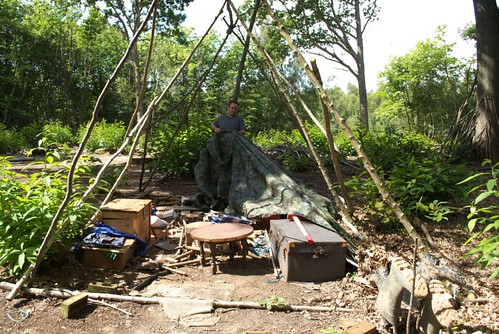 Then I set about making pegs to fasten the tarpaulin down on the new shelter, while Tracy began moving stuff over.
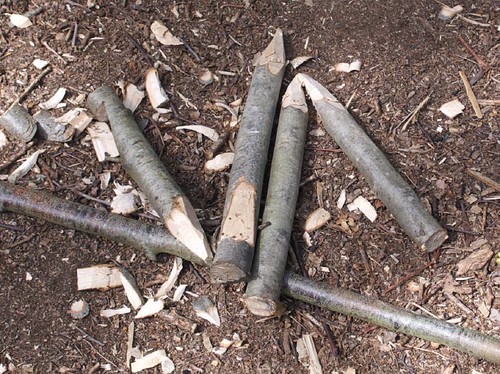 Before long we had the cover staked down, and all the stuff organised into it:
 The old shelter is just waiting for dismantling now. The bolts are all stainless steel, so hopefully I'll be able to reuse them, and the poles are birch so after a year standing up should be nice and dry for firewood!
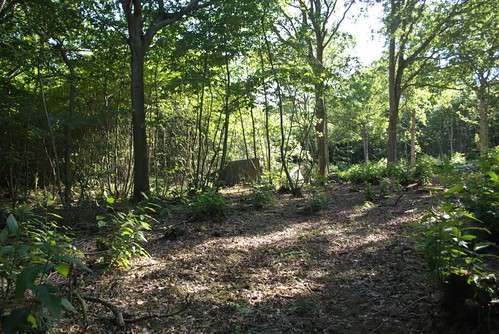
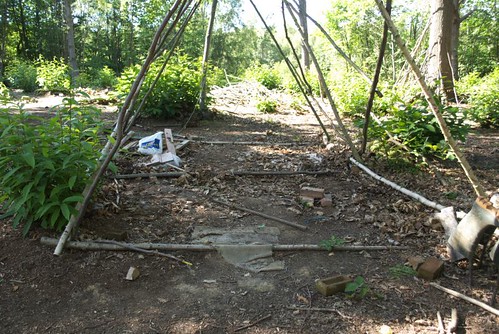 The shelter doesn't seem to be too obtrusive, looking from either end of the coup we cut last winter, and certainly can't be seen from any public footpath:
 The guys had been busy processing the oak offcuts into firewood:
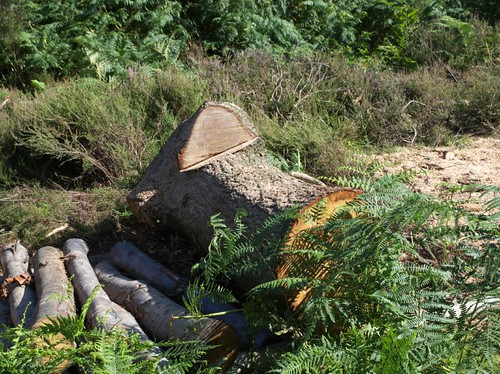
 There's only one oak log left to be converted now:
 While we were out in the wayleave we heard a snapping sound every 20 seconds or so. A dim and distant memory from the garden of a house I lived in many years ago led me to the nearby Broom bush:
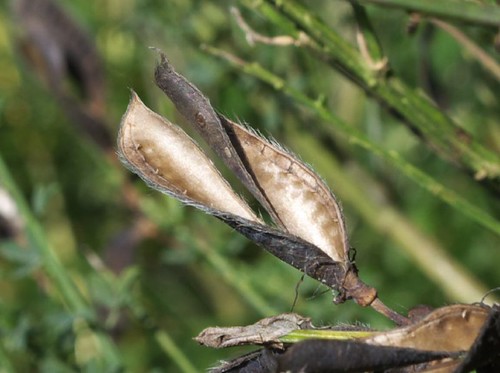
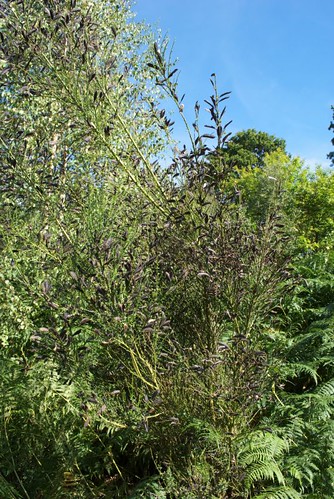 So what was making the noise? Here's a seed pod with the seeds still in it:
 and here's a seed pod after the heat of the sun has made it go "snap", flinging the seeds away from the plant to start a new life somewhere nearby:
 Also out in the wayleave were a Gatekeeper and a dragonfly: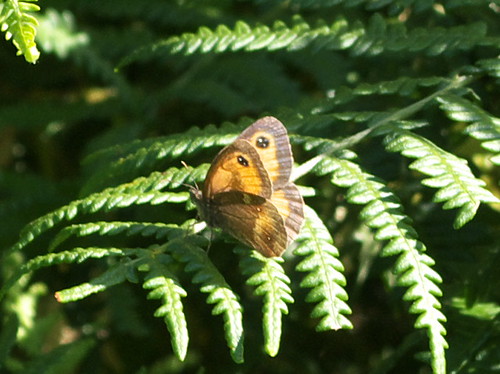
 Finally we went over to the pond for Tracy to dump some willow in it to soak, so she can try making a basket in a couple of weeks:
 One the way back to the car, something small ran across the ride in front of us. It was a mouse! It hid between some logs and pretended we couldn't see it:
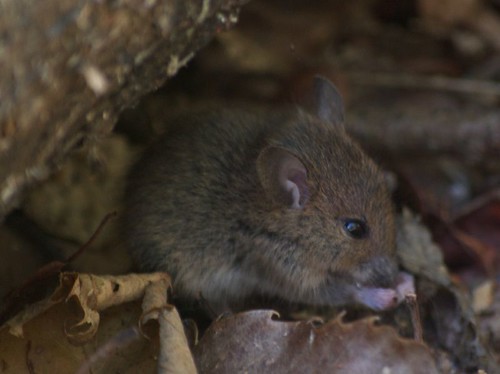 But then it did a runner:
 after which it was kind enough to sit still while I took a couple more pictures: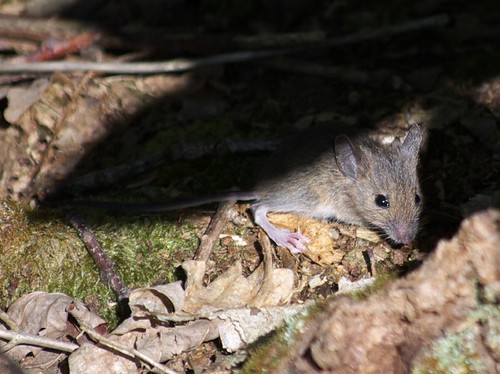
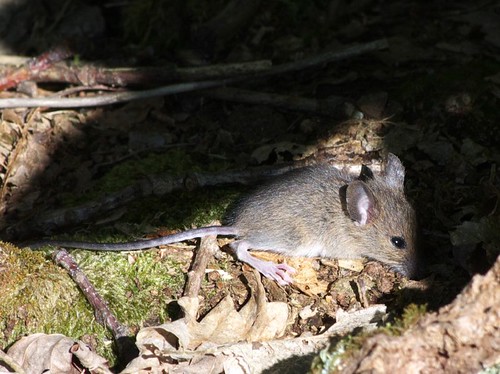
We're hoping to go badger watching again tonight, depending on the weather.
Mike
UPDATE: links to posts on building the shelter:
http://peplers.blogspot.com/2008/07/shelter-building-and-nuthatch.html
http://peplers.blogspot.com/2008/07/more-shelter-building.html
http://peplers.blogspot.com/2008/07/shelter-frame-finished.html
Thursday, 31 July 2008
Shelter complete!


Tuesday, 29 July 2008
Shelter frame finished!
Today we went up to the wood to continue with the shelter, fixing poles across what will be the roof once it's the right way up:  We used a draw knife to flatten the end of each pole on both sides to help it to sit onto the beam:
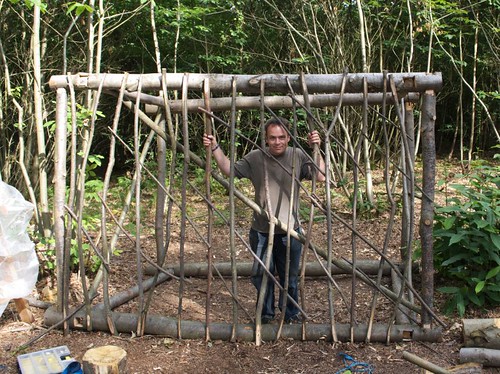
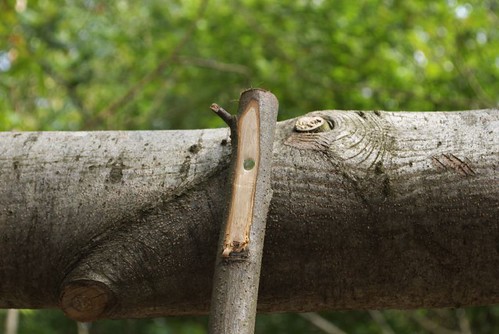 Once all the poles were on, Tracy thought it look like a prison:
 Then came what I thought might be the hard bit - turning it back the right way up! We set the winch up on one side to give a bit of a pull to get us started:
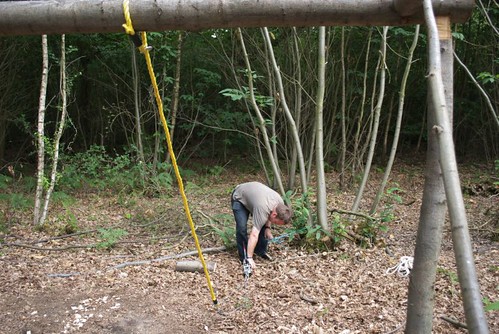 and then with a bit of a heave, and Tracy controlling a rope to prevent it moving too fast, we got it turned over. Much easier than I thought it would be!
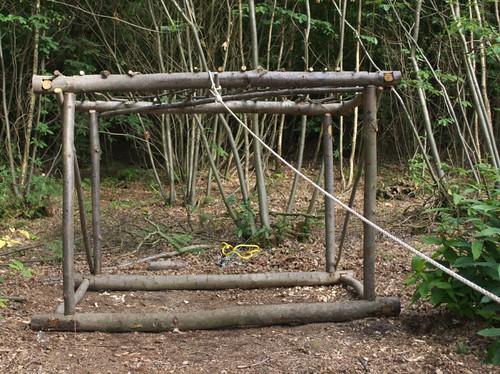 Two finishing touches were then made: another diagonal beam across the back to keep it all square
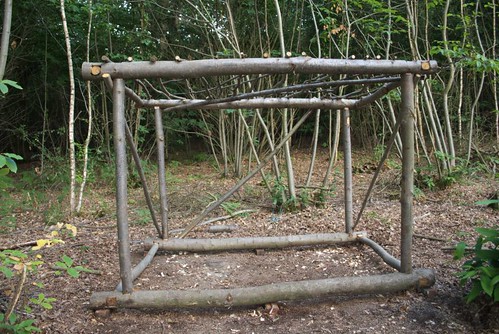 and setting each corner on a brick to keep the logs off the ground to some extent, hopefully preserving them from rot, although chestnut is pretty tough stuff anyway.
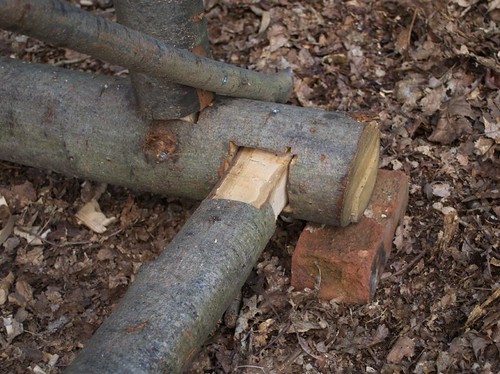 Next is fixing the tarpaulin over it, moving everything across from the old shelter, and then taking the old shelter down.
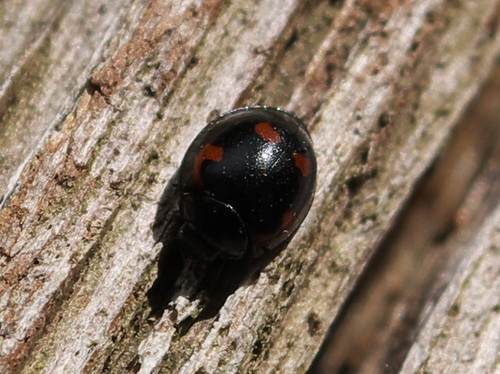
We did have a small audience for all this, including this Meadow Brown: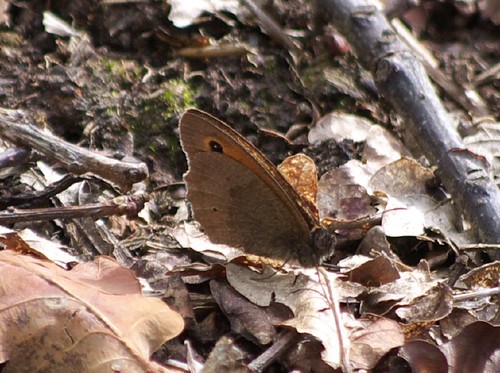 and this ladybird, which I think is a 2-spot (in black, of course):
 Mike
Mike
UPDATE: links to posts on building the shelter:
http://peplers.blogspot.com/2008/07/shelter-building-and-nuthatch.html
http://peplers.blogspot.com/2008/07/more-shelter-building.html
http://peplers.blogspot.com/2008/07/shelter-complete.html
Chainsaw sharpening
Here's an interesting blog for anyone who owns a chainsaw:
http://chainsawsharpenersguide.com/
I think the name says it all!
Mike
Monday, 28 July 2008
More shelter building...
Today was the big day for the shelter. The shelter will still be temporary (in terms that a planning officer would understand...), just a bit more sturdy than the old one, and more waterproof for the purposes of storing tools and drying wood.
Yesterday we'd made the pillars for the corners, so the first job was to slot them into place and put some bolts through to secure them: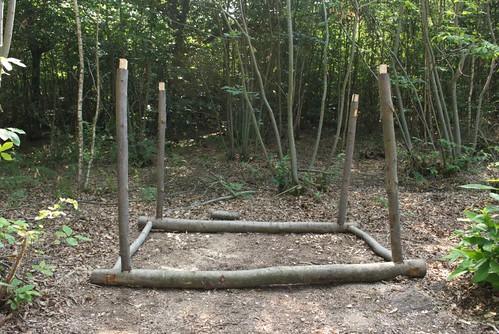 Don't worry that they look a bit wonky - they're not meant to be tight in their sockets at this stage. However, this did make it difficult when we tried to tip the whole thing on its side, and we discovered a use for all those poles with forked ends that we'd saved last winter:
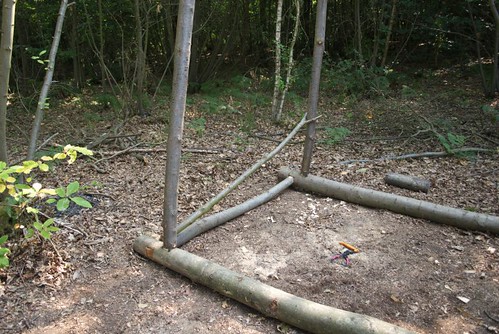 With the poles that would be on top after tipping braced, we heaved the whole thing over, moved the supports and attached some ropes to hold it all steady while we worked:
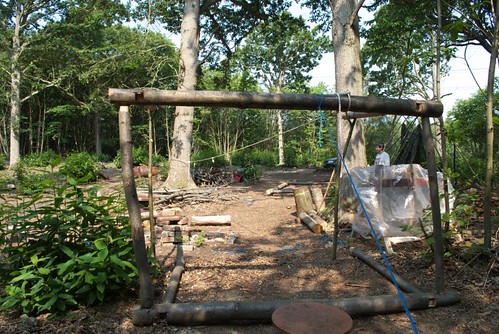 With the whole frame on its side, getting the "roof" on was quite straightforward, and we ended up with a cuboid shape:
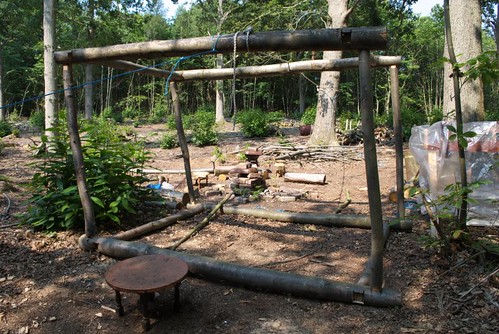 We added some diagonals on the side walls to stiffen the structure, and then it was time to stop, because we were hungry and the sun was getting pretty hot!
 When we next get up, perhaps tomorrow, we'll put a couple more diagonals on and them lots of poles across the roof (currently on the side) to support the tarpaulin - we've learned from past experiences with rain on the original shelter! Then the whole thing can tip back to where it started and we're done!
We had a wander around the woods after lunch, and saw this stunning feather floating on our pond. My Dad helped me ID it, it's from a Jay.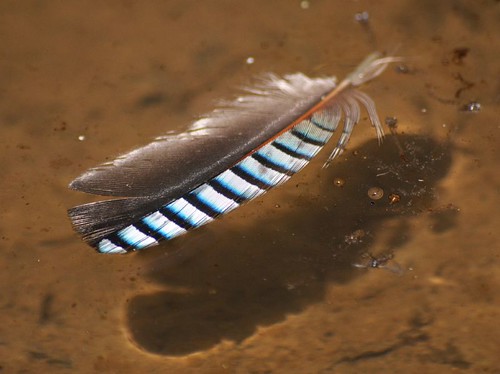 The pond, by the way, is doing OK. There's a few plants in it, and lots of little black bugs crawling around on the bottom. The algae seems to be slowly making a comeback too - I wonder if it had a "bloom" in its population and then suddenly ran out of a critical resource, and is now coming back slowly. Worryingly, human population has done much the same, with oil and gas being used to grow food, and the implications of Peak Oil take on a dark side...
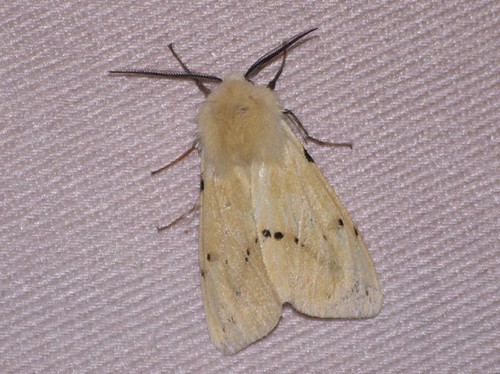
But moving on to a lighter topic, here's a Peacock butterfly enjoying the sun in our coppice. Same it wouldn't sit still for me to get a better photo!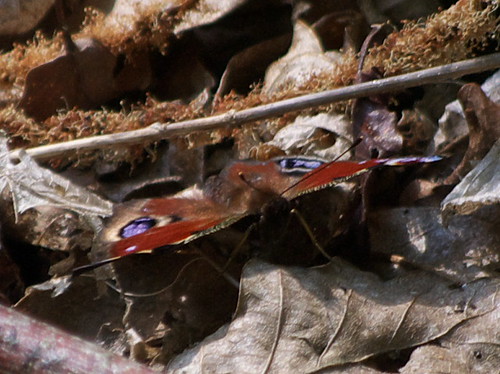 This wasn't the only pretty insect I've seen recently. After my discovery of the range of moths we have, when I found one on our blind this morning I took a photo before carefully catching it and letting it out the window. It's a Buff Ermine, a common species that's apparently attracted to artificial light, so no surprise it was in our house!
 Well, after all that hard work with shelter we cycled down to the beach for a swim. That's the nice bit about living by the sea - when it gets hot and sunny you can just pretend you're on a beach holiday! :-)
Bye for now, Mike
UPDATE: links to posts on building the shelter:
http://peplers.blogspot.com/2008/07/shelter-building-and-nuthatch.html
http://peplers.blogspot.com/2008/07/shelter-frame-finished.html
http://peplers.blogspot.com/2008/07/shelter-complete.html
Saturday, 26 July 2008
Moth survey results - part 1
OK, here's the first set of results from the moth survey. But I'll start with a picture of one of the best looking moths, called Buff Arches: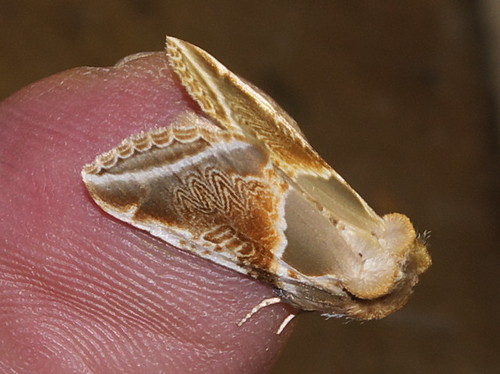
 The key results from our wood and the wayleave were:
Here's how it was done. Each of the six traps used a white sheet, a mercury vapour lamp, and a box full of old egg boxes and with a sloping glass lid to allow moths in but make it hard for them to get out. There was a petrol-fuelled generator used for each trap, or sometimes one between two where they were near each other: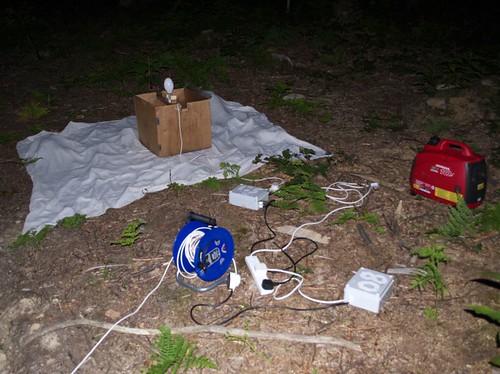 Here's a couple in action:
 They gave the wood an eerie glow - here's a long exposure photo:
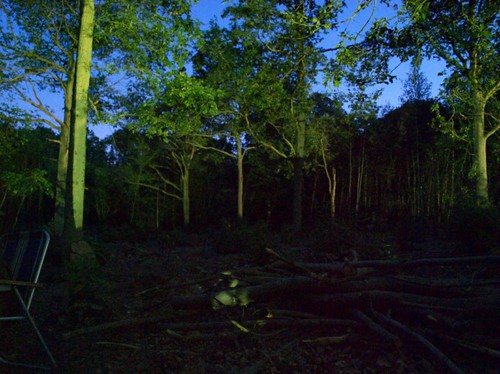 And here's the Moth Men in action - they're amazing, they could recognise dozens of species instantly, and as each trap was opened the action was surprisingly fast-paced, I could barely keep up taking photos, and Steve Wheatley was scribbling madly in his notebook to keep track of everything.
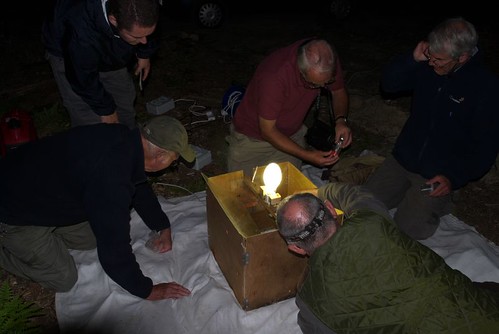 I don't think the survey would work without experts like these - there simply isn't time to be looking stuff up in ID books, the moths would have flow away by the time you'd figured out which the first one was!
Anyway, here's some more pictures of the ones I have names for, the rest will follow when I know what they are...
Ruby Tiger
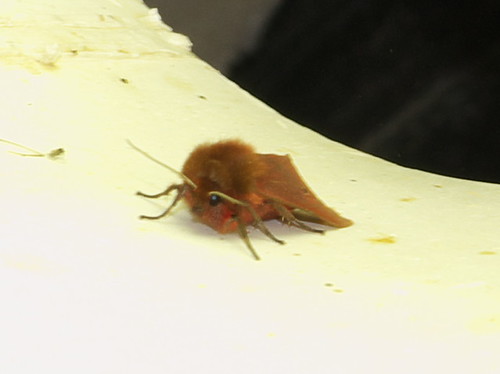 Gold Triangle
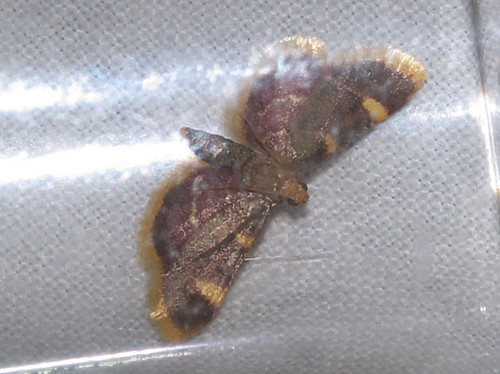 Small Emerald
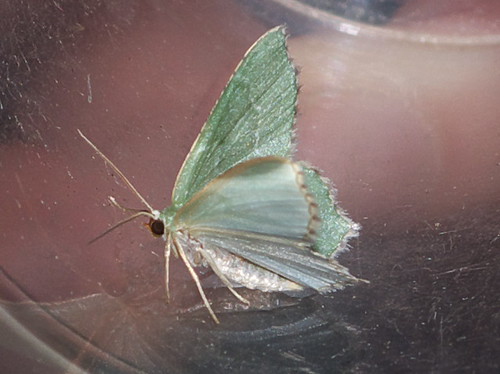 Large Emerald
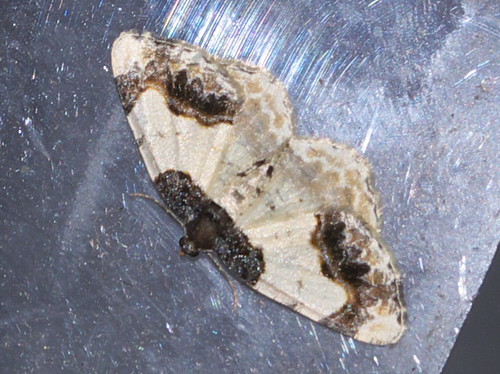
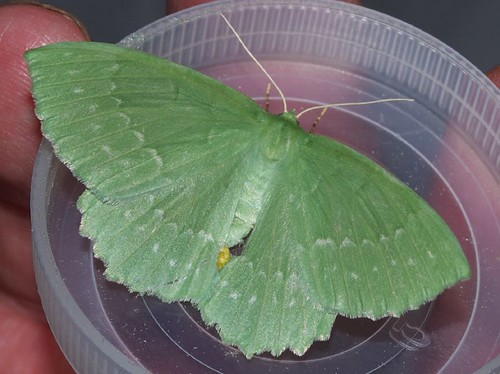 Peppered Moth
 Scorched Carpet (yes, that really is its name!)
 And then several other things attracted by the light: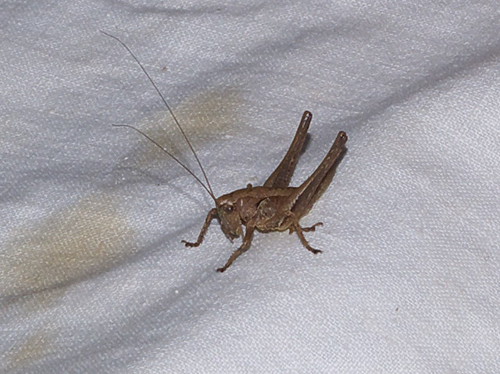
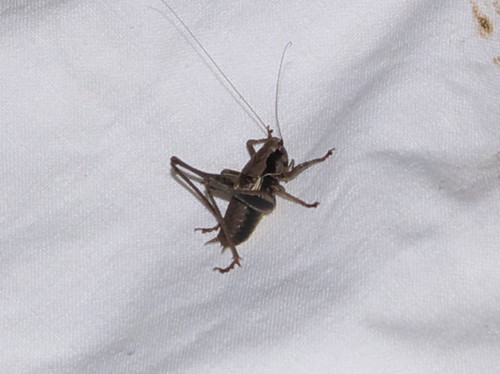
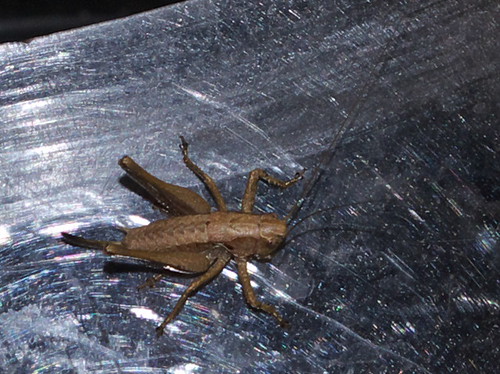 UPDATE: you can see the results of our 2009 moth survey here.
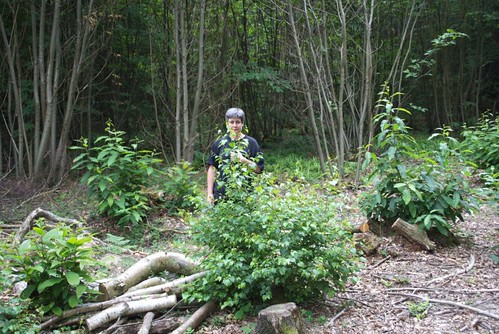
In other news, we went up to the wood again this morning and did a bit more to the new shelter - the basic frame should be ready to put up tomorrow, unless we decide to go down to the beach instead! The wood was looking particularly nice on a sunny day like today: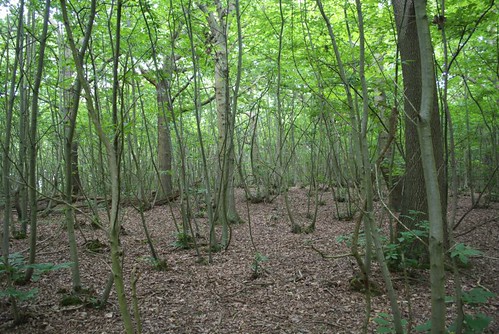 I thought it was time I look some pictures of the coppice regrowth with Tracy standing next to them for scale - it's amazing how fast this stuff grows! Here's a chestnut and then a birch (which was cut a couple of months later on):
 We also saw several butterflies around the wood, though they're looking a bit battered! There were two Speckled Woods fluttering around where we had coppiced by the pond, here's one of them:
 And White Admirals again, back in their favourite place in the cant we cut last winter:
 That's all for now....
Mike


