Showing posts with label coppice. Show all posts

Monday, 22 December 2014

Coppicing update

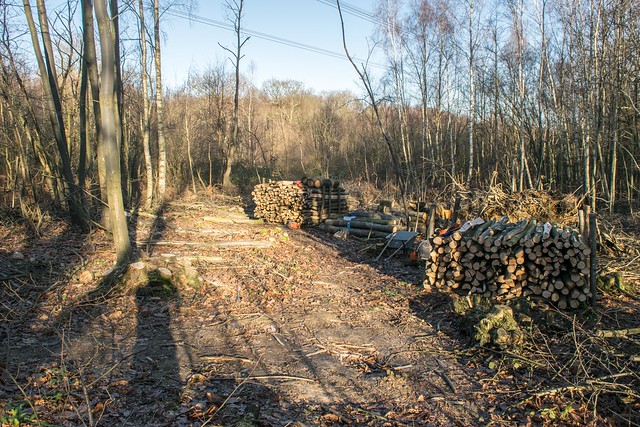
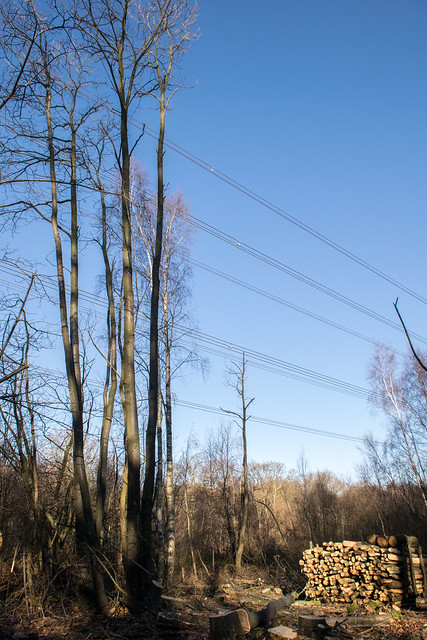
There's been a few days with nice weather during December so far, and it's been great to spend them cutting trees in the woods:

DSC_3053

DSC_3054

DSC_3058

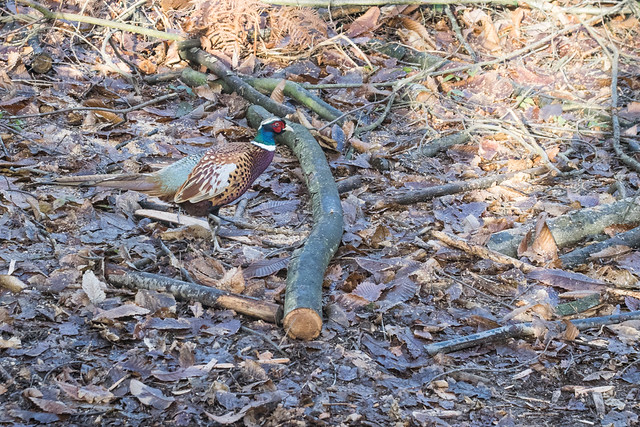
I've had several pheasants coming to watch me work - they aren't sufficiently afraid of humans for their own good! Fortunately for them I wasn't out to shoot them.
DSC_3012

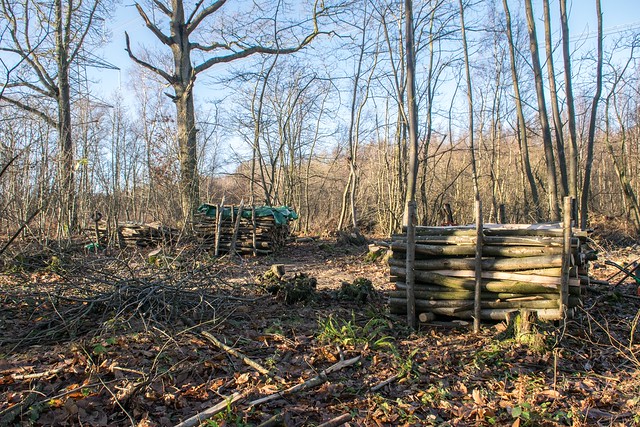
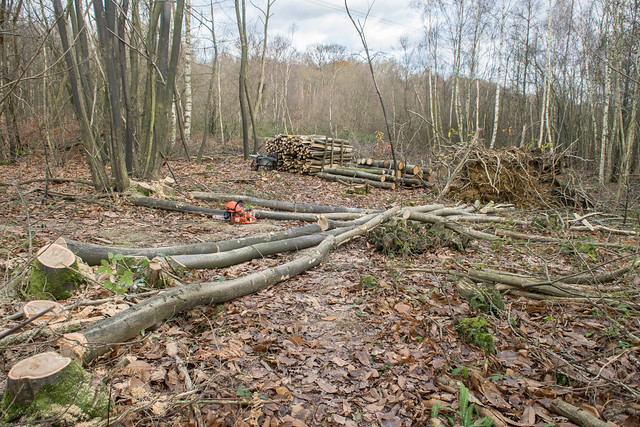
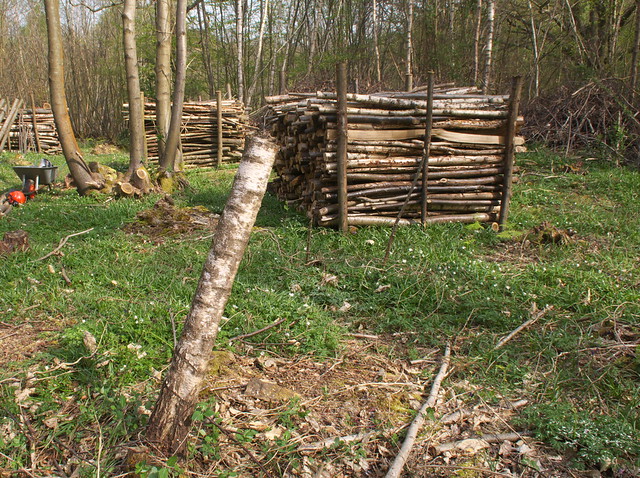
The trees I've been felling have been yielding a decent quantity of wood, so I've had to build several more racks to store it in, but the tricky bit is always find a place for them where they won't be in the way of trees I'm yet to fell. In this case, I felled several trees first and cut them up:
DSC_3010

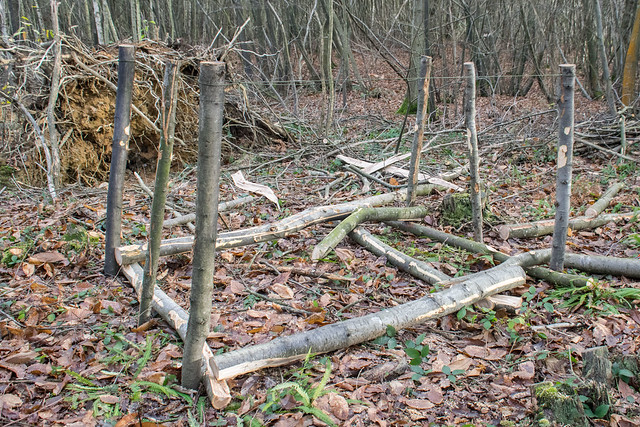
Then built a rack where they'd fallen, using some of the logs from them as bearers:
DSC_3017

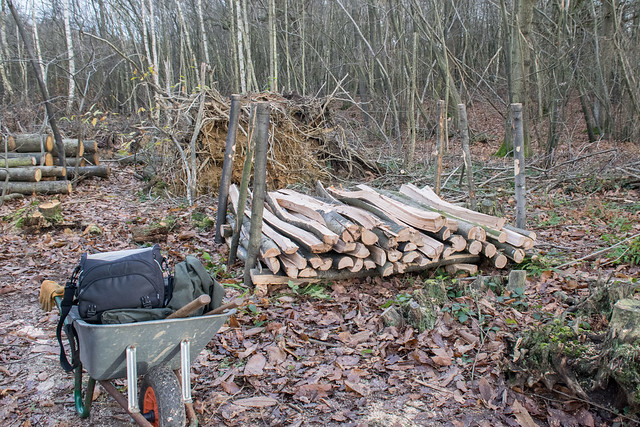
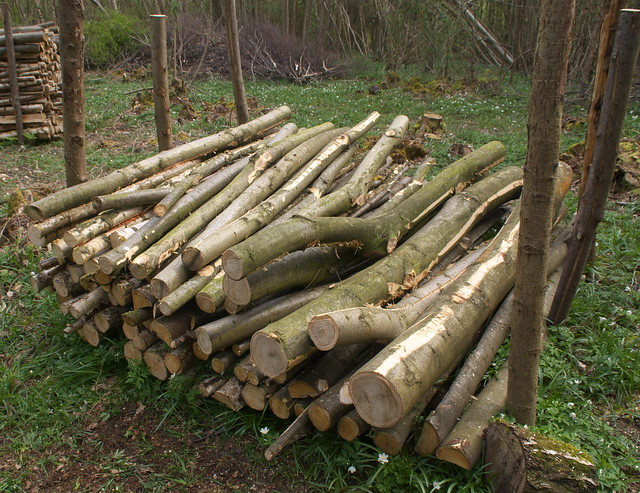
Then the remainder of the logs made a good start towards filling the rack!
DSC_3020

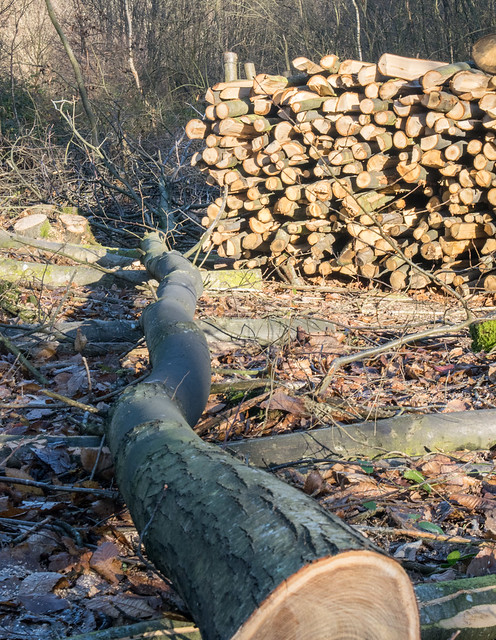
Of course, plans and the wind direction sometimes change as you go along, and this tree didn't have a clear space to fall into. But it was very satisfying to get it to fall just where I wanted it, missing this log rack on the right and some regrowing trees on the left:
DSC_3067

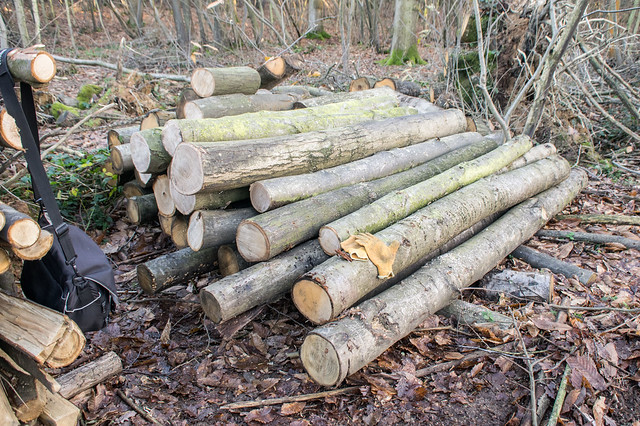
As well as the racks of firewood, there's also a nice pile of logs which will make good benches at some point in future:
DSC_3069

And also lots of blanks for making one-piece stools:
DSC_3068

It looks like there'll be a few more sunny days over the holidays, so I'm looking forward to spending some more time up there - I shouldn't need many more days to complete the work I've planned for this winter.

Mike

Click here to read the rest of this post.

Sunday, 13 April 2014

Getting started on next winter's firewood and clearing windblow

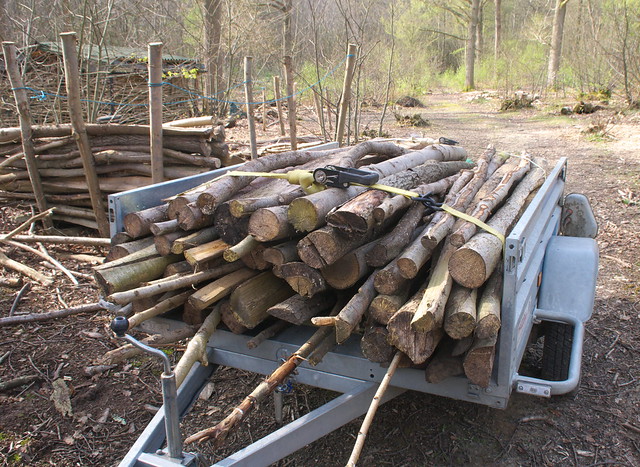
With the spell of good weather we're having at the moment, I took the opportunity to get into the woods and start preparing logs for next winter, and clear up some more windblown trees. For the first time I took the logs home in 2m lengths, as we now have the Truncator to cut them up at home:

DSC_8269 Trailer of logs

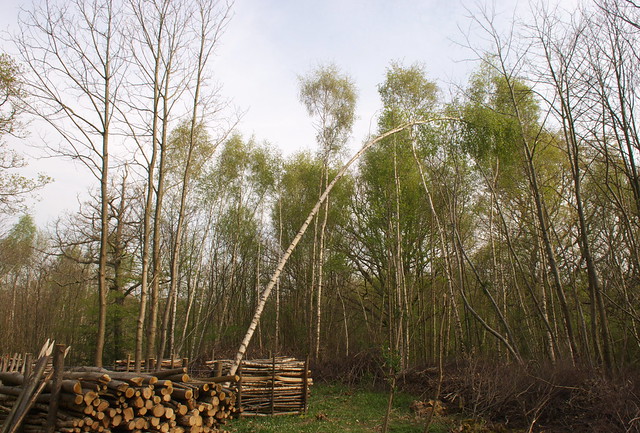
Back in the area I coppiced last autumn, the birch I'd left to grow bigger didn't really work out due to the storms...
DSC_8270 Windblown tree

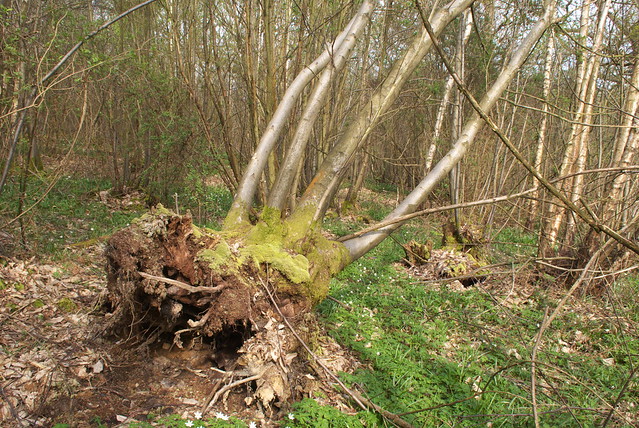
There was also a sweet chestnut stool knocked over there too:
DSC_8273 windblown coppice stool

They were dealt with pretty quickly, I decided to pollard the birch a few feet up, and coppice the sweet chestnut in the hope it will recover in some form:
DSC_8275 pollarded tree

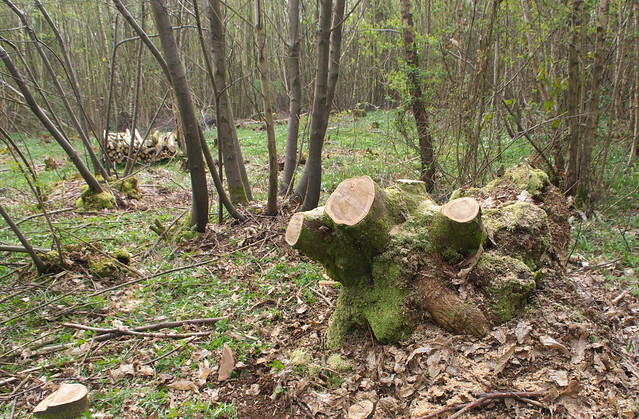
DSC_8278 Sweet Chestnut coppice stool

There was still some space in one of the racks for the logs produced from the work:
DSC_8276 logs

The stools I coppiced back in the autumn are showing some new growth now:
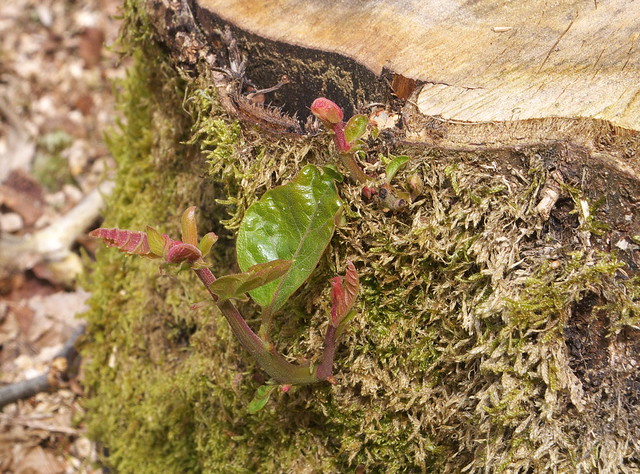
DSC_8286 Sweet Chestnut coppice regrowth

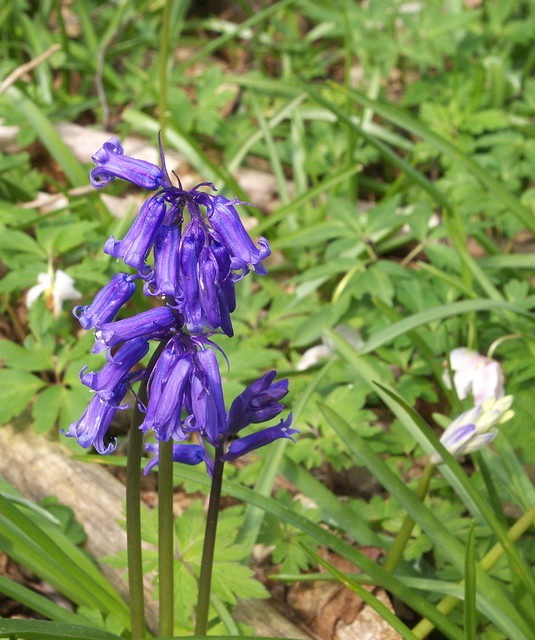
The blubells are picking up too, as the wood anemone start to fade...
DSC_8289 bluebells

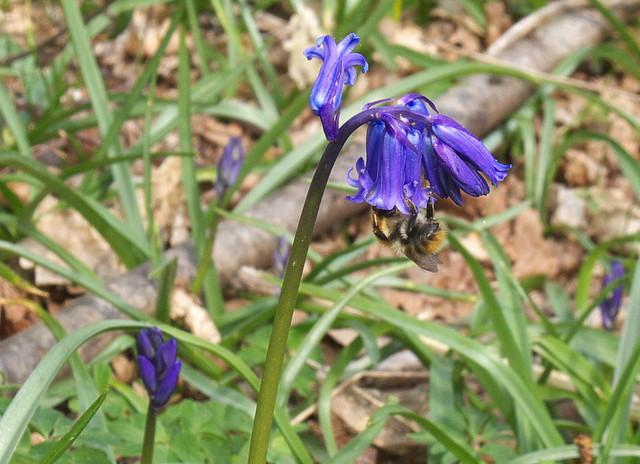
... much to the delight of the bees of course!
DSC_8287 bluebells and a bee

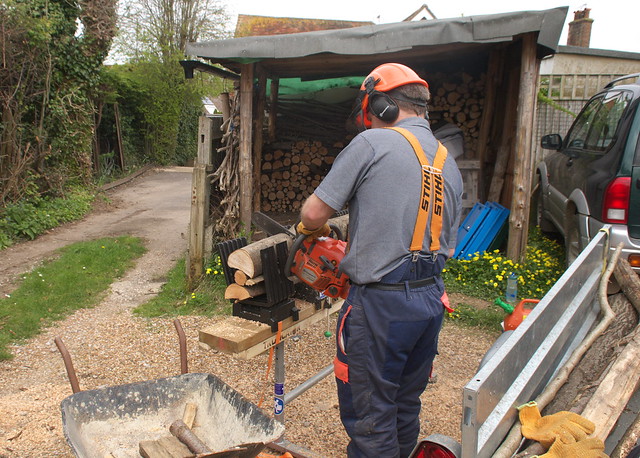
Once I got back home, we got the Truncator out and Tracy helped me process the logs - I chainsawed the logs in the Truncator, then Tracy took them for stacking while I loaded the next lot from the trailer to the Truncator.
DSC_8302 truncator logging

DSC_8303 truncator logging

We reckon for the volume of logs produced, it had saved about 60-90 minutes compared to our old method of processing and transporting logs, and was much easier on our backs, as there was not much need to pick stuff up form the floor and all the logs ended up in a wheelbarrow.

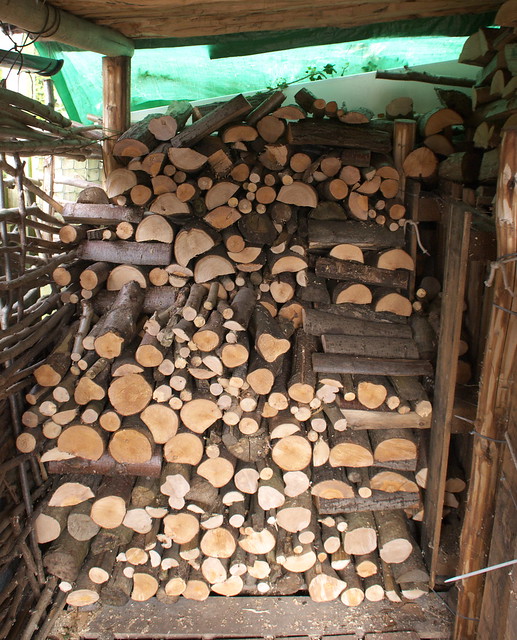
So we're now started on the road to next winter's firewood...
DSC_8307 logs

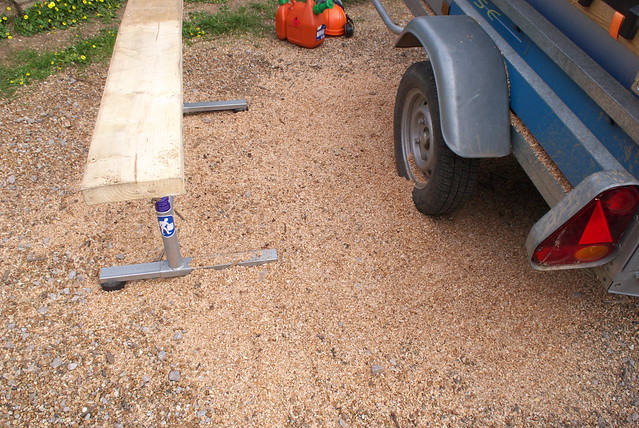
Of course, the side effect of using the Truncator at home is that the saw chips are all over the drive... Next time I'm going to try putting a tarp down to collect it, and see if anyone wants it for animal bedding.
DSC_8308

Oh, and if you missed it, I also uploaded a video of how to make a simple log bench in five minutes!

Mike

Click here to read the rest of this post.

Thursday, 9 May 2013

Spring in the woods and making charcoal

The woodland is looking amazing now, with the Spring flowers finally showing themselves. We had several friends come and visit us in the woods on the bank holiday, so a charcoal top up was needed for BBQ cooking - this time we made a short video showing how this simple method of making charcoal in a kiln works, using an oil drum and a smaller barrel:


We had plenty of time to see the displays of flowers. In the darker parts of the wood there are still mostly Wood Anemones, though with some Bluebells mixed in:
DSC_6469

DSC_6467

DSC_6454

DSC_6452

There's the first signs of shade as well, now that the leaves are appearing on the trees:
DSC_6465

The sunnier parts of the wood are looking good with Bluebells, especially over in Sweep Wood:
DSC_6479

The coppice is growing quickly again there as well:
DSC_6477

Over in Smock Wood, the ride I cut a couple of years ago is looking great:
DSC_6450

What's particularly interesting there is that there are a lot of Violets, which weren't in evidence there a few years ago, so I guess that's a positive result from cutting the ride:
DSC_6457

DSC_6461

The bit of the wayleave that I cut last winter is coming on well too:
DSC_6447

DSC_6448

DSC_6449

As usual the wayleave is full of wildlife again...
DSC_6419 Peacock butterfly

DSC_6412 Pheasant

And finally... this year we are hoping that we'll actually get some fruit, as the bees should be out at the same time as the blossom, unlike last year...
DSC_6462

Mike

Click here to read the rest of this post.

Saturday, 24 November 2012

Woodland maintenance and bryophytes

Because we cut so much wood over the 2010/11 winter, we're not doing any significant coppicing this year, as we need to burn or sell the pile we still have. Instead, we're taking the opportunity to get some maintenance jobs done. Here's a a few pics...

First, on the footpath that borders the wood that my friend Alex owns, we found this coppice stool had blown over in October:

DSC_4995

DSC_4996

This was quite a quick one to clear up - it was too far from the path to be bothered trying to extract the logs, we we just cut it up and left them there:
DSC_5097

DSC_5098

DSC_5101

Also in Alex's wood, when he visited in late October, we went along the road edge and cut back a section of coppice there. This makes it easier for traffic to pass along there, and reduces the risk of trees falling in the road in future:
DSC_4991

DSC_4992

DSC_4993

We got a trailer load of logs out of this bit of work, and left all the brash to form a dead hedge.
DSC_4994

Not long after this, it became apparent that autumn was truly upon us, with just the oaks holding on to some leaves:
DSC_5094

But last week, most of the remaining leaves came down when there was a frost. As this happened when there was no wind, the leaves lay in a thick carpet for a day or so:
DSC_5141 Autumn leaves

DSC_5142 Autumn leaves

DSC_5143 Autumn leaves

DSC_5144 Autumn leaves

Another job I got on with was rebuilding our supercharged fire pit, as the bricks had started collapsing in a bit. When I dug it out, I was interested to see that some of the clay in the ground had been baked by the heat of repeated fires, and was beginning to look like brick. In the photo below you can see normal clay to the left, and baked clay to the right:
DSC_5148

While rebuilding, I've made two changes. First, I raised the air inlet a bit - in its original position it kept filling with ash, and second, I dug out a trench and buried a layer of bricks, which I hope will make this version more stable:
DSC_5151

Then I laid another layer on top, and pushed some soil up against them:
DSC_5153

The wall of bricks is lower now than before, which should let more heat out of the fire, and there are some spare bricks to put on top for cooking.

Just a few days ago, I got back to clearing up some more windblow, and this time my friend Andrew was visiting, along with Dougal, his Jack Russell terrier:
DSC_5168

We tackled this area near the entrance, which blew over a few years ago:
DSC_5163

DSC_5162

Because the wood had been dead for a while, we left most of it piled up to rot for bugs to live in. Standing dead wood is useful for this too, but in this case it was pushing live trees over, so I felt it was best taken down.
DSC_5167

It's left a new clearing, so it'll be interesting to see what grows there next summer:
DSC_5166

DSC_5164

While we got on with this, Dougal supervised from a nearby coppice stool:
DSC_5172

We did one other bit of clearing up. Our solitary Alder Buckthorn, which fell over in snow in Feb 2012, has been held by a rope over the summer:
DSC_5176

This was so it could do its summer of growing, but now that's done, we've pollarded it a short height above the ground, and settled its roots back in, so it will hopefully regrow strongly next year:
DSC_5178

Finally, we recently had Tom Ottley, an expert in bryophytes (moss), visit the wood. He was looking at areas like this:
DSC_5161

He looked around both our woodland and the other nearby plots, and gave us the list below of what he found growing there. He also disturbed a wild boar! I guess compared to us he was going around a lot more quietly on his own... His summary was:
A very good total for a visit of only a few hours. There is a very wide range of habitats which makes that possible. The main part of wood is coppice and the most interesting habitats there are the old stumps (coppice stools), the ditches and various small banks, some of which are clearly very old. However, the best area is the wayleave for the high-voltage power lines which has a rutted track running along it. The edges of the ruts and various damp areas along the route are all species rich and benefit from being kept open. There is a good quantity of Sphagnum in boggy areas.

Epiphytic bryophytes are very scarce in the wood. The reasons for this are unclear but may be down to a lack of optimum tree species (ash, elder, field maple) in well-lit situations. However most species likely to occur can be found in small quantity.
Here's the list of bryophytes, with comments on location and rarity:


English Name

Scientific Name

Location and Frequency

Occurrence in Sussex

Common Smoothcap

Atrichum undulatum

On soil, abundant, fruiting

Usually very common in woodland.

Silky Forklet-moss

Dicranella heteromalla

On soil, abundant, fruiting

A very common moss. Not often fruiting as freely as here.

Common Feather-moss

Kindbergia praelonga

On soil, abundant

Almost always abundant in woodland.

Redshank

Ceratodon purpureus

On path

Common on paths and in gardens etc.

Swan's-neck Thyme-moss

Mnium hornum

On stumps, abundant

Usually very common in woodland.

Swartz's Feather-moss

Oxyrrhynchium hians

By small stream

A typical habitat. Generally quite common.

Common Cord-moss

Funaria hygrometrica

On bonfire site, fruiting

The common moss on old bonfire sites.

Common Pocket-moss

Fissidens taxifolius var. taxifolius

On banks, common

Usually common, as here.

Overleaf Pellia

Pellia epiphylla

In ditches, very common

Always very common on neutral to acidic soils in wet places.

Pointed Spear-moss

Calliergonella cuspidata

On stream bank, common

Usually common by streams or in damp grassland.

Rough-stalked Feather-moss

Brachythecium rutabulum

On banks, common, fruiting

One of the commonest of all mosses.

Common Frillwort

Fossombronia pusilla

On side of drainage ditch, fruiting

Much less common in Sussex than a related liverwort, F. wondraczekii.

Lesser Pocket-moss

Fissidens bryoides

On side of drainage ditch, fruiting

A common moss.

Glaucous Crystalwort

Riccia glauca

On side of drainage ditch

Not really a woodland species, preferring arable fields, but occasionally turns up where disturbed.

Elegant Silk-moss

Pseudotaxiphyllum elegans

On banks, abundant

Always common in woods on neutral to acidic soils.

Nodding Thread-moss

Pohlia nutans

On bank of ditch

Frequent in woods, more commonly on heathland.

Hart's-tongue Thyme-moss

Plagiomnium undulatum

On stream banks, frequent

Very common in wet places in woods.

Large White-moss

Leucobryum glaucum

On stumps, abundant

Common in woodland, preferring slightly drier habitats.

Common Striated Feather-moss

Eurhynchium striatum

On banks, infrequent

An indicator of old woodland, generally fairly common.

Two-horned Pincerwort

Cephalozia bicuspidata

On paths and banks, abundant

Usually very common in woodland.

Notched Pouchwort

Calypogeia arguta

On ditch banks, frequent, with clusters of gemmae

An early colonist of ditch banks. Usually spreads by means of gemmae.

Common Pouchwort

Calypogeia fissa

On bank by path

Frequent on banks in woodland.

Slender Mouse-tail Moss

Isothecium myosuroides

On base of ash

On the base of oak and ash especially.

Larger Mouse-tail Moss

Isothecium alopecuroides

On base of ash

Much less common than the preceding species and usually found on ash.

Fox-tail Feather-moss

Thamnobryum alopecurum

On base of ash

Frequent in woodland generally.

Cape Thread-moss

Orthodontium lineare

On stumps, frequent, fruiting

Originally introduced from South Africa, now widespread but not often troublesome.

Cypress-leaved Plait-moss

Hypnum cupressiforme

On stumps, abundant

Always abundant in woods.

Variable-leaved Crestwort

Lophocolea heterophylla

On stumps, occasional

Common on stumps, roots etc.

Bruch's Pincushion

Ulota bruchii

On Quercus, uncommon, fruiting

One of several, usually common epiphytes that are very scarce in Mill Wood. They prefer willow or elder in well-lit situations.

Smaller White-moss

Leucobryum juniperoideum

On a bank

Much less common than Leucobryum glaucum but in most of the woods in this part of East Sussex.

Supine Plait-moss

Hypnum resupinatum

Epiphyte, common

Always very common. Prefers smooth-barked trees.

Mamillate Plait-moss

Hypnum andoi

Epiphyte, common, fruiting

Usually common.

Mueller's Pouchwort

Calypogeia muelleriana

On a bank by a path

Common on banks, mainly in acid woodland.

Broom Fork-moss

Dicranum scoparium

On stumps, common

Usually very common in woodland.

White Earwort

Diplophyllum albicans

On an old bank

Only found on old banks, a good indicator species.

Waved Silk-moss

Plagiothecium undulatum

On an old bank

Tends to be restricted to older woodland and a very attractive species.

Bank Haircap

Polytrichastrum formosum

On banks, common

Usually common in woodland.

Pellucid Four-tooth Moss

Tetraphis pellucida

On stumps, frequent

Common on stumps generally, particularly coppice stools.

Rusty Swan-neck Moss

Campylopus flexuosus

On stumps, frequent

A species often found on tree stumps.

Heath Star Moss

Campylopus introflexus

On stumps in clearings, common

Originally introduced but now abundant on heathland and on stumps in woodland.

Common Tamarisk-moss

Thuidium tamariscinum

On soil, frequent

Usually common, prefers damp soils.

Neat Feather-moss

Pseudoscleropodium purum

In clearing

A plant of open grassland.

Springy Turf-moss

Rhytidiadelphus squarrosus

In clearing

Another grassland species.

Cow-horn Bog-moss

Sphagnum denticulatum

In boggy area under pylons

Often found in small bogs in woodland. A related species, S. fallax usually occurs too but not found here yet.

Blunt-leaved Bog-moss

Sphagnum palustre

In boggy area under pylons

Another plant of bogs, including those in woodland.

Bifid Crestwort

Lophocolea bidentata

On ruts at edge of track

Common on banks in woodland.

Smallest Pottia

Microbryum davallianum

On ruts at edge of track, fruiting

Not often found but extremely small.

Lesser Bird's-claw Beard-moss

Barbula convoluta

On track, abundant

Usually abundant on paths.

Bird's-claw Beard-moss

Barbula unguiculata

On track, frequent

A very common species.

Crimson-tuber Thread-moss

Bryum rubens

On track, with rhizoidal tubers

Frequent throughout Sussex, preferring sandy soils.

Cylindric Beard-moss

Didymodon insulanus

On track, abundant

Abundant by paths and on tarmac.

Dusky Beard-moss

Didymodon luridus

On gravel track, frequent

Frequent on paving and sometimes gravel.

Tall-clustered Thread-moss

Bryum pallescens

On soil under pylon

Very few records for East Sussex. This moss has a strong preference for polluted soils (heavy metals). In this case it thrives on the zinc from the galvanised steel pylon structure.

Heath Plait-moss

Hypnum jutlandicum

On heathy bank by track

A common heathland plant.

Bicoloured Bryum

Bryum dichotomum

On track, with bulbils

Common on soil throughout Sussex.

Delicate Earth-moss

Pseudephemerum nitidum

On track, fruiting

Frequent on bare soil in woodland, usually seen in the autumn when it has distinctive small capsules.

Juniper Haircap

Polytrichum juniperinum

On track

A common heathland species.

Bristly Haircap

Polytrichum piliferum

On track

Decidedly less common than the preceding species.

Acid Frillwort

Fossombronia wondraczekii

On ruts at edge of track, fruiting

The commonest member of this genus of liverwort.

Crenulated Flapwort

Jungermannia gracillima

On ruts at edge of track

Common on sandy soils on heathland.

Common Pottia

Tortula truncata

On ruts at edge of track, fruiting

Always very common.

Red-stemmed Feather-moss

Pleurozium schreberi

On heathy bank

A very typical heathland species.

Creeping Feather-moss

Amblystegium serpens var. serpens

On bank at edge of track

Very small but usually quite common.

Great Plait-moss

Hypnum lacunosum

On bank at edge of track

A heathland species.

Great Hairy Screw-moss

Syntrichia ruralis

On gravel at edge of track

Often found on roofs.

Fallacious Beard-moss

Didymodon fallax

On gravel at edge of track

Requires a neutral to basic soil. Often very common.

Silver-moss

Bryum argenteum

On track

Common on paths and on paving.

Bud-headed Groove-moss

Aulacomnium androgynum

On stump, with gemmae

Possibly declining, at one time very common on stumps.

Cylindric Ditrichum

Trichodon cylindricus

On stream bank

Frequent, often by streams.

Kneiff's Feather-moss

Leptodictyum riparium

On stream bank fruiting

Frequent by streams and ponds.

River Feather-moss

Brachythecium rivulare

On stream bank

Typically found on stream banks.

Dilated Scalewort

Frullania dilatata

On Salix in carr

Often common, but not here.

Wood Bristle-moss

Orthotrichum affine

On Salix in carr, fruiting

Usually a very common epiphyte but very little in Mill Wood.

Lyell's Bristle-moss

Orthotrichum lyellii

On Salix in carr, with gemmae

A frequent epiphyte.

Forked Veilwort

Metzgeria furcata

On Salix in carr

A common epiphyte. Unusually scarce in Mill wood.

Mike

Click here to read the rest of this post.