Just watched a great video review of this stove by our friend Andrew. It's a gasifying stove that runs on wood, much like our woodgas campstoves, but it has a thermoelectric generator built into it, so you can charge small devices like phones while making dinner or a cup of tea! Here's the video...
Showing posts with label woodgas. Show all posts
Showing posts with label woodgas. Show all posts
Saturday, 15 December 2012
Wood-powered phone charger... the Biolite stove


Friday, 31 August 2012
A wood-gas stove for Kenya
I recently heard about an interesting organisation called Kenya Stove, they are working to promote a design of gasifying wood stove that doesn't need a fan (unlike the ones I use). The design looks to be simple and durable - ideal for use in developing countries, where it should help reduce deforestation, improve health by reducing smoke, and also save people money on fuel for cooking. Check out the video they've made:
and go here if you want to donate some money to help get the whole thing started:
www.kickstarter.com/projects/627536440/kenya-stove-revolutionizing-how-people-cook
Mike Click here to read the rest of this post.
Monday, 11 January 2010
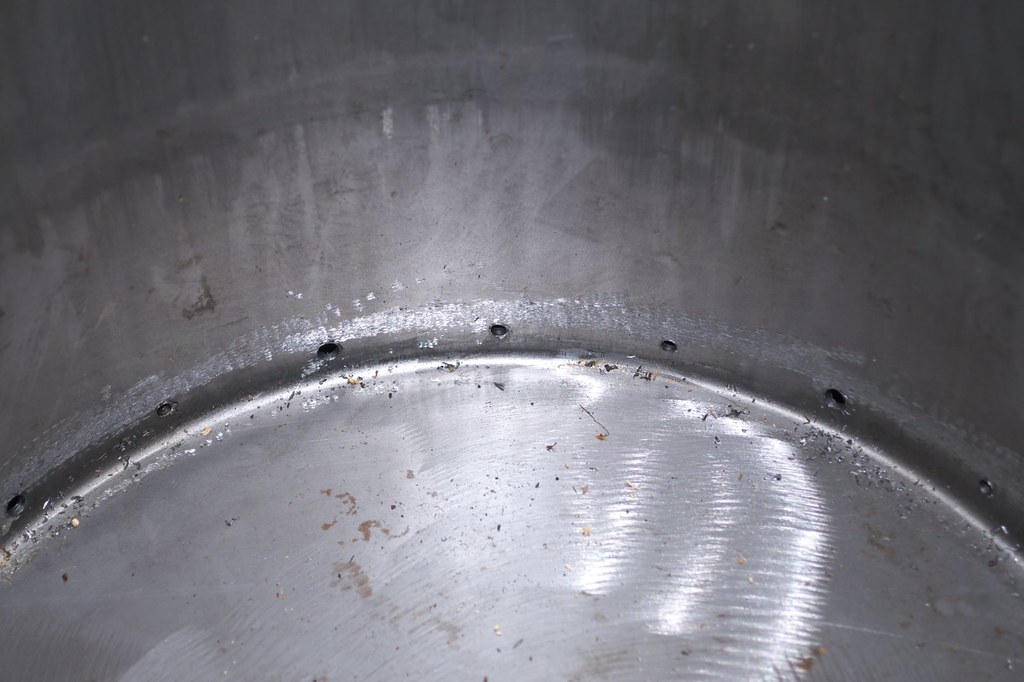
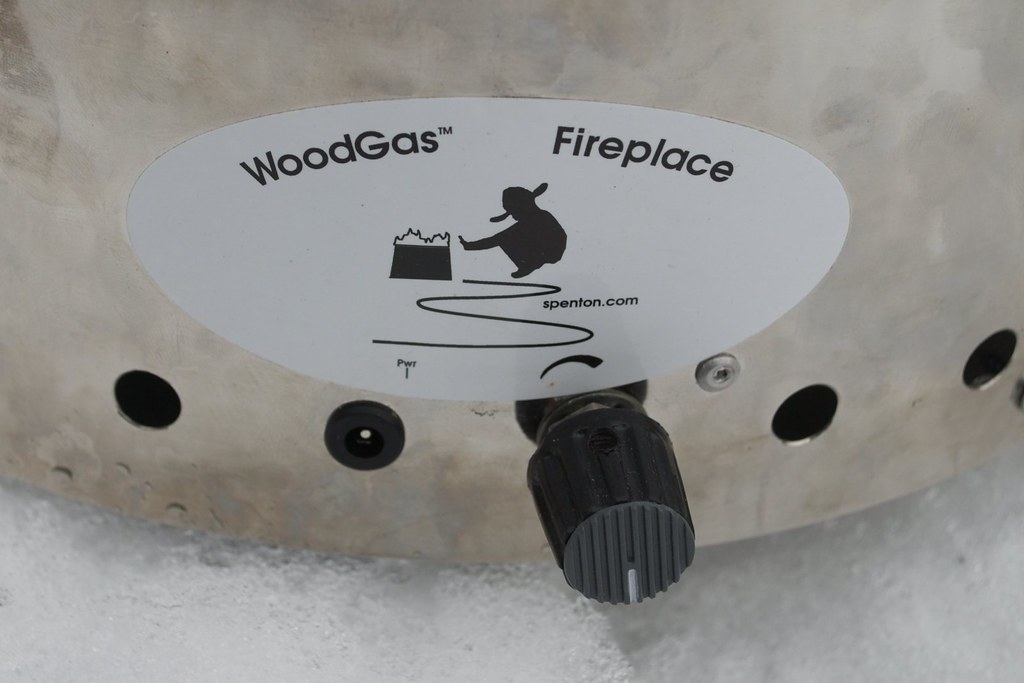
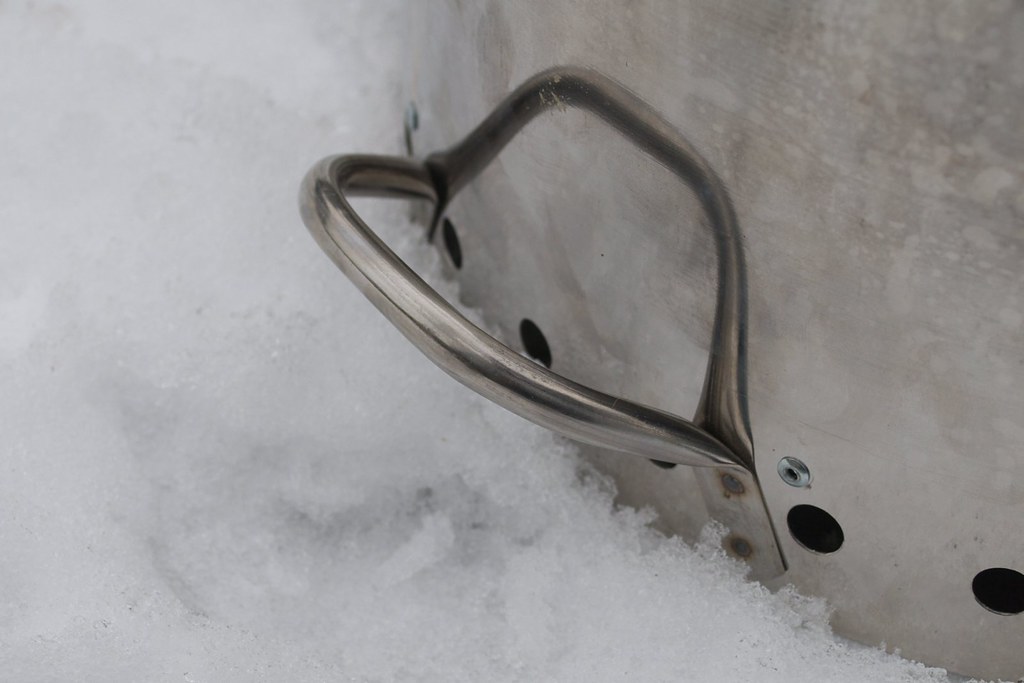
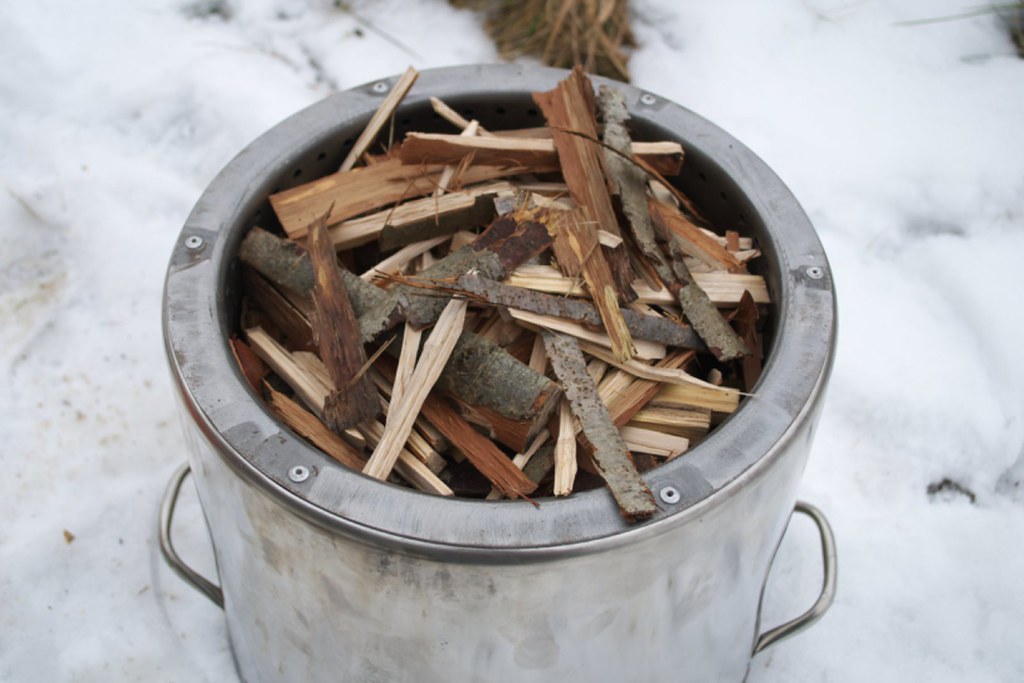
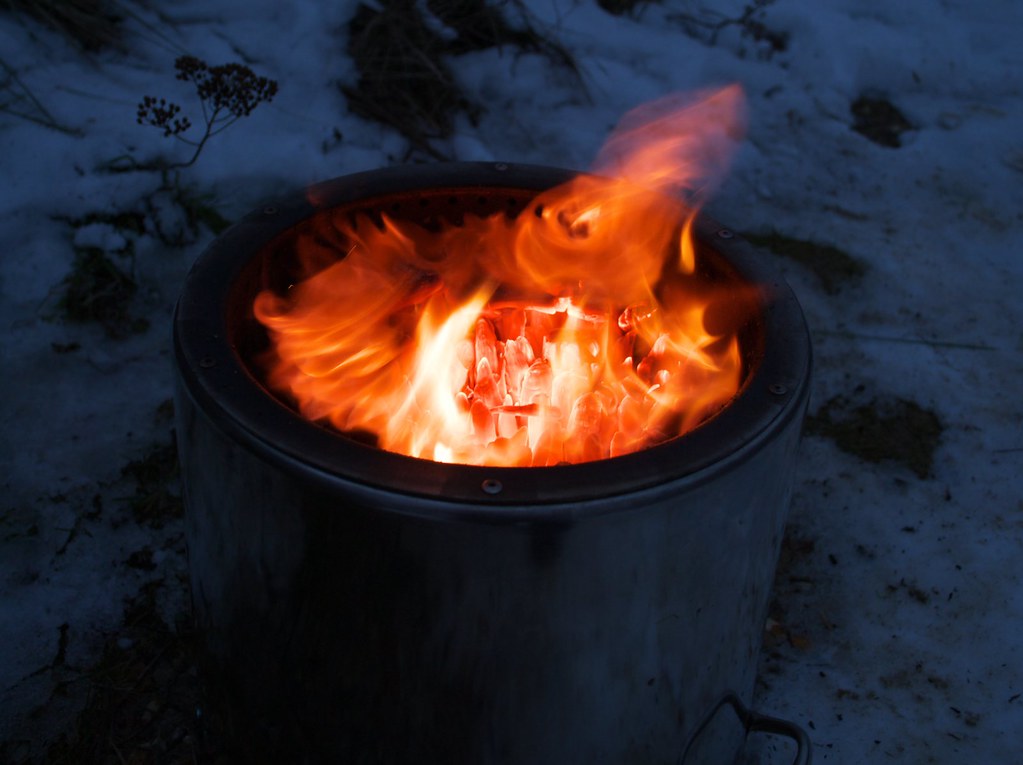
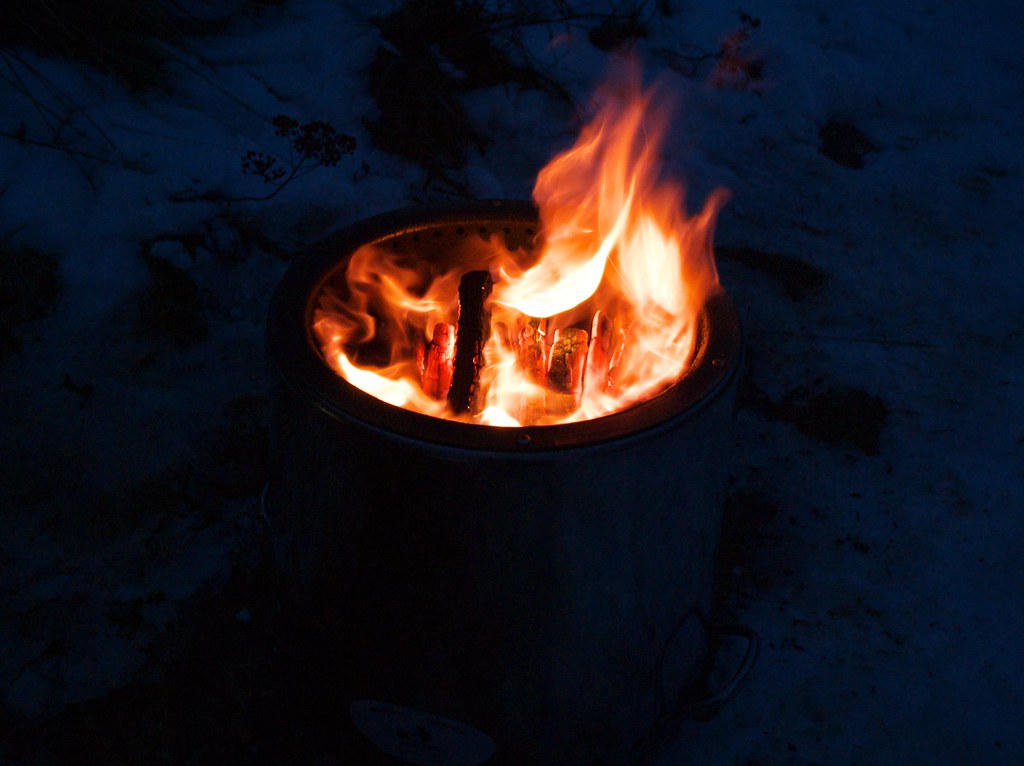
Woodgas Outdoor Fireplace review
Some time ago I posted a review of the Woodgas Campstove we use for cooking in the wood. Well, now I've got another video - this time of its big brother, the Woodgas Outdoor Fireplace:

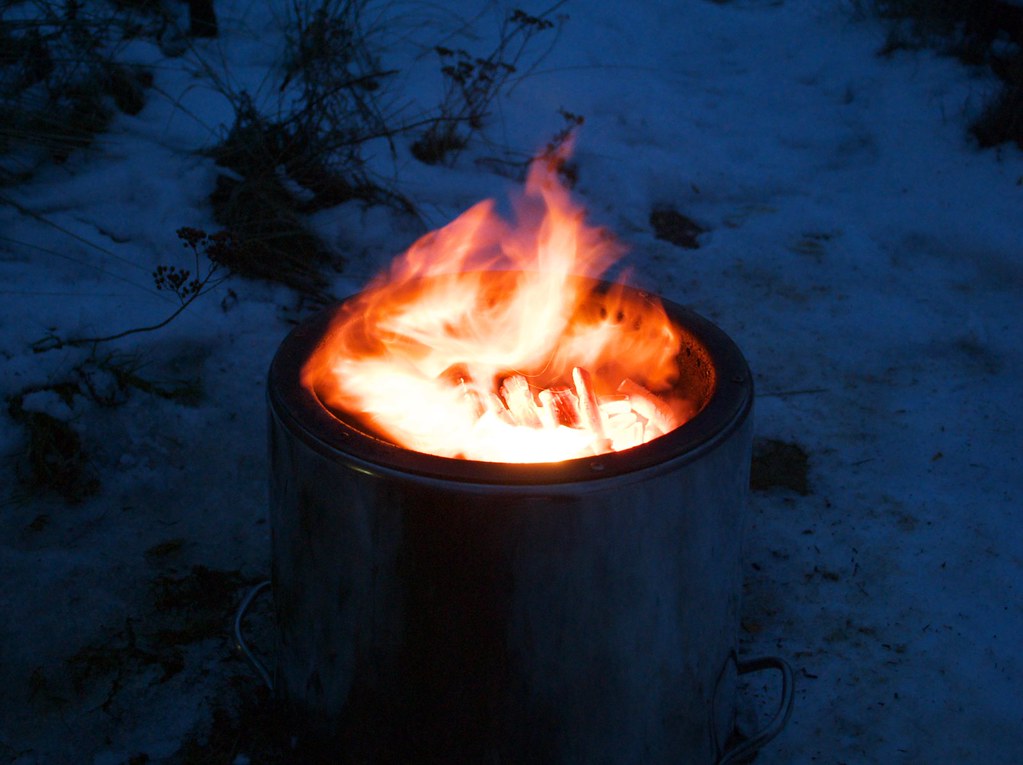
If you want to buy one, go to woodgasstove.co.uk
Mike
Monday, 25 May 2009
Woodgas camp stove demo
You may have noticed in some recent posts that we've got a fancy new stove to use at the wood - well, here's a demo video of how it works. (Still pictures and a text explanation are below)
It's a WoodGas CampStove XL. What it does is "gasify" the wood, burning the gas produced in an efficient manner right under the cooking pot. Basically there's a cylinder inside it that you fill with small sticks:
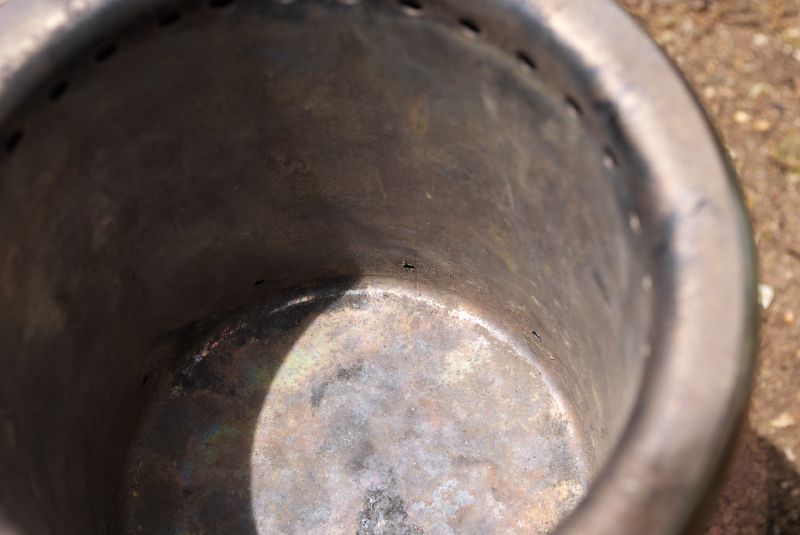 If you look carefully you'll see some small holes at the base of this cylinder - these allow in a small amount of air to gasify the wood. Gasification means allowing the wood to partially burn, resulting in a mixture of gases, including hydrogen, methane and carbon monoxide (so don't use it indoors). These are all flammable gases, and as they rise up the inside of the stove they meet with more air injected through a ring of holes at the top of it:
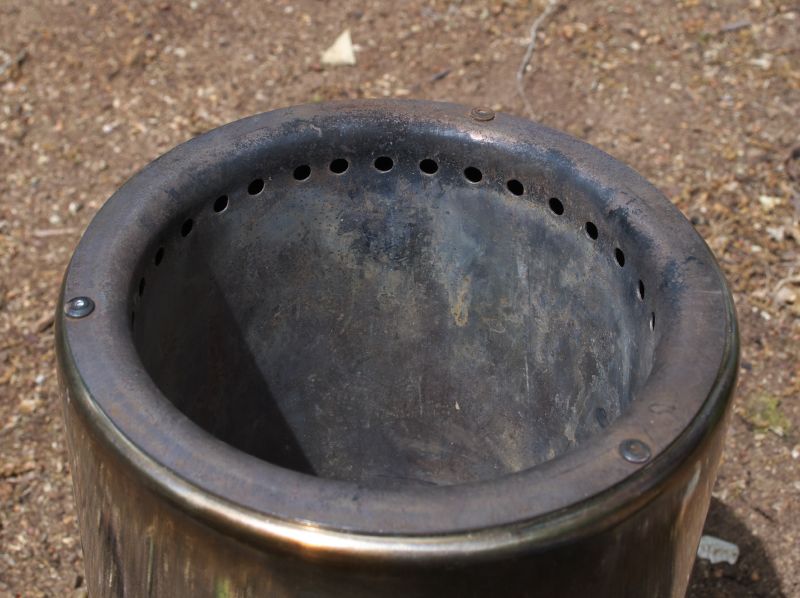 The gas mixes with this additional air and burns. Right above it sits your cooking pot, resting on a simple but effective pot stand:
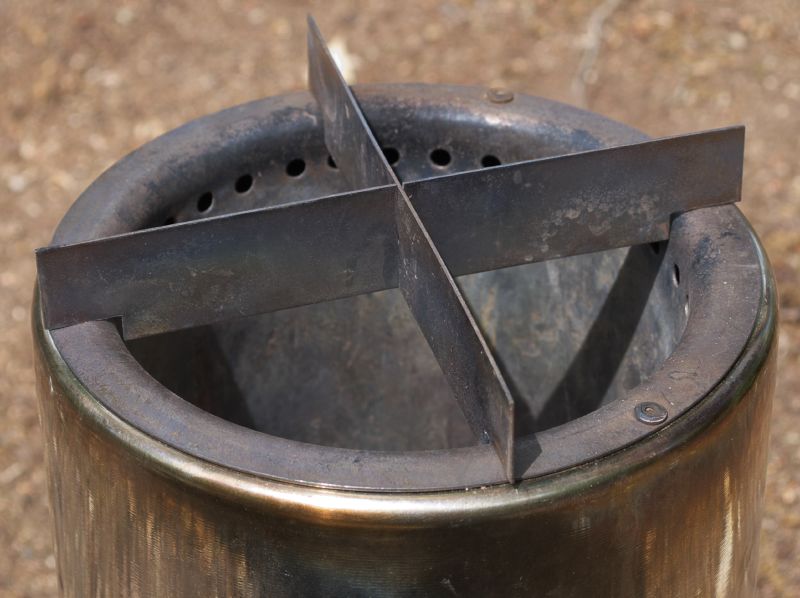 The air is drawn in through holes around the the outside of the base of the stove, which encloses a small fan. In the picture below you can see the two power sockets for the fan (high and low speed), and the air inlet holes:
 The battery pack contains two AA rechargeable batteries (I reckon my 3200mAh batteries will run it for over 15 hours), and you plug it into the high or low speed socket depending on how much heat you want out of the stove: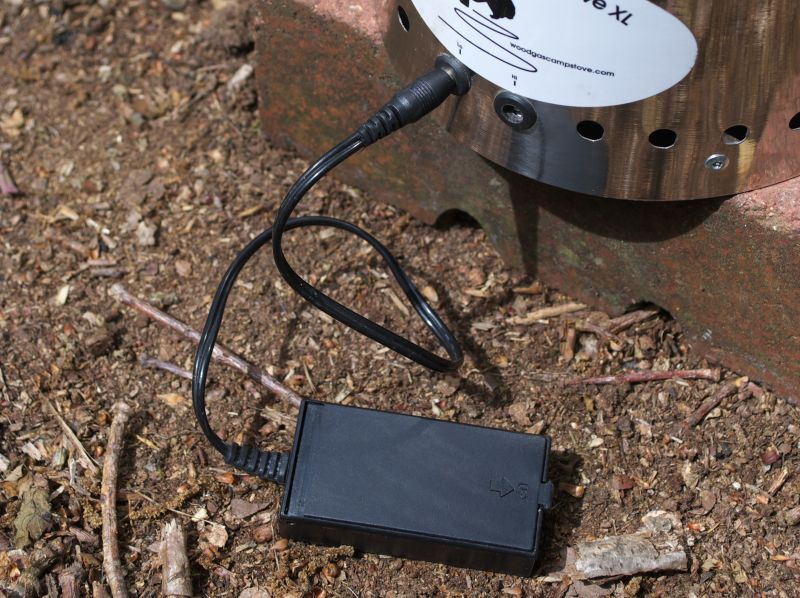
Mike
Click here to read the rest of this post.
Subscribe to:
Posts (Atom)


