Tuesday, 11 May 2010

The Recycled House

A couple of our friends, John and Helen, have taken on a huge project for 2010. In their own words:

The "recycled house" is a renovation project we started in January 2010, taking a 1960's detached house - an ex-Police house in East Sussex - as our starting point. The house has a good footprint, a reasonably large garden and potential for a garden studio. The objective of the project is to create a sustainable contemporary house, with as much re-use, recycling and freecycling of materials as possible, using local contractors and suppliers, no skips and as little as possible going to landfill. In part our inspiration for this project is the fact that there is a huge amount of existing housing in the UK which is unaffected by government targets for building more efficient new homes, and we wanted to prove that it is possible to create efficient homes from old housing stock.
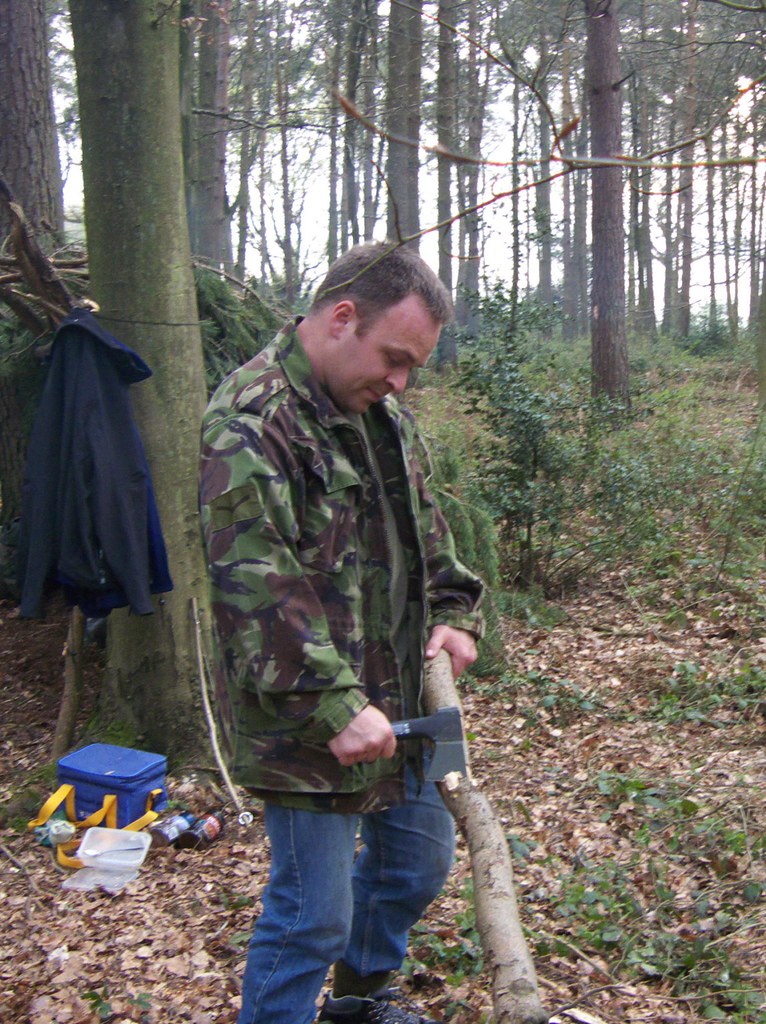
Here's a couple of pictures from their website, of the solar PV installed, and me chainsawing some trees in the garden - the wood will of course be used to heat their home!Make sure to visit their website to find out more: www.therecycledhouse.info

Mike

Click here to read the rest of this post.

Saturday, 8 May 2010

Catching up...

It's been a bit hectic the past couple of weeks, as work's been busy and we've had family visiting, so I've got a bit behind on posting photos up here. So, here's a round-up of some odds and ends.

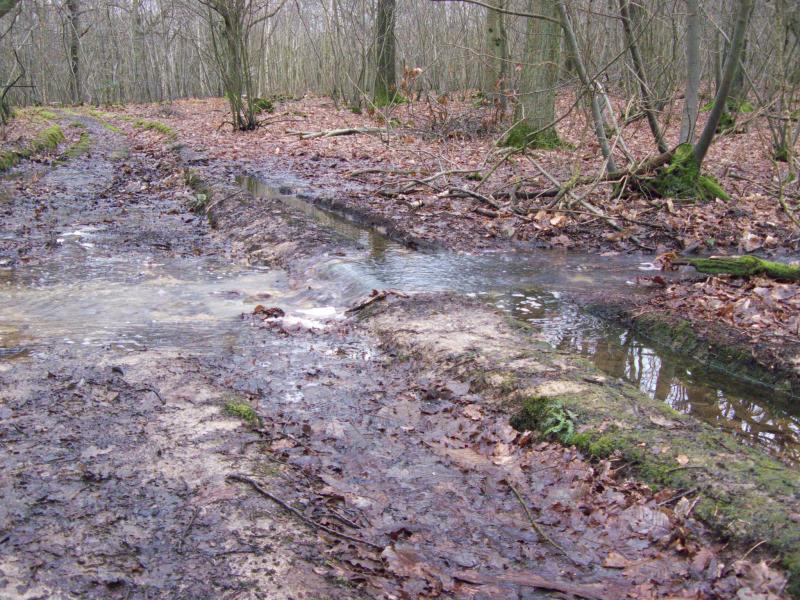
A few weeks ago we found the culvert in the wood had got blocked again, as heavy rain had washed leaves and twigs into it:
This has happened before, but this time Tracy videoed me unblocking it, so here you go:

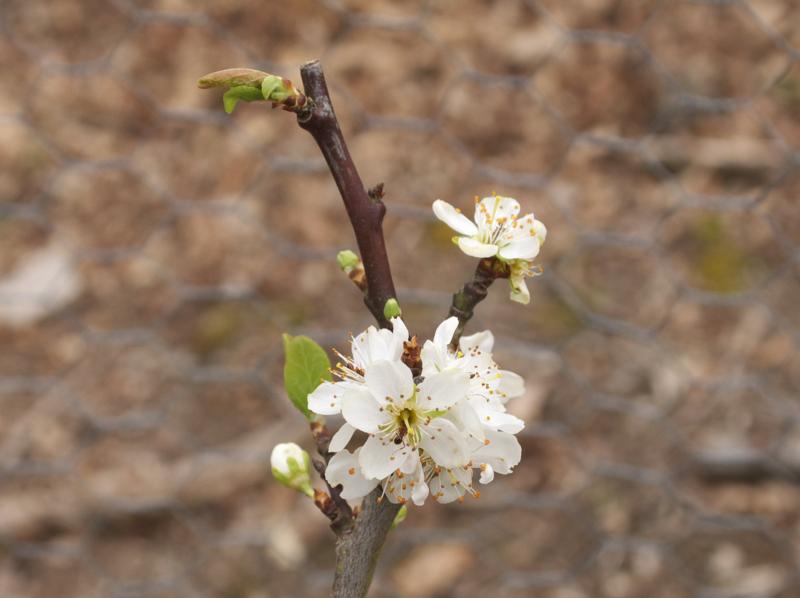
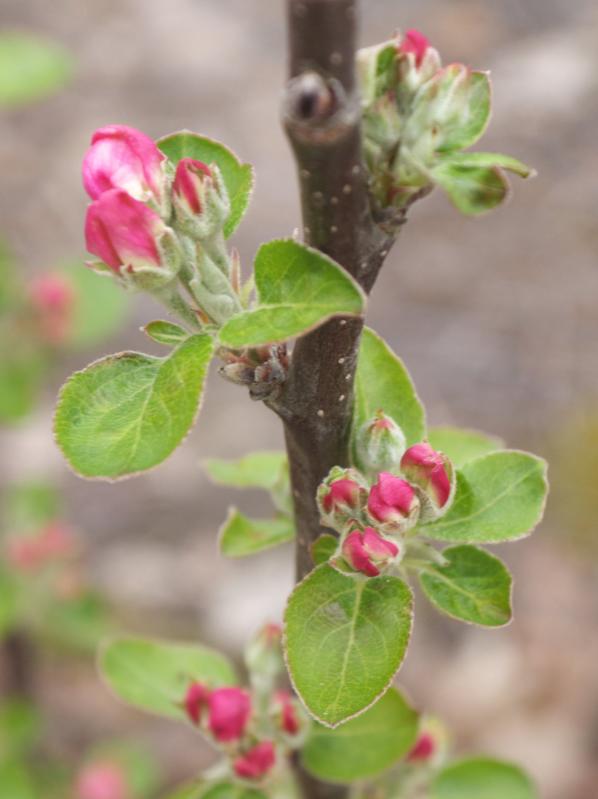
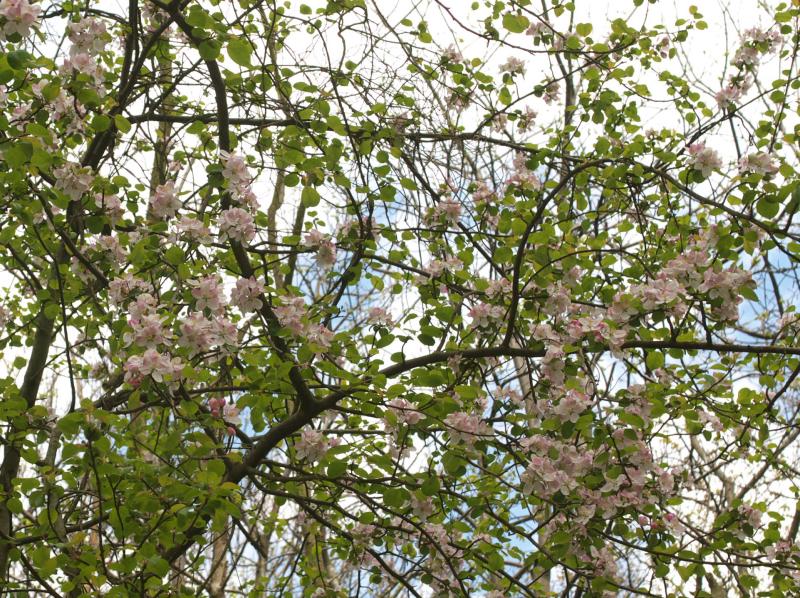
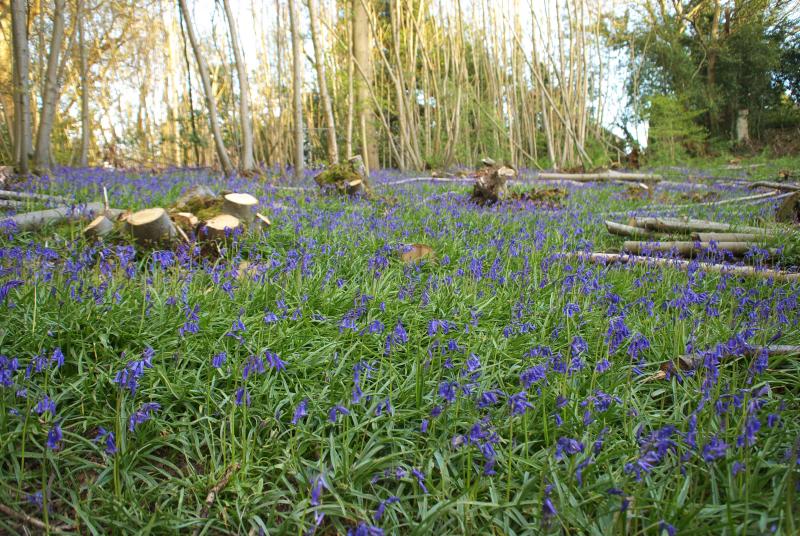
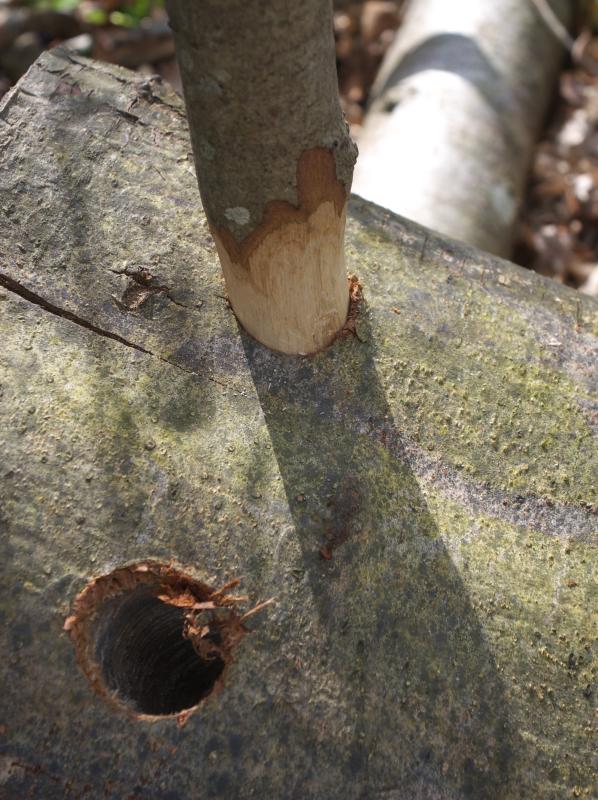
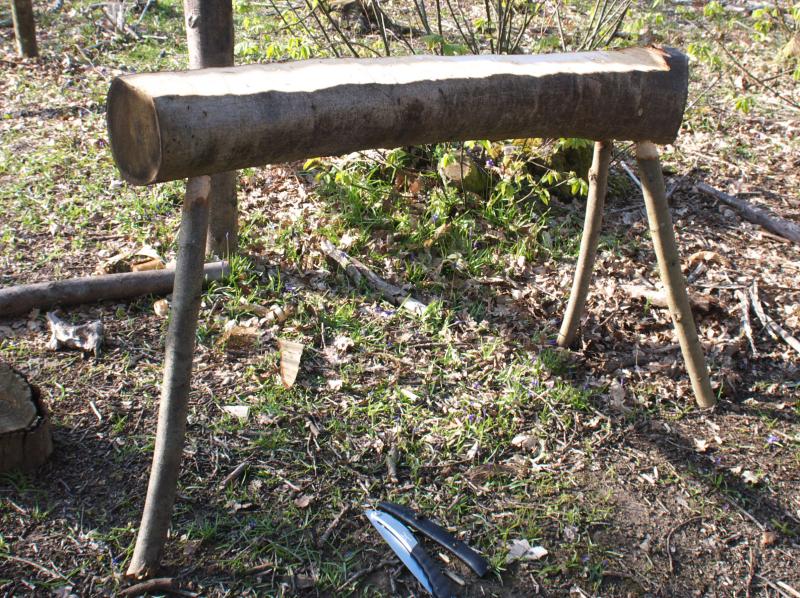
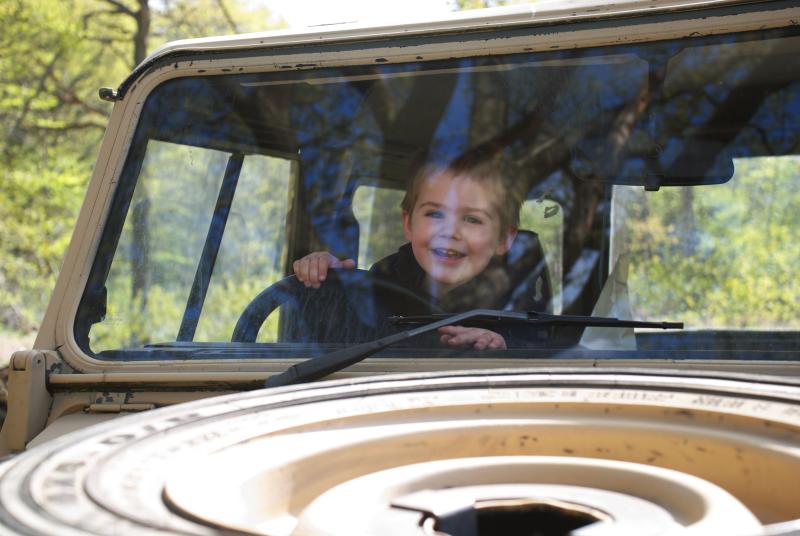
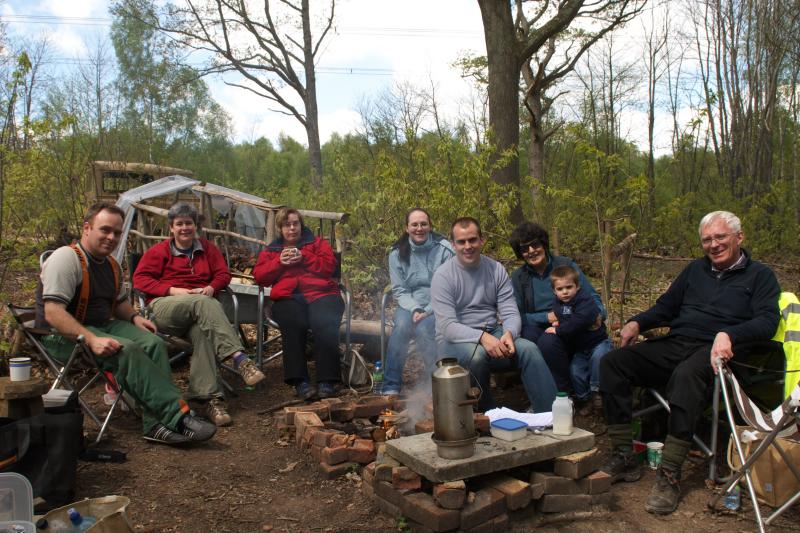
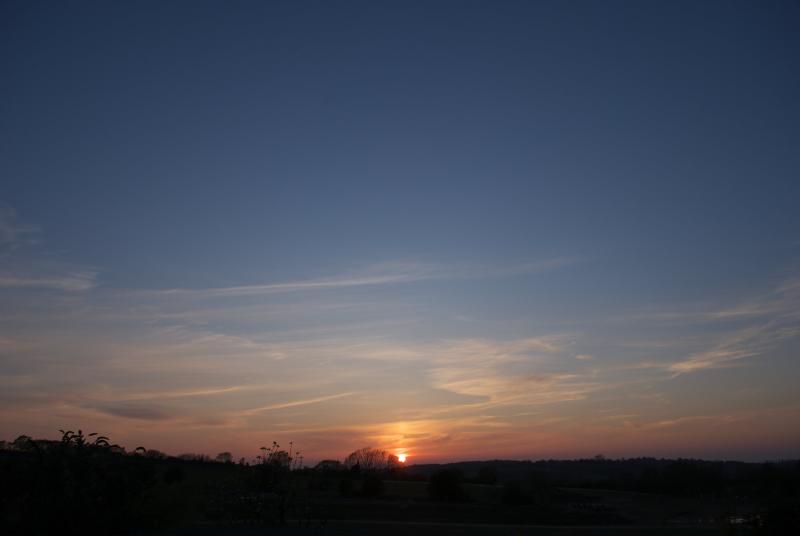
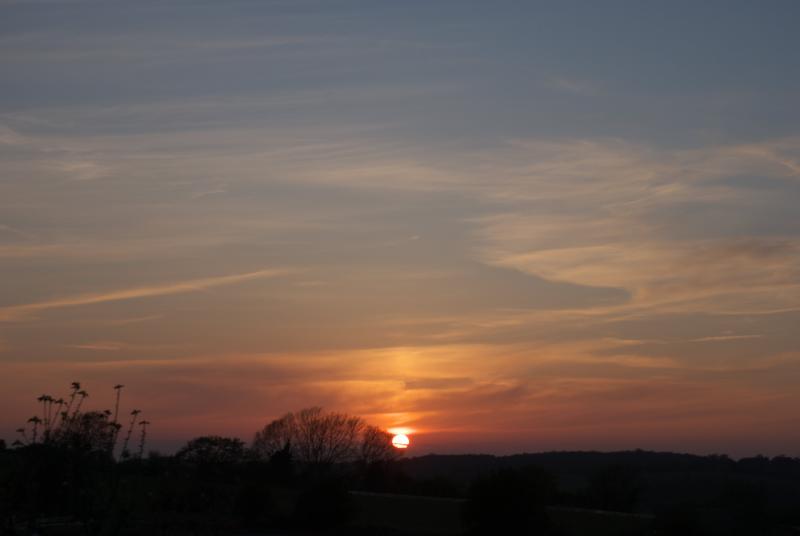
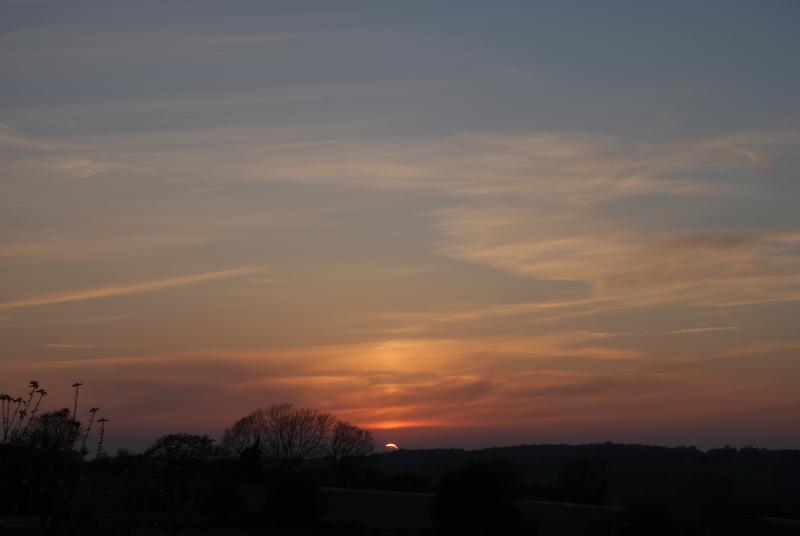
With all the rain and some sunshine as well, the fruit and nut trees we planted in November have been doing well, with many of them now showing blossom: Our crab apple tree has also come into bloom again, starting with dark pink buds that opened out into pale pink flowers: Down at ground level the bluebells are in full bloom in the parts of the wood with more sunlight, like this patch a neighbour owns: the flowers are slower to come out in the shadier parts of the wood. Near our camp, we now have several Violets growing - this is the first year they've come up since we coppiced there, and it's great to see them. They've been in the wayleave all along, so I guess the seeds have come through from there. My dad brought his "scotch eyed auger" with him to try putting some legs on our "shave log". It's a very neat tool, and you just find a suitable stick to use as a handle: It bites into the wood very effectively: boring out nice neat holes: Then we just had to cut some legs to fit: and we had it up on legs: OK, I know the legs aren't very straight, but I can always replace them with better ones later if it turns out to be a problem. I did a bit of work levelling off the the top of the log with a draw knife, and found it was at a good height for working. Meanwhile my nephew Joshua had a great time playing in the land rover: Here's the obligatory group photo of everyone - quite a crowd! and finally, some sunset pics from the garden of the house they rented while they were down here: That's all for now. Mike

Click here to read the rest of this post.

Monday, 26 April 2010

Survival weekend with Landrock Survival Training

Last weekend we spent two days and one night in the woods - without a tent! We were on a "Wilderness Weekend" with Landrock Survival Training, learning the basics of how to survive if you become stranded somewhere. Our instructors were John Hayward and Antony Quinn, both of whom had military training. They were both excellent teachers, demonstrating, explaining and assisting without ever being condescending. Below I'll explain what we got up to, but if you want more detail then you need to go on the course! :-)

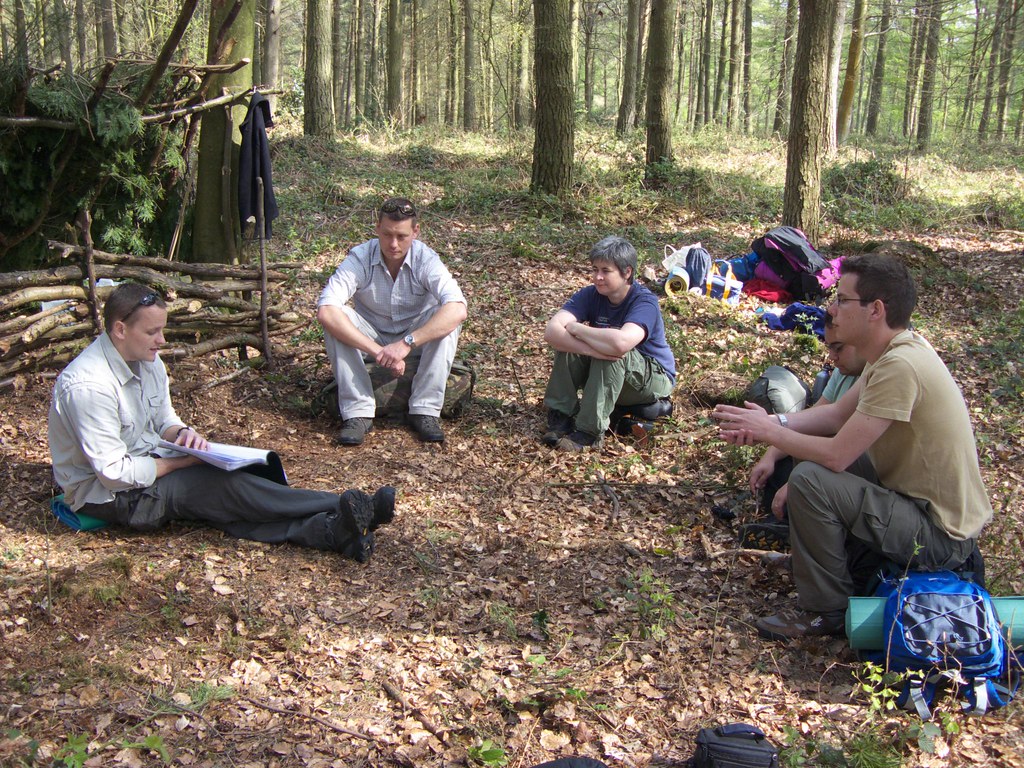
When we arrived, along with Joel and Chris who were also on the course, there were already some example shelters set up, and we sat down for an initial briefing.
The key acronym we had to remember was PLAN:

  • Protection (i.e. shelter and fire to keep dry and warm)
  • Location (how to make sure a rescuer can find you)
  • Acquisition (of water and food, in that order)
  • Navigation (with and without a compass)
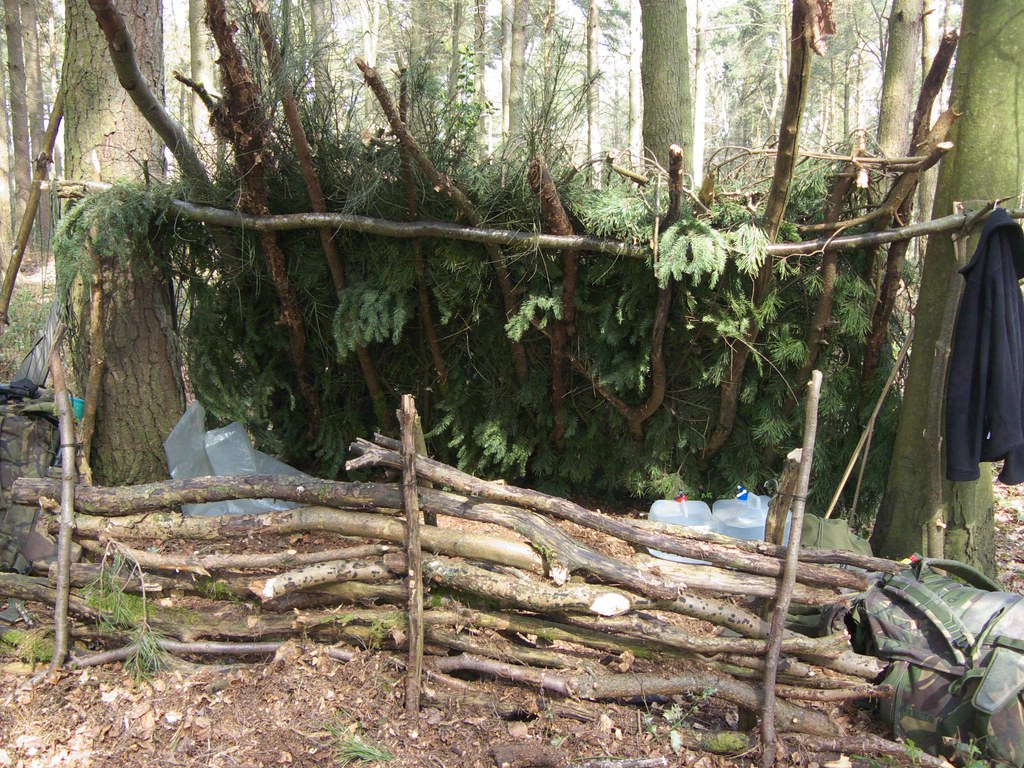
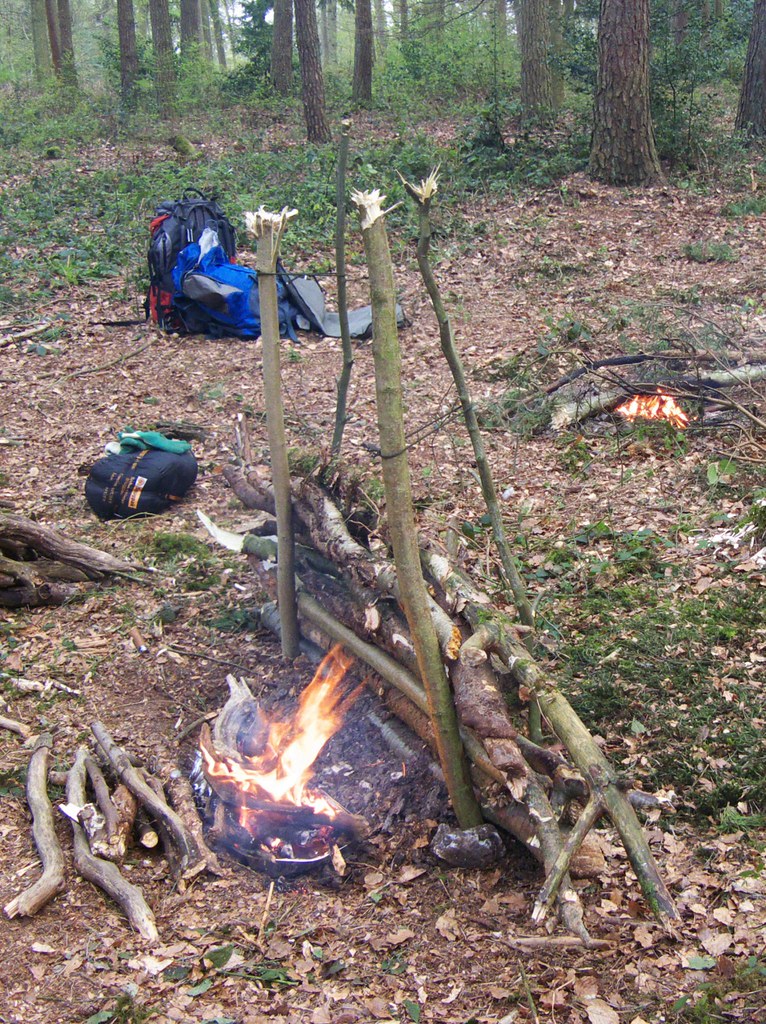
To start with we looked at the example shelters, such as this lean-to shelter. The wooden screen in front of it reflects heat from a small fire back into the shelter.
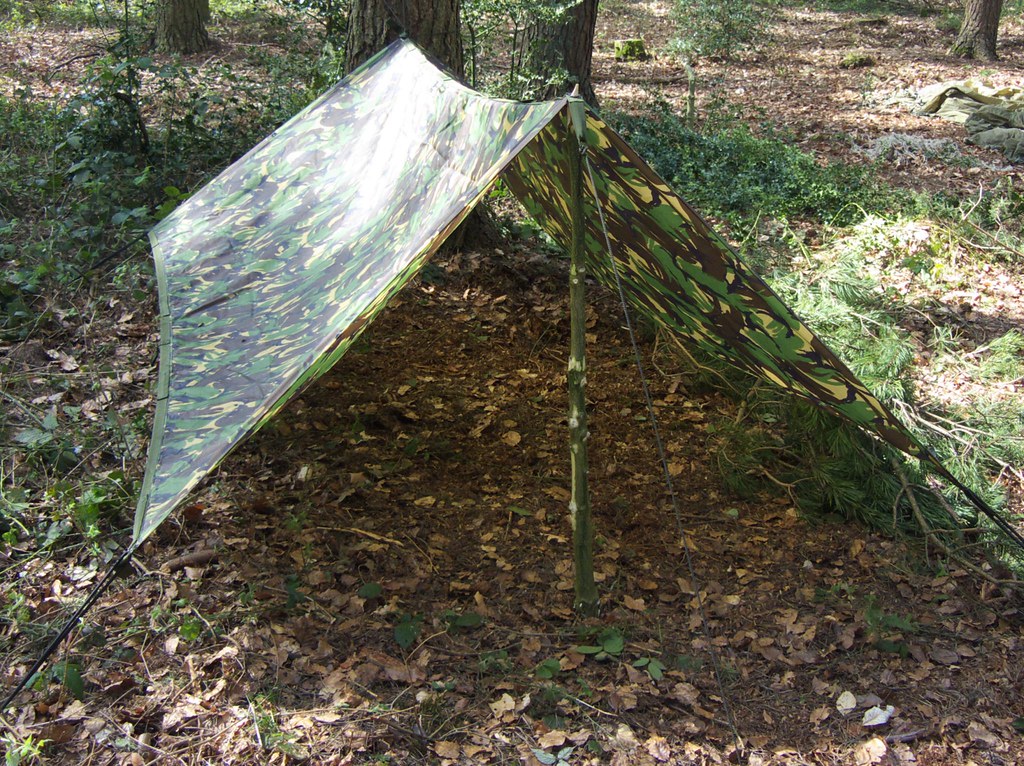
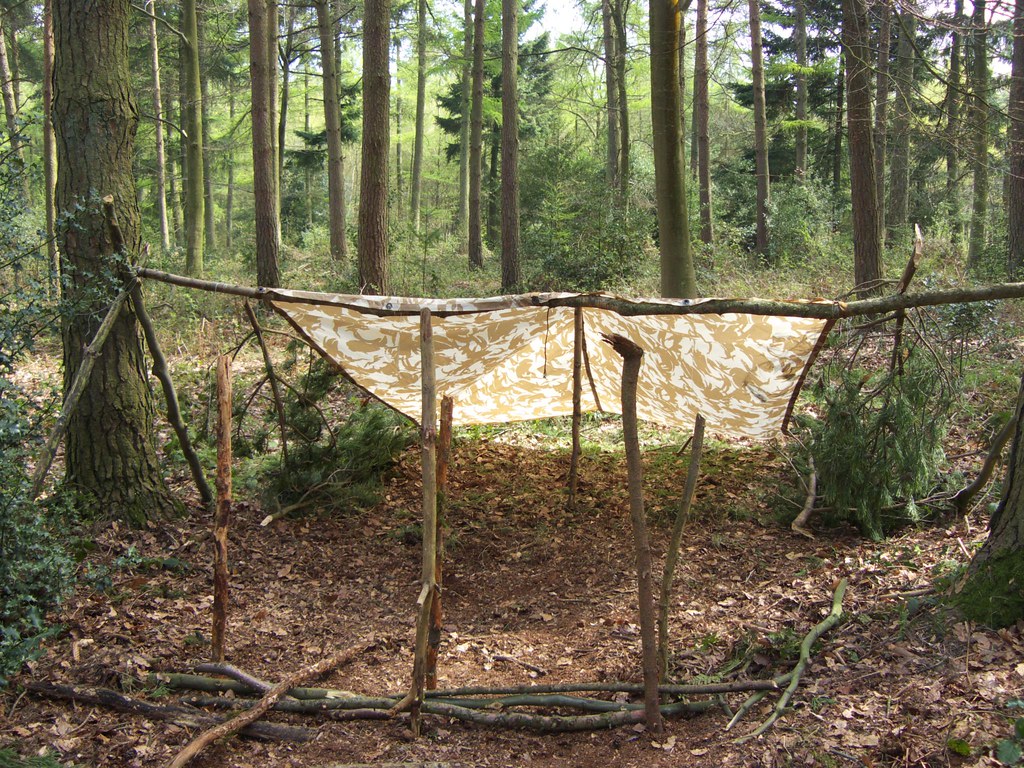
Here's a couple of ways of putting up a basha (a kind of tarpaulin), either low to the ground:
Or higher up, with brash to keep wind out at the edges:
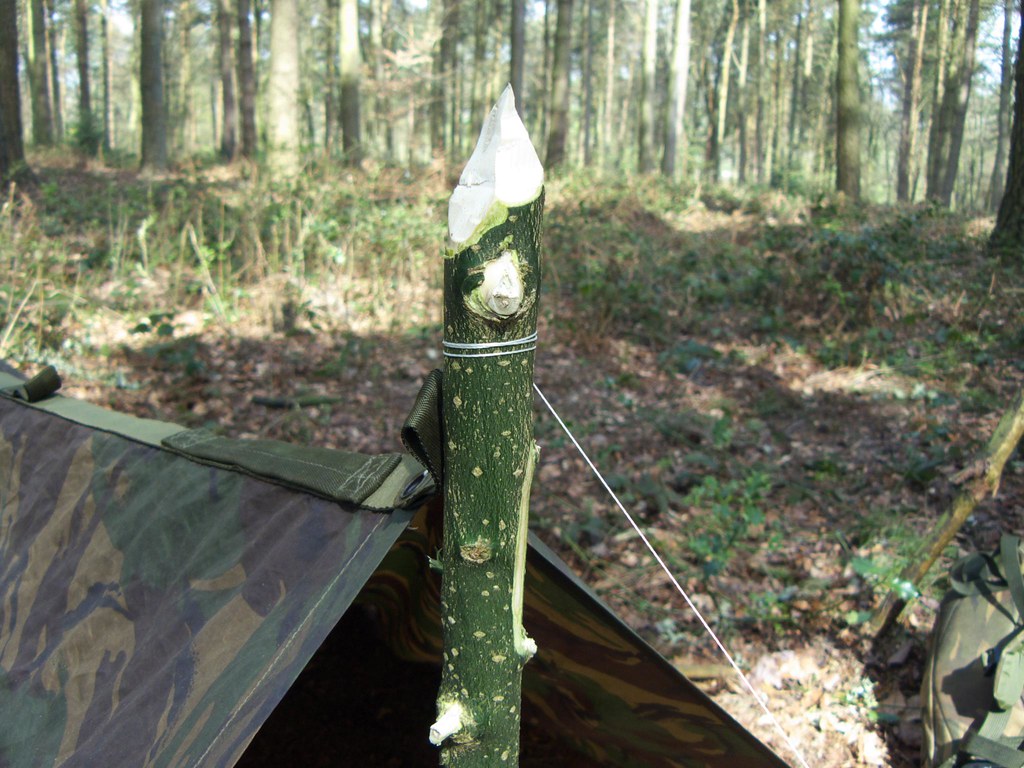
the poles for the basha can easily be made from wood, and the guy ropes can be made from the strands inside a piece of paracord:
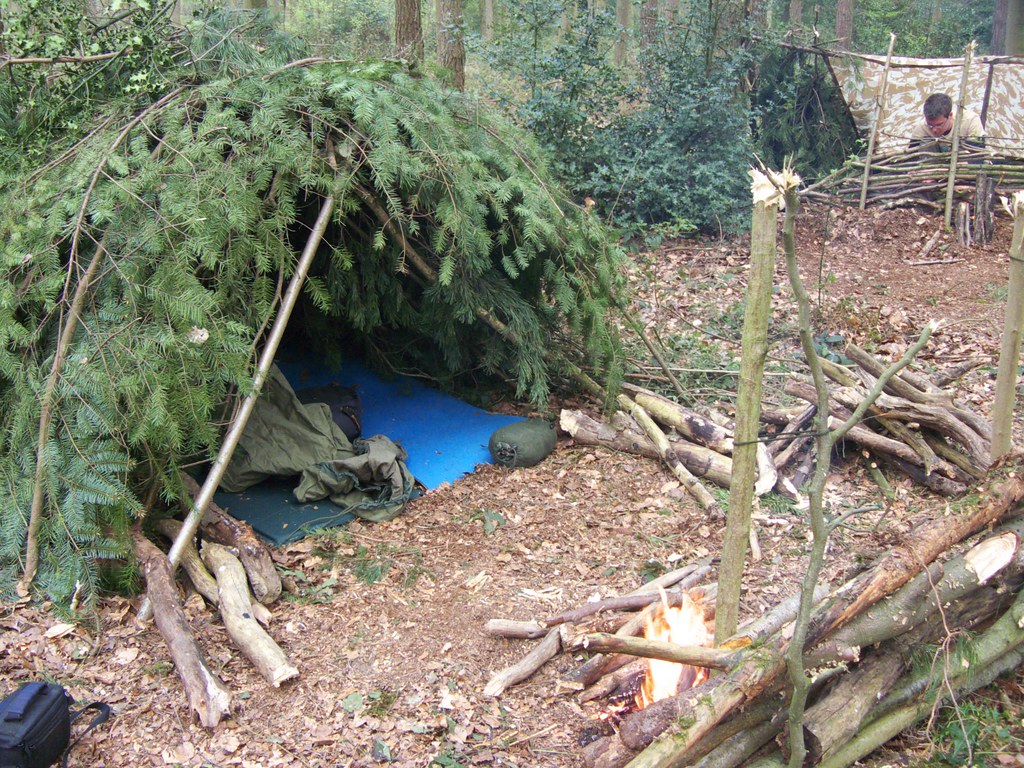
Then there's an A-frame shelter, which is smaller but well-insulated:
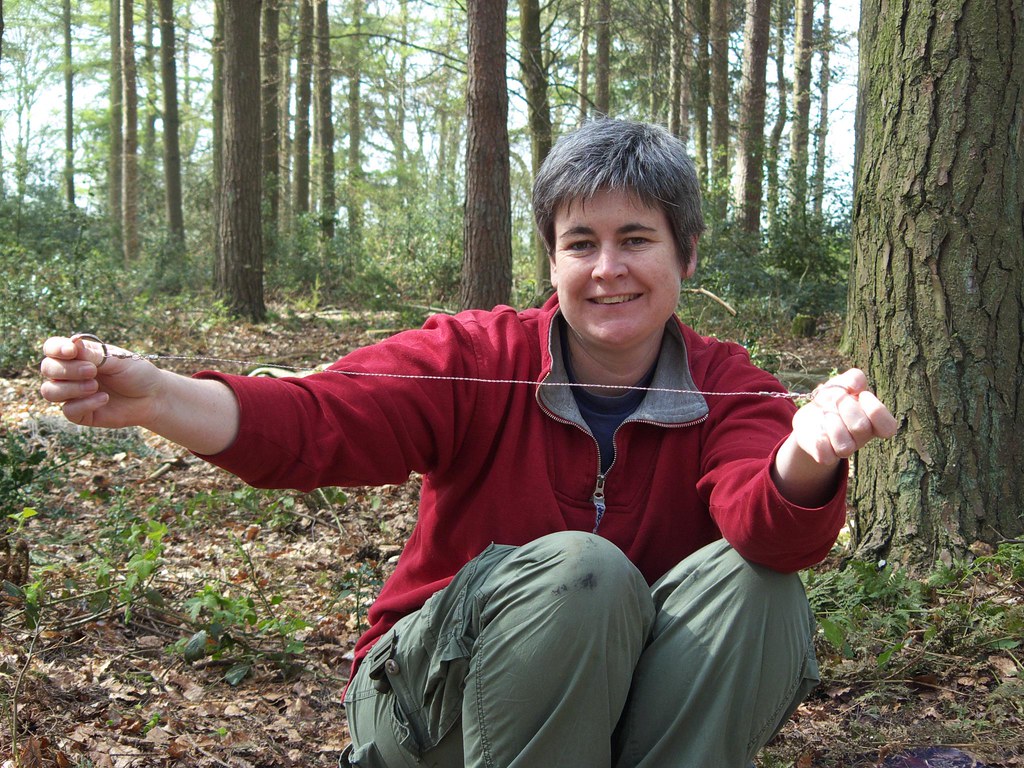
This is the one we decided to build, but the first job was to set up our wire saw. You can use this just by holding the two ends:
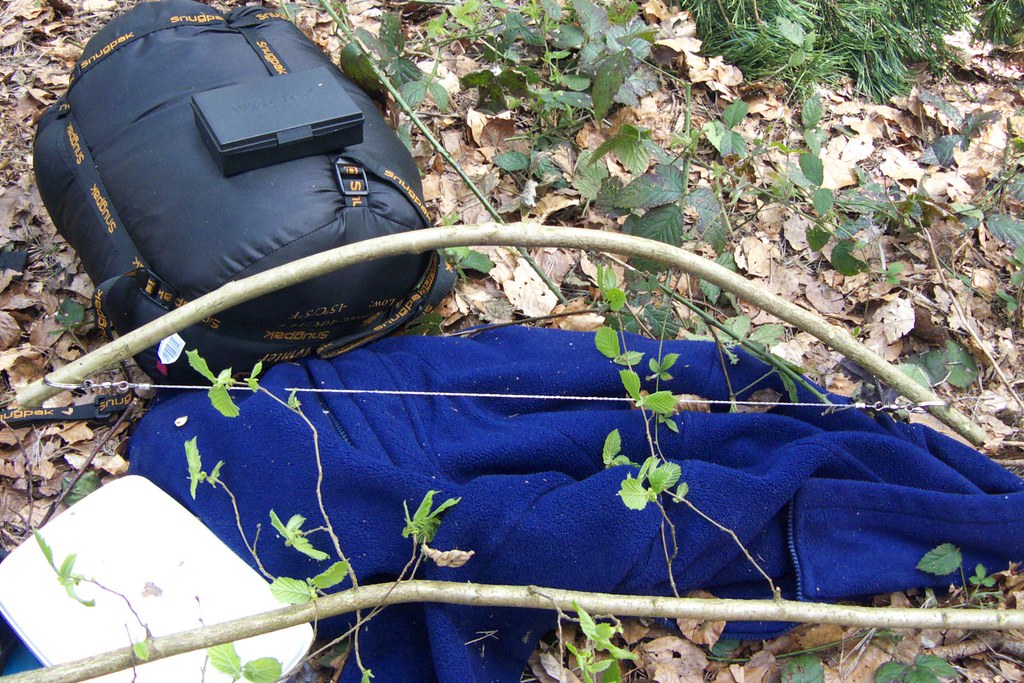
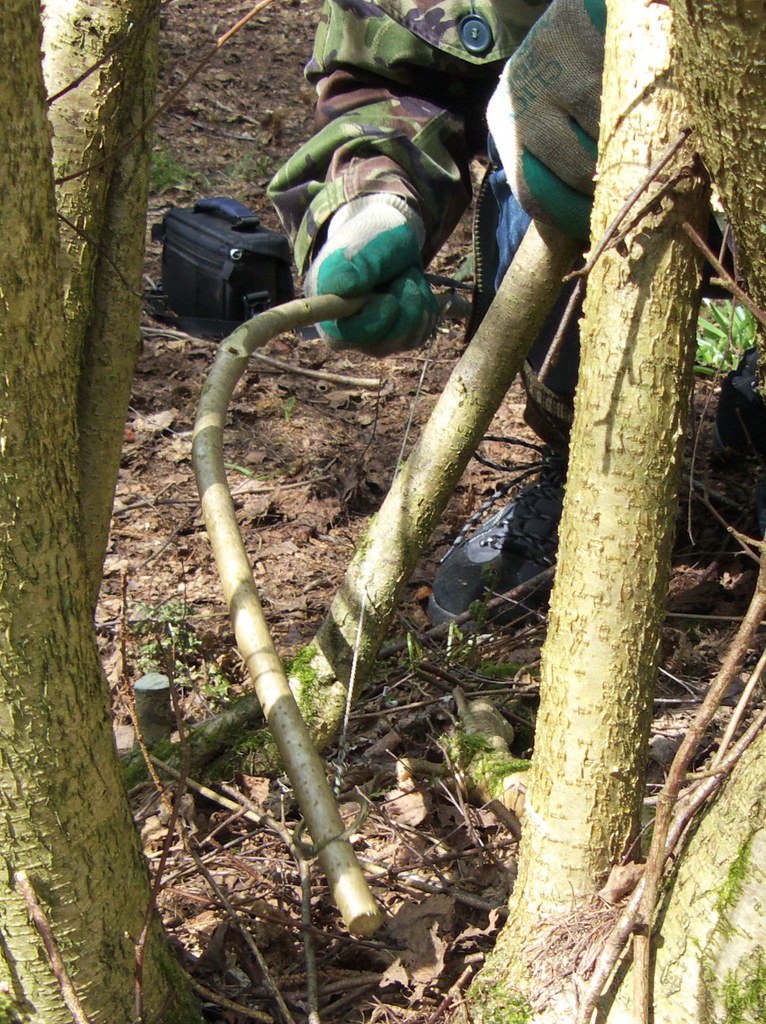
But it works better if you put two notches in a bent stick:
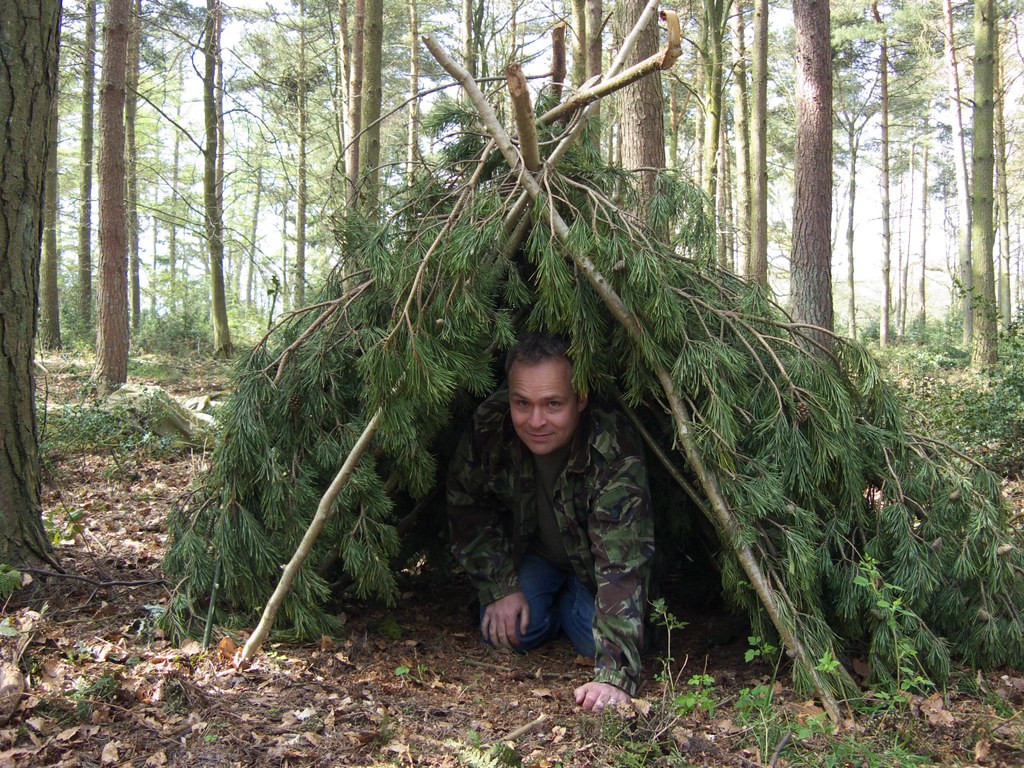
Anyway, we soon had some poles to make our A-frame:
using a bit of paracord to secure them:
and then we collected and cut lots of branches to make the roof:
Here it is inside - although you can see a bit of light through, it did actually keep the rain out.
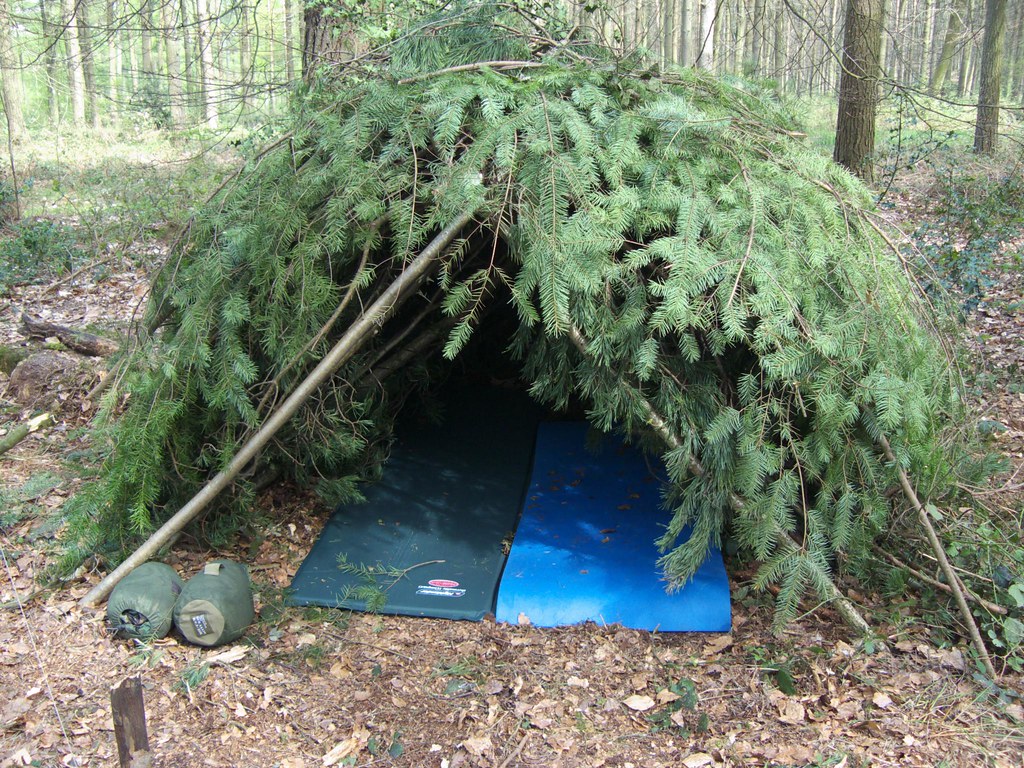
Joel and Chris went down a different but equally effective route:
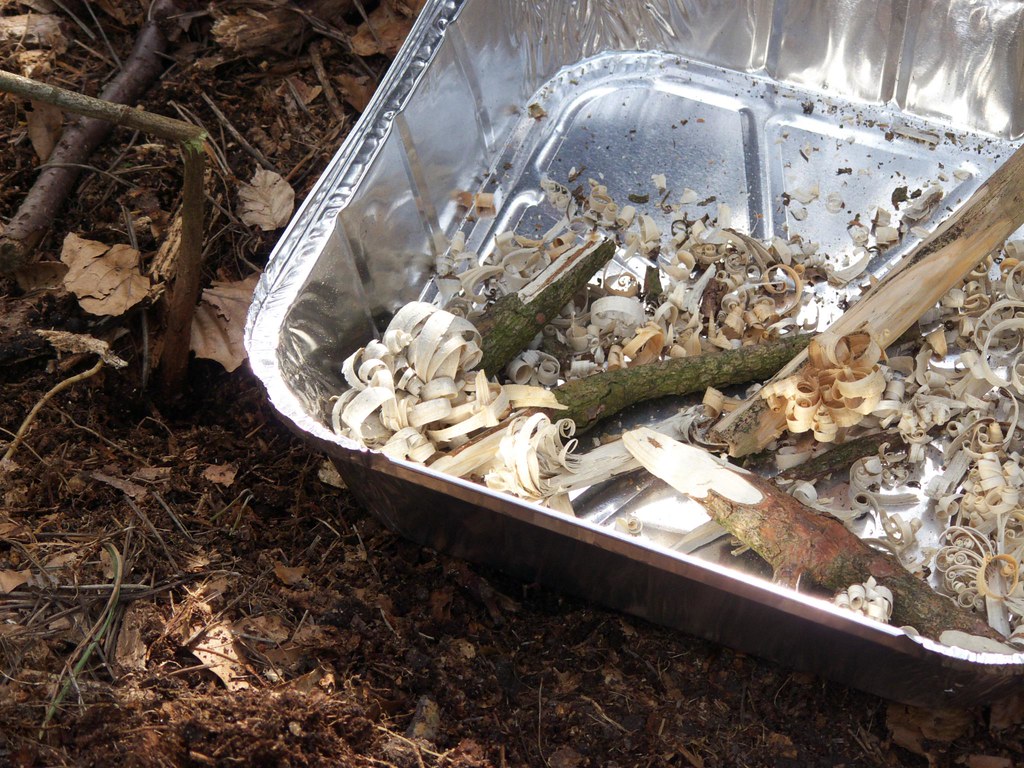
With the shelters up, the next step was fire, and we saw how to light a fire from sparks using different tinder materials, such as these "feather sticks and birch bark:
Here's a video of John demonstrating:

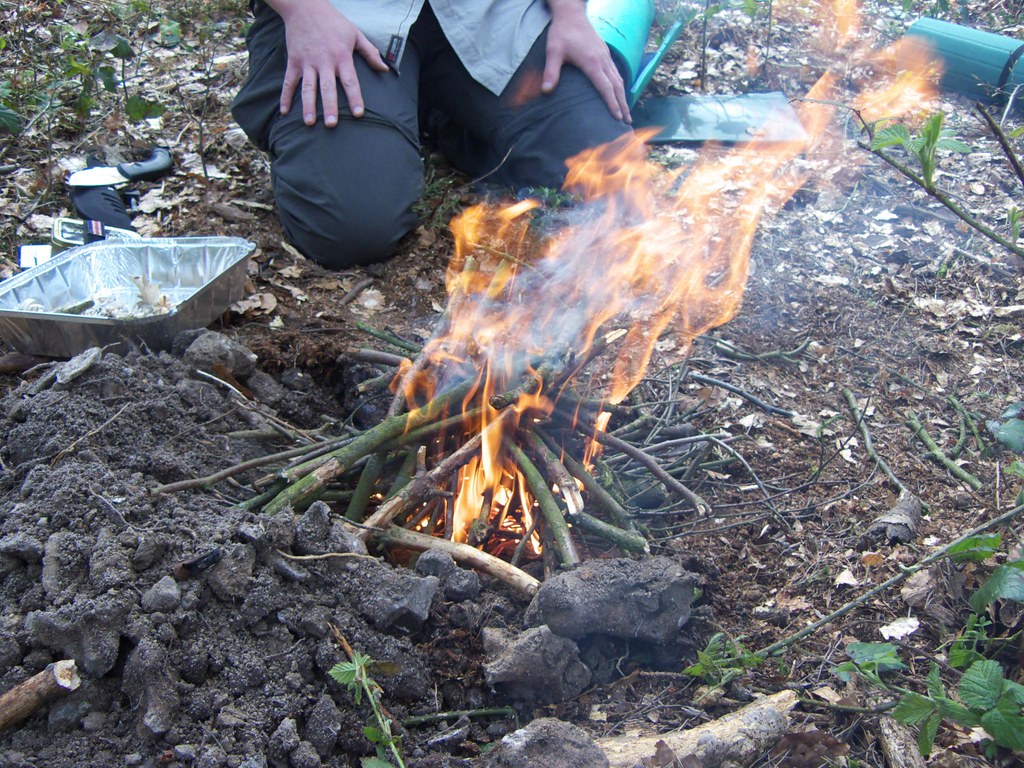
after which the fire was quickly burning:
It wasn't long before we all had chopped some dead wood and got small fires burning by our screens, ready to use for cooking and later on to keep us warm:
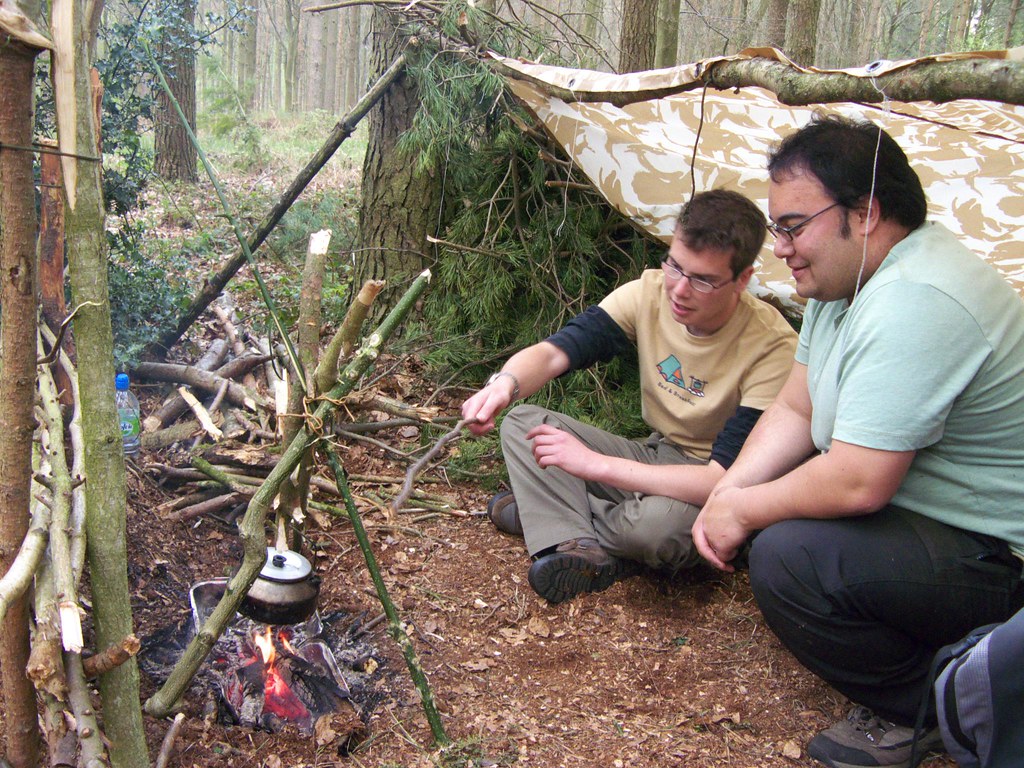
Chris and Joel set up a little tripod for cooking:
and as the night closed in we had a nice atmospheric glow from the fires:
We walked around the woods in the dark looking for wildlife (especially the edible variety!), and chatting about different survival scenarios, then settled in for a pretty comfortable and warm sleep, to be woken up by the dawn chorus a few hours later...

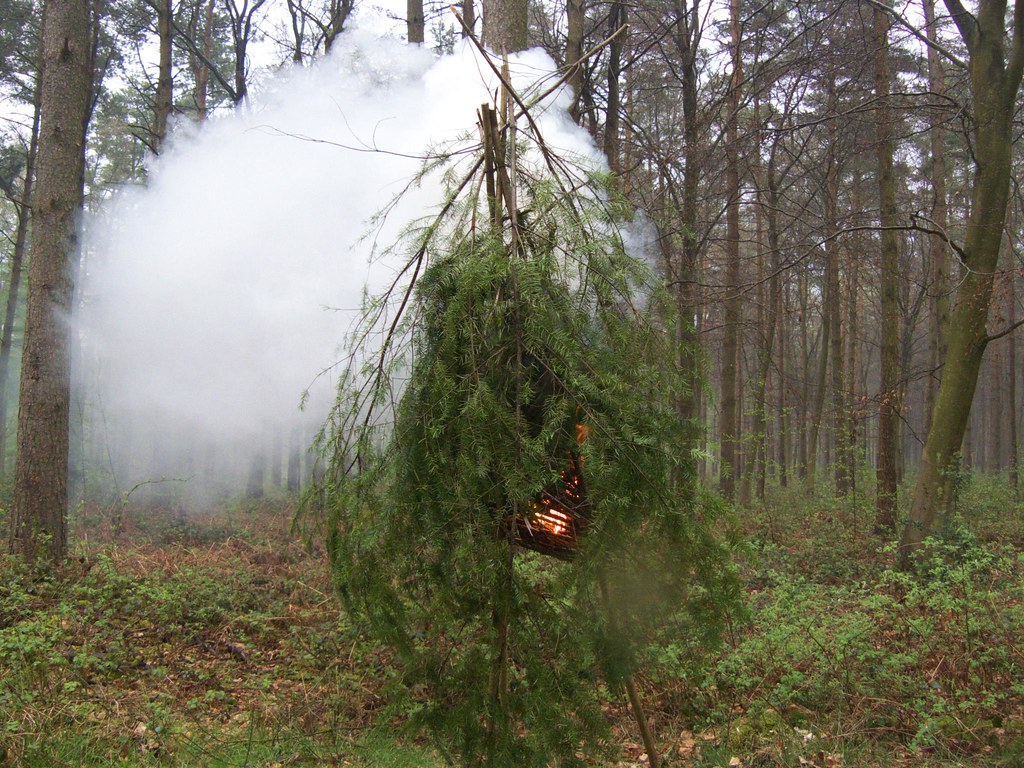
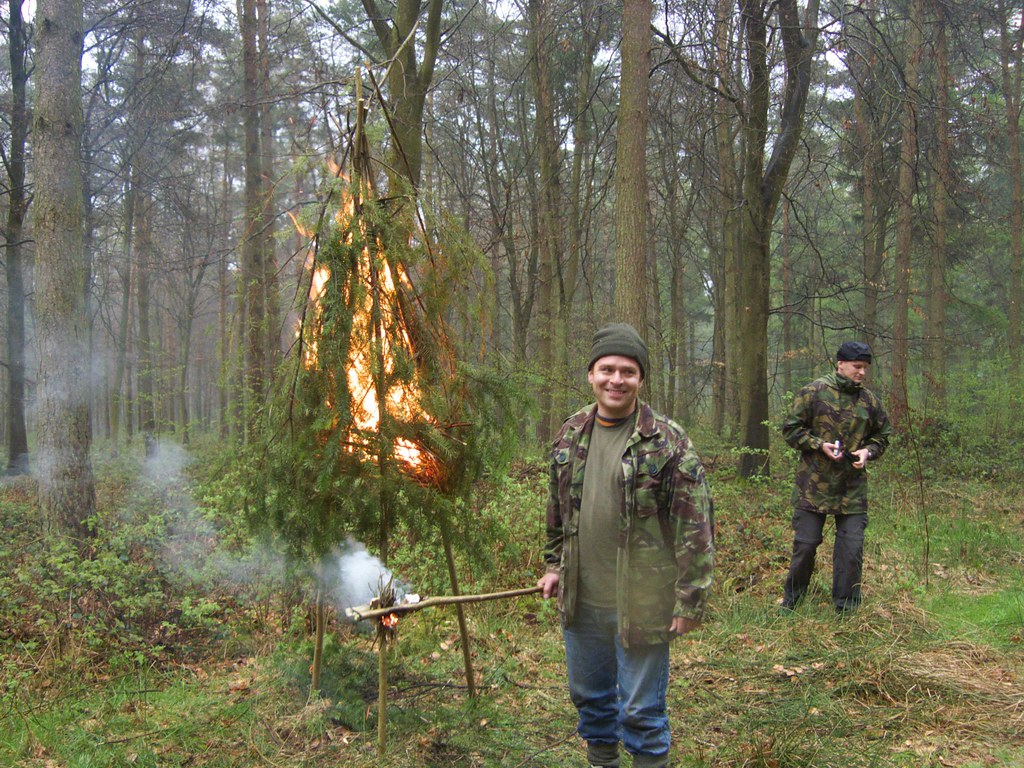
While we were having breakfast, John suddenly announced that he could hear a "spotter plane" - this was our prompt to go and light the signal fire we'd prepared the day before as fast as possible:
I should have put more greenery on top, to keep the smoke going longer, but you only learn by practice...

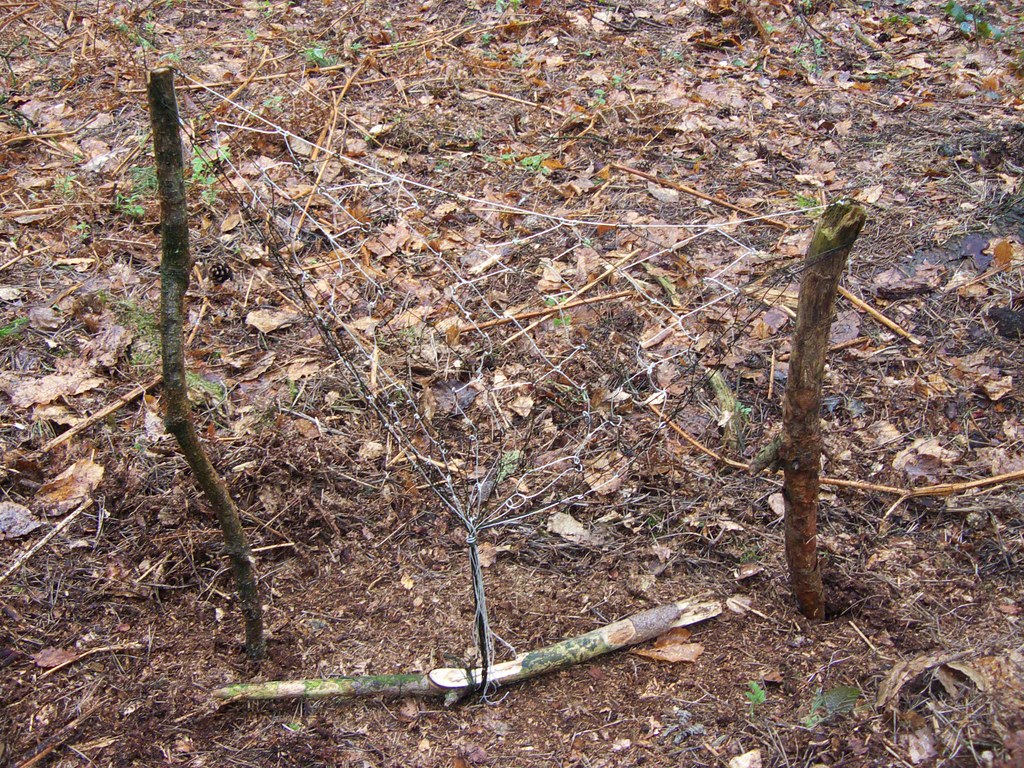
Then it was on to acquisition. We saw various ways of fishing, though it was pointed out that these are not legal as a fish could be stuck on a hook for many hours until you come to check it, so they are only to be used in real survival situations. If no hooks are available there was also the option to make a net (again from the ever-useful inner threads from some paracord):
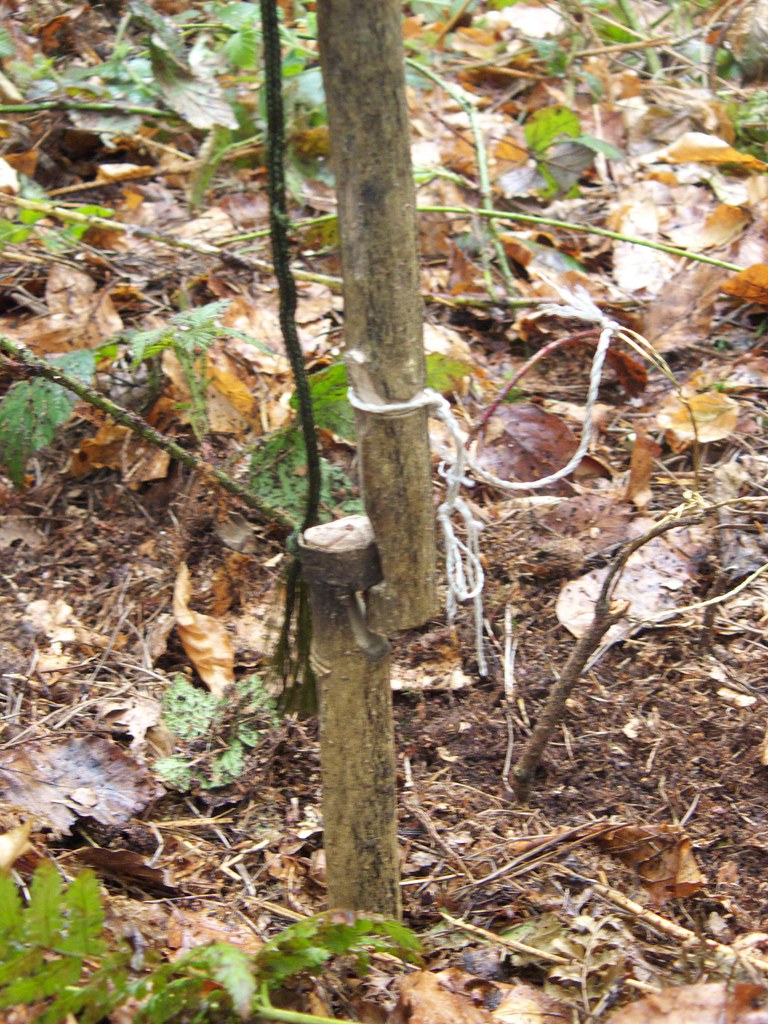
We also how to set up saw several snares, but just for demonstration purposes, we didn't leave them out to catch anything. Most of them use a hook mechanism like this to hold them in place:
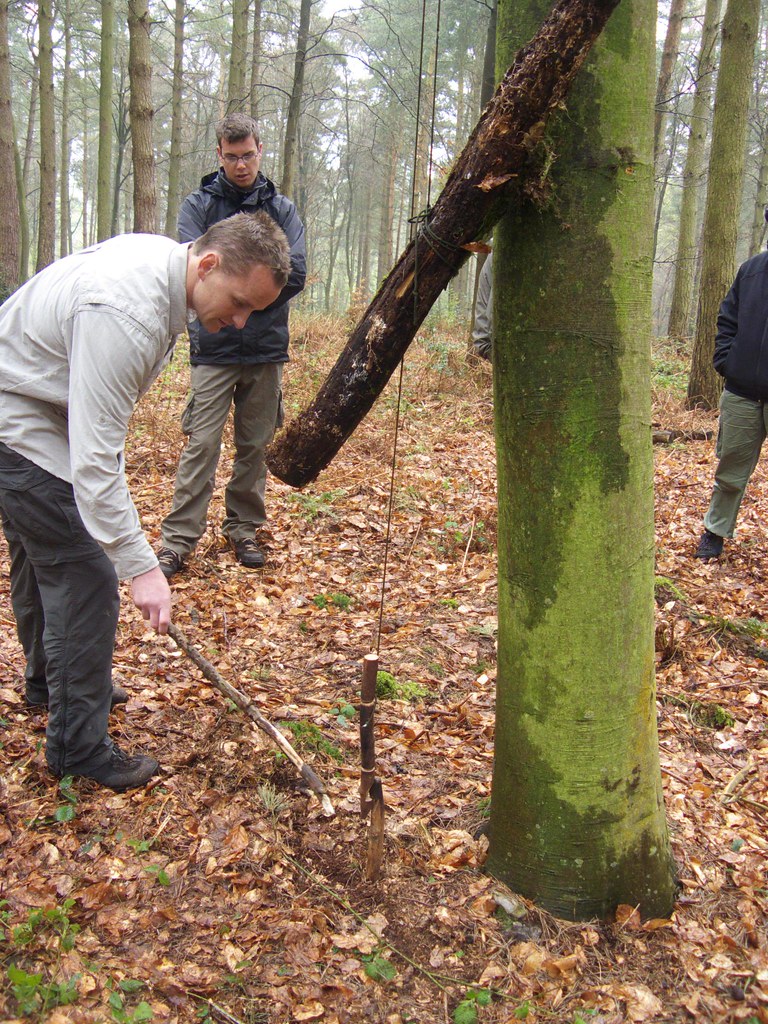
and some used a weight to fall on the catch at the same time as lifting it up:
Here's a video of one in operation, but remember this is just a demo - if it was being done for real we'd have used a thicker and higher branch - the catch needs to be lifted high enough off the ground that a fox doesn't get it:

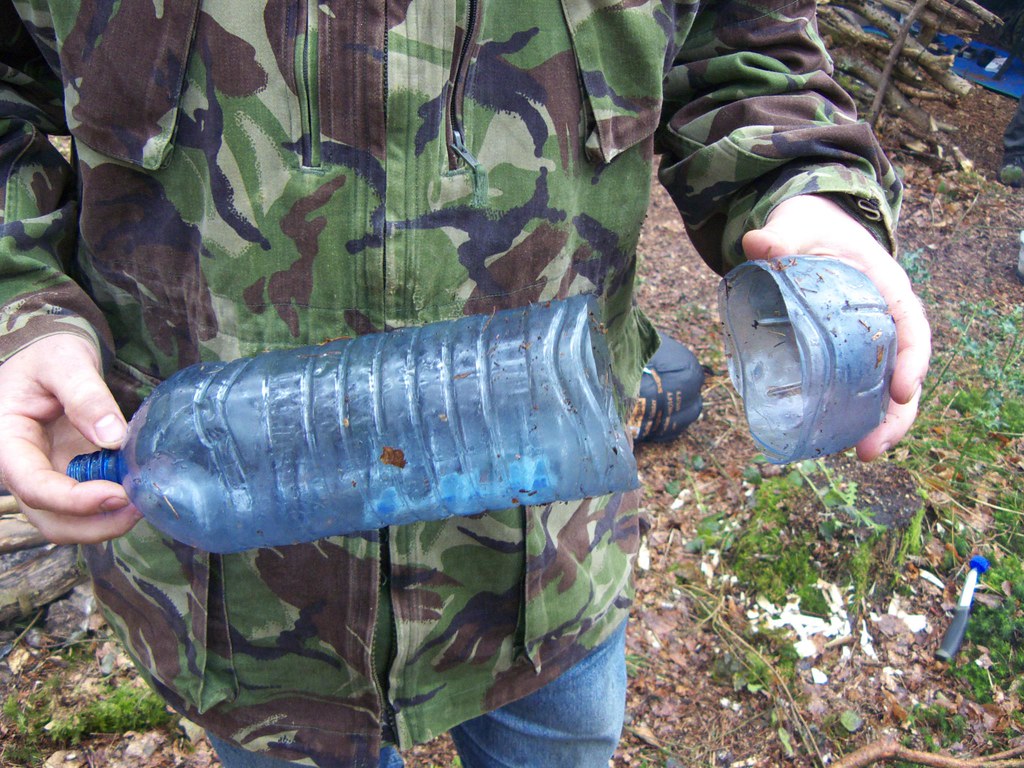
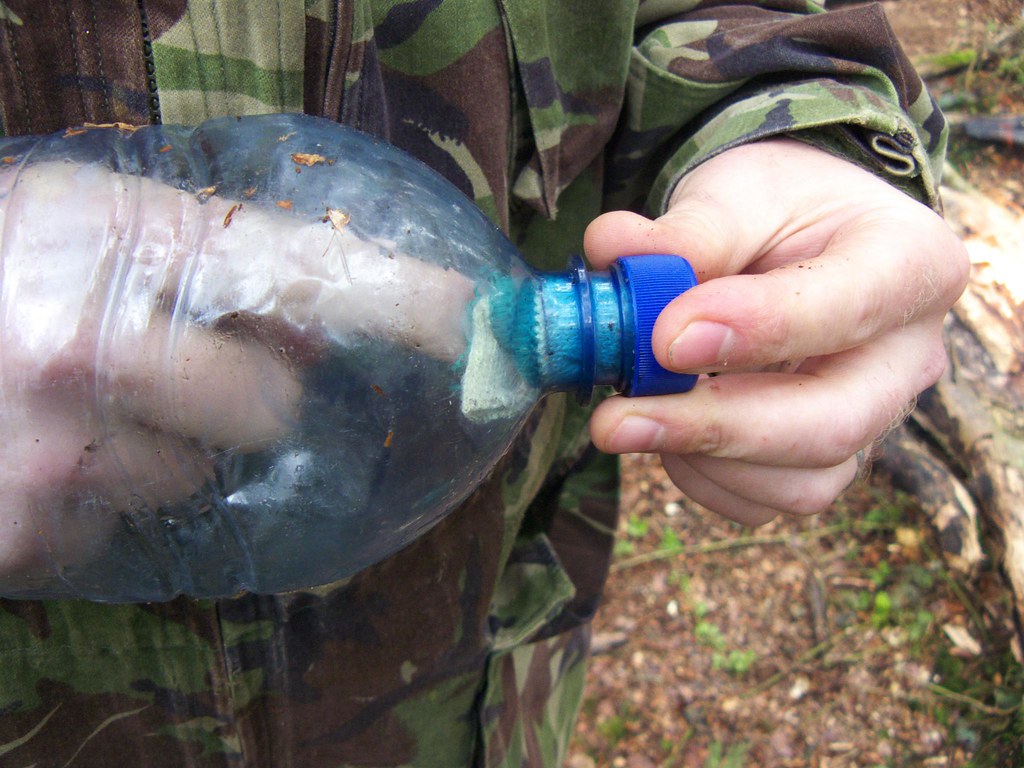
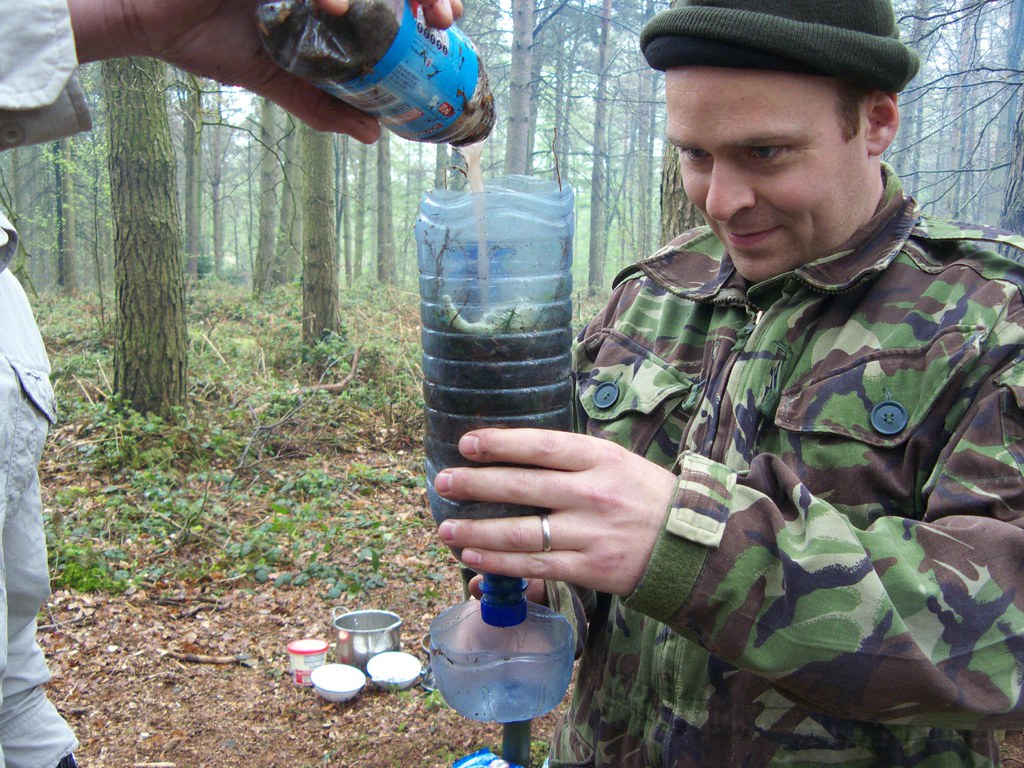
The we looked at water filtering using materials like ash, charcoal, leaves and moss. We used a spare water bottle:
In went some muddy water:
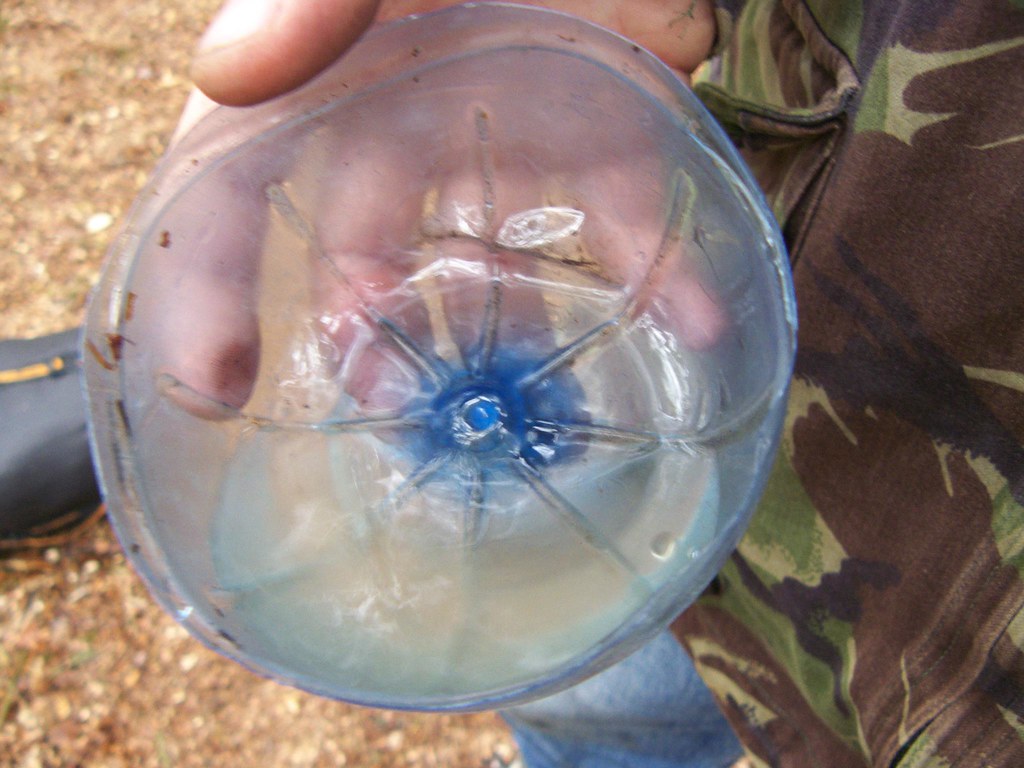
and it really did come out cleaner than it went in, though several passes would be required to get it properly clear:
The last activity was navigation, where we learned how to accurately judge distances by pacing, even if you can't go in a straight line, using a compass and also how to precisely find North without a compass, using a stick and a cleared piece of ground!
I'm not going to try and explain it here, you need to see it, but basically it's a bit like a sundial.

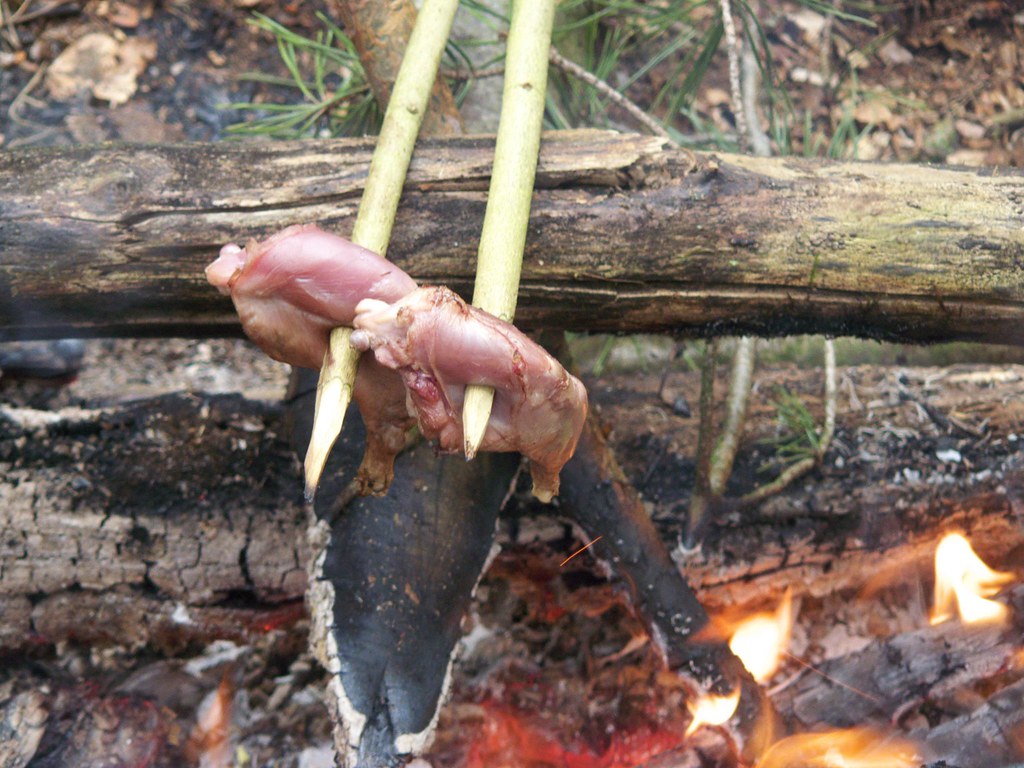
We finished up the weekend seeing how to gut a squirrel (which John had shot for us), but I'll spare you any pictures of that. Instead, here's the finished product roasting over the fire. It was quite tasty but tough, and John told us it would be better to stew it.
Anyway, that's about it. There was a lot more detail of course, but I'm not going to try and put it all down here. We came away with a very nice Mora survival knife and a Web-tex survival kit, so we can carry on practising - I've already got a mini expedition planned in a few weeks time!

So, if you like the sound of it, and I strongly recommend it, contact John and book yourself in!
www.landrock-training.com

Mike

Click here to read the rest of this post.