Showing posts with label isle of eigg. Show all posts

Thursday, 12 August 2010

Visiting the Isle of Eigg (part 3)

OK, so here's the detail on why I was visiting Eigg. At the time, they were an applicant for an Ashden Award, which they went on to win this summer. The award was given for their work in cutting their carbon emissions by almost 50%! This has been done through a combination of renewable energy generation, energy efficiency and behavioural change. The renewable energy generation is the most visually impressive, so that's what most of the pictures are of - I'll talk about the other stuff at the end of this post.

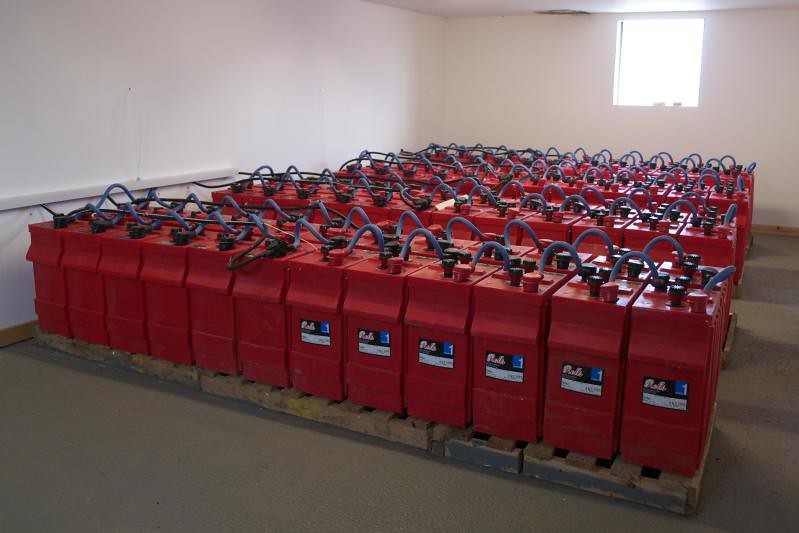
The heart of the system is a small building which has two main rooms, one housing this huge bank of Rolls lead-acid batteries, sufficient to run the entire island for 24 hours without discharging too deeply:


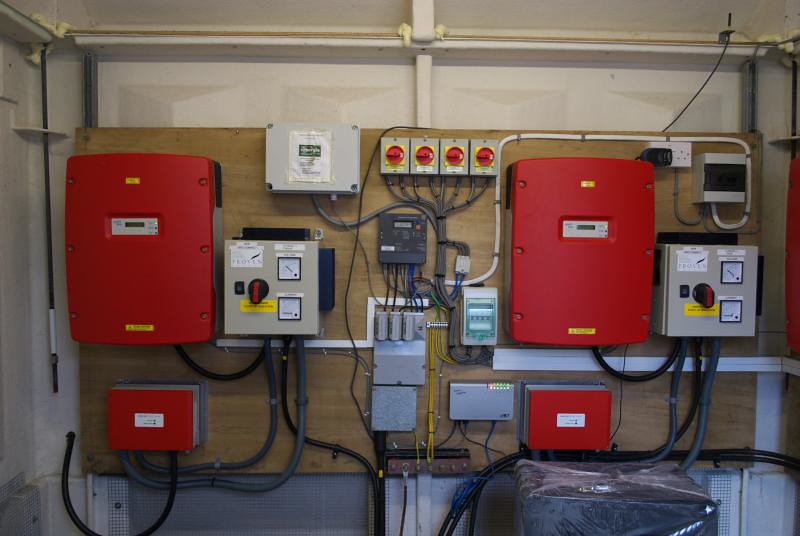
The batteries work to smooth out the changes in supply and demand for electricity over time, thereby reducing the need for backup generation. The connections for these battery banks pass through the wall into the next room, which houses twelve 5kW inverters, four in parallel for each of the three phases used by the grid:

Also in this room is all the control hardware for the system:

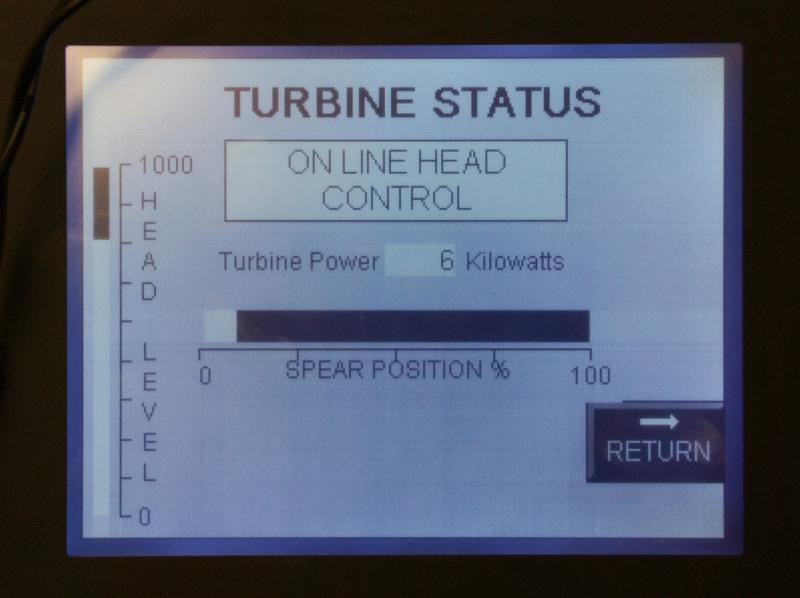
including all kinds of live data from the weir and water turbine:


Just outside the control room is a pair of diesel backup generators, which operate alternately to provide redundancy. A generator will come on to top up the battery bank whenever the charge level drops too low. In practice they don't get use much - over 90% of Eigg's electricity comes from the renewable energy sources, and this will increase when they add more solar PV.

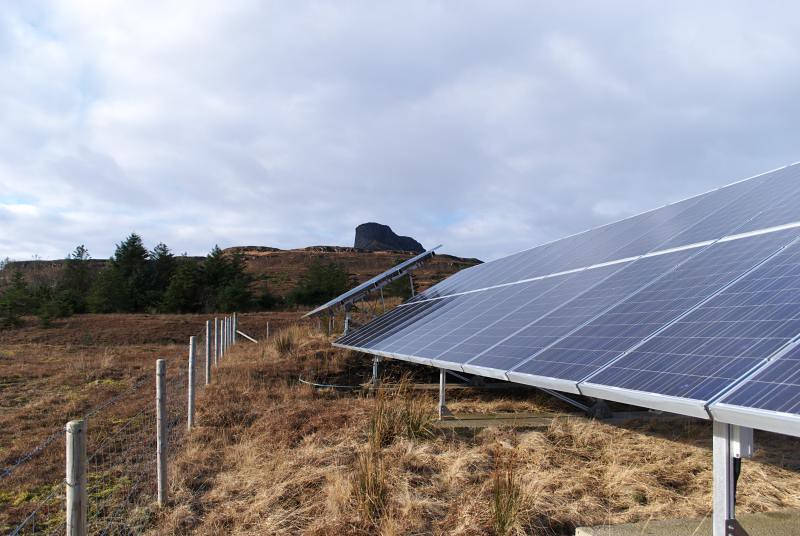
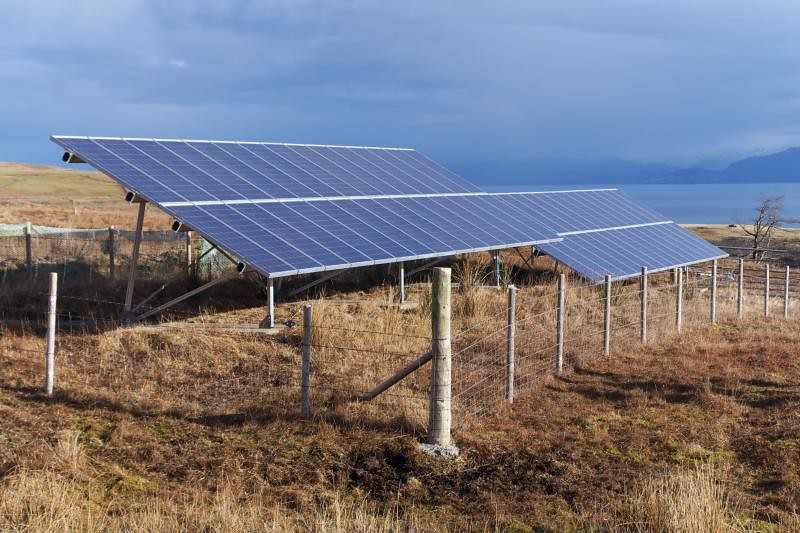
Not far from the generators is 10 kWp of solar PV, which is due to be increased to 30 kWp in the near future. It's in a great location, with no shading and a view of the Sgurr in one direction and the sea in the other:


To the south of the Sgurr is the wind farm, which uses four 6kW Proven wind turbines:
Inside the control room for them are inverters and equipment to divert power to dump load heaters in the event of there being excess power. Dump load electric heaters are also used in community buildings, and as the grid frequency rises with excess generation, they automatically come on in stages to make use of the spare power. The dump loads at the wind turbines only come on when all of the heaters in community buildings are already on.

As you can see, some of the roads are pretty rugged, hence the need for a 4x4. At least they don't get driven very far, and there's a lot of lift-sharing as well.

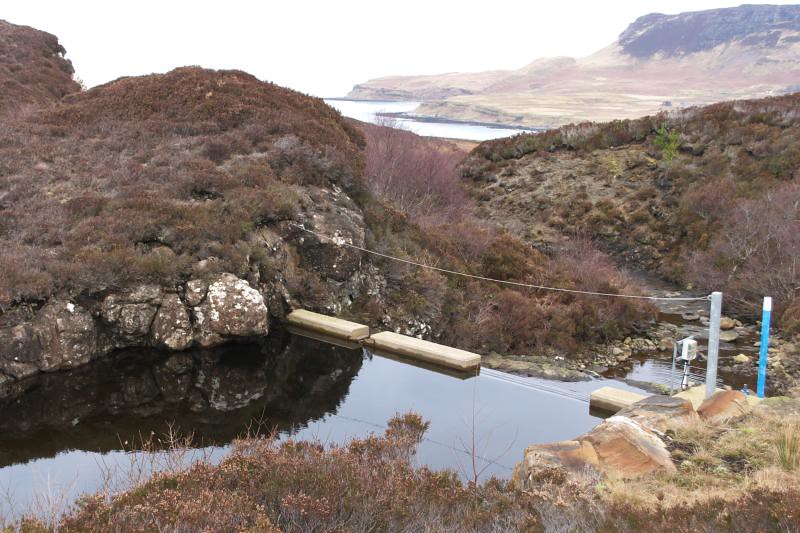
Near the centre of the island is a weir:


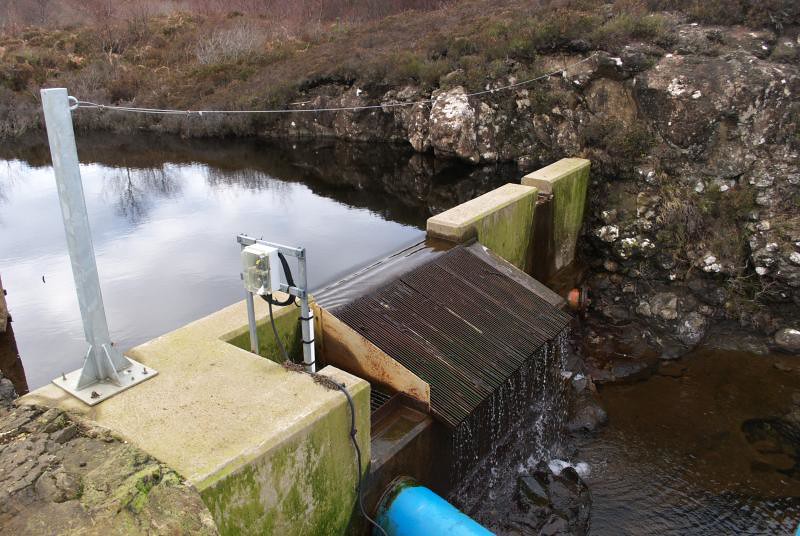
From here the penstock takes water out of the stream for the water turbine, with a valve controlled remotely to ensure some water remains in the stream:

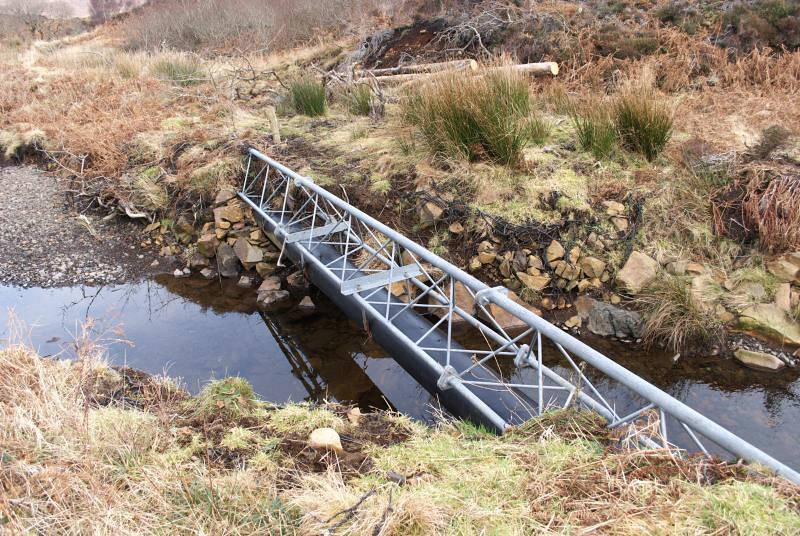
There's a drop of over 100m from here to the turbine, and we walked down it, following the buried penstock across fields and streams:

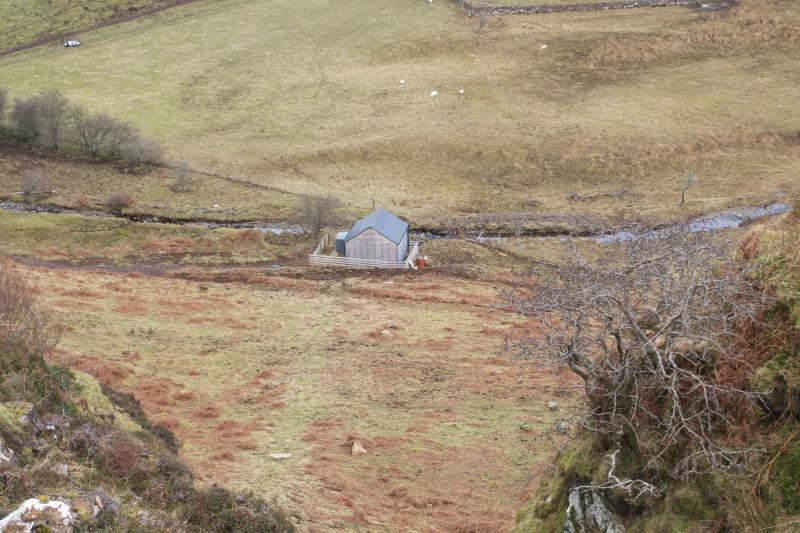
You can still just about see where it was buried on its way to the power house where the turbine is located (strip running up from the bottom of the picture, just left of centre):

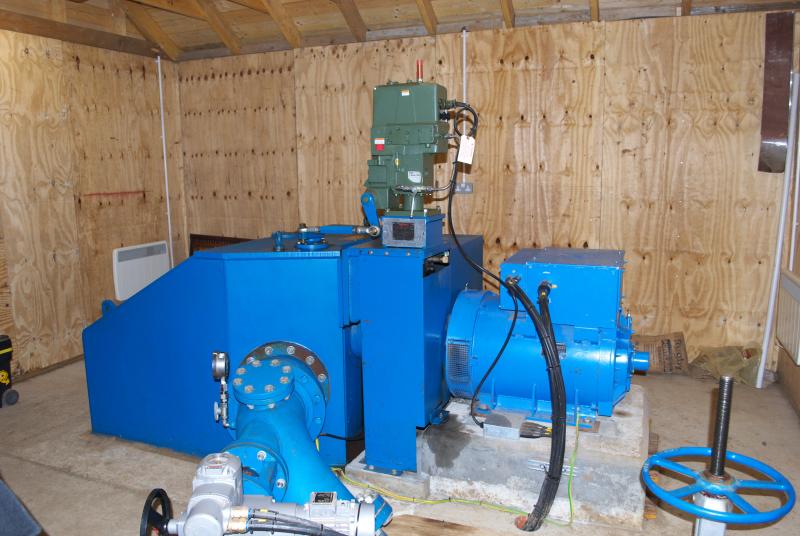
Inside the power house is the water turbine - these are never very interesting to look at, they just sit there and do their job. This one was painted in the traditional "hydro blue" that seems to be compulsory for turbine equipment!

It's a pelton turbine, here's the technical details:

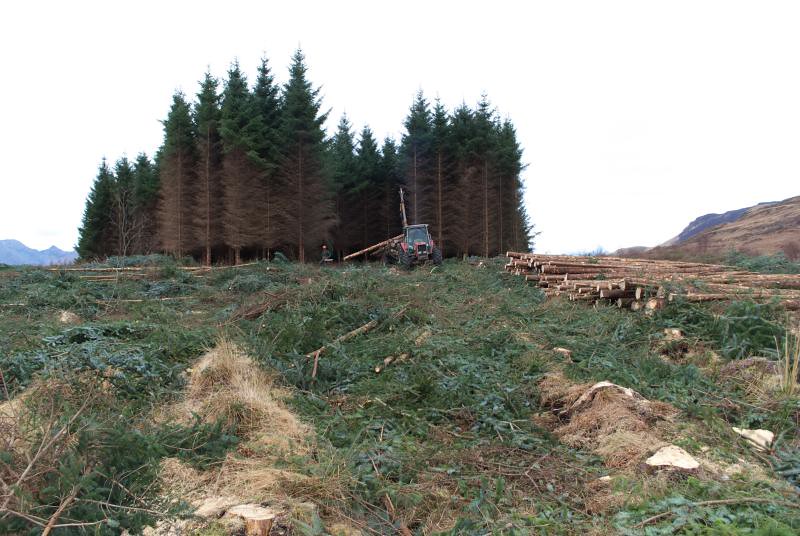
Well, that's where Eigg's electricity comes from, but as as I said, that's just one aspect of how they've cut their carbon emissions. Another is switching from from fossil fuels to wood for heating - I saw forestry work in progress, and the production of logs for heating is ramping up rapdily now:


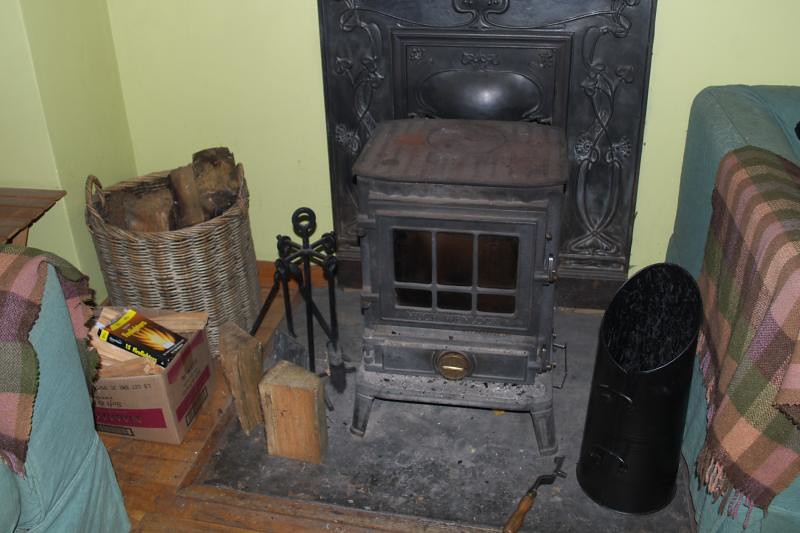
The wood is burned in stoves that either heat a room or have a boiler in them to run central heating:

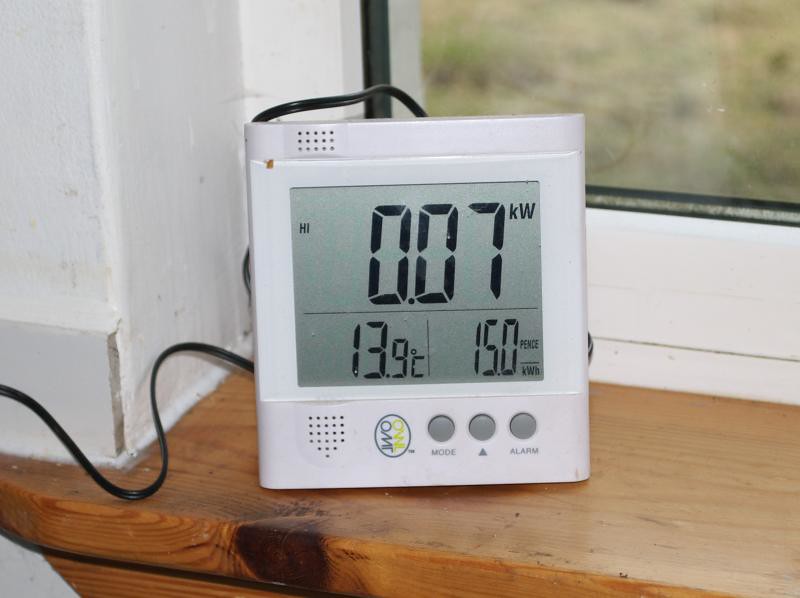
Every home has an OWL energy monitor - this is crucial, as one of the constraints adopted to make the renewable energy supply practical and affordable was to limit every house to 5 kW, and businesses to 10 kW - if you go over, your electricity cuts out, and a technician must visit to turn it on again. The meters sound an alarm if consumption gets close to the limit, and very few people ever get cut off, as energy-saving habits are second nature to the residents of Eigg.

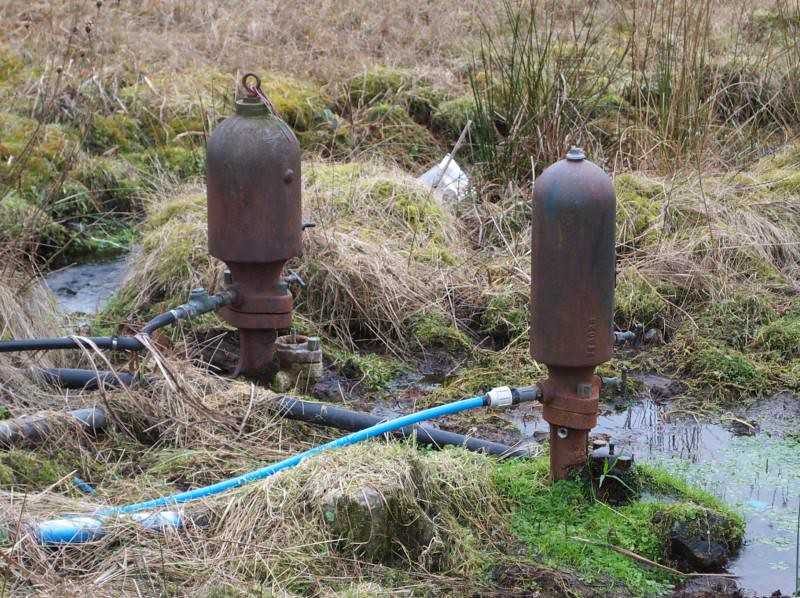
Every house on Eigg has to have it's own water supply, and it was nice to see a few ram pumps running - supplying water without using fossil fuels. We had an international Ashden Award winner using these a few years ago, in the Philippines.

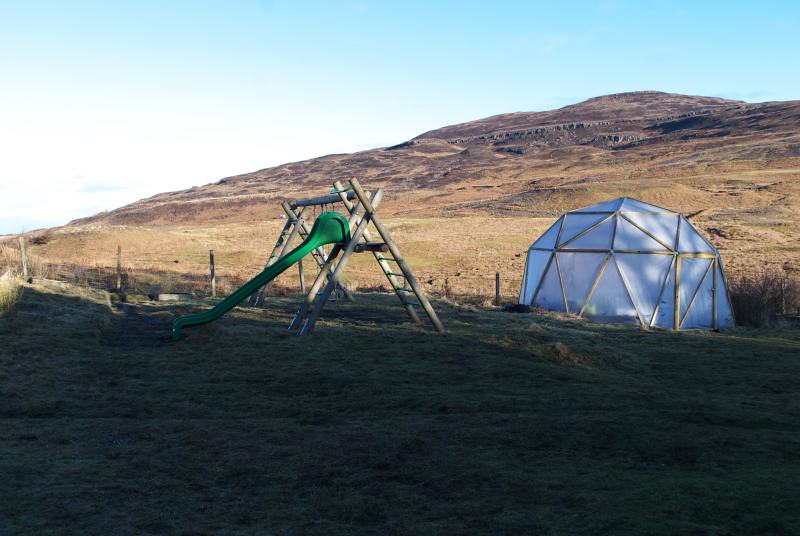
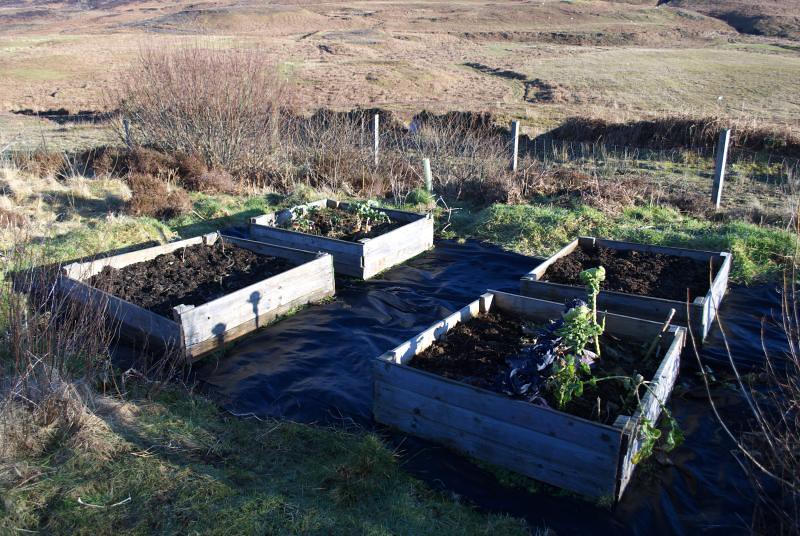
Over at the school sustainability was high on the agenda too, with a geodesic greenhouse and raised beds in the garden (I was there in February, which is why there's not much growing):


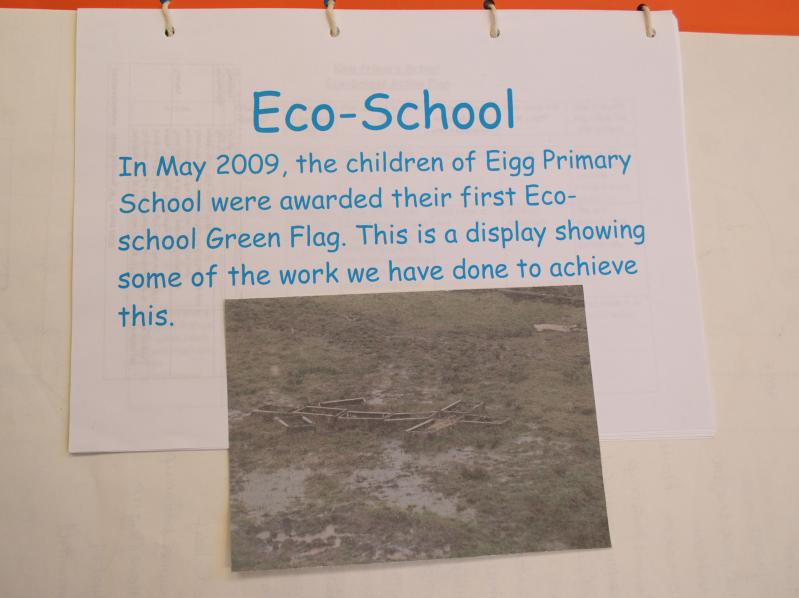
The school is proud of its achievements and has won a Green Flag from Eco-Schools for its work.

There are numerous other initiatives in progress, such as home insulation, poly-tunnels to grow food (reducing food miles), increased cycling and the use of solar water heating:

Eigg's done an amazing job, massively cutting it's carbon emissions, and showing the rest of the UK the way it should be going with renewable generation. To finish, I'll leave you with the video that the Ashden Awards made about Eigg's achievements (you can download a copy from the Ashden Awards website):


Mike

Read part 1 of Visiting the Isle of Eigg
Read part 2 of Visiting the Isle of Eigg

Click here to read the rest of this post.

Wednesday, 4 August 2010

Visiting the Isle of Eigg (part 2)

In part 1, I showed you pictures of the trip to Eigg. In this post, I'll show you some of the magnificent scenery on and around the island.

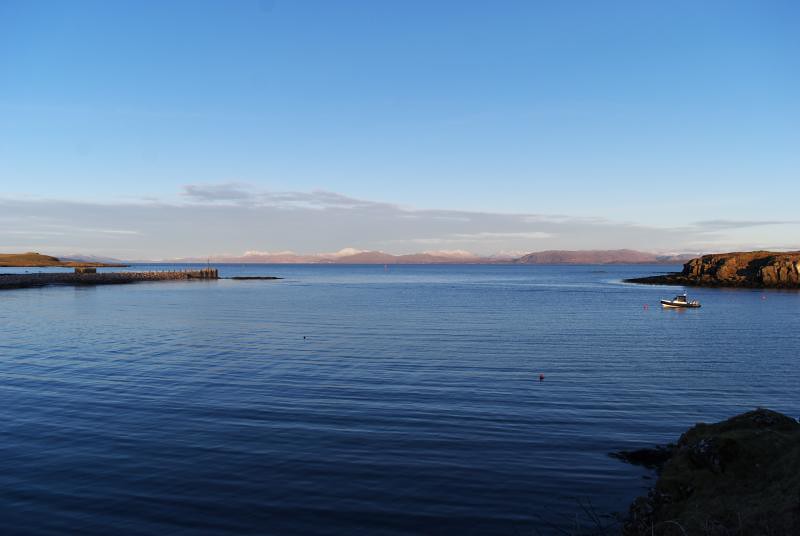
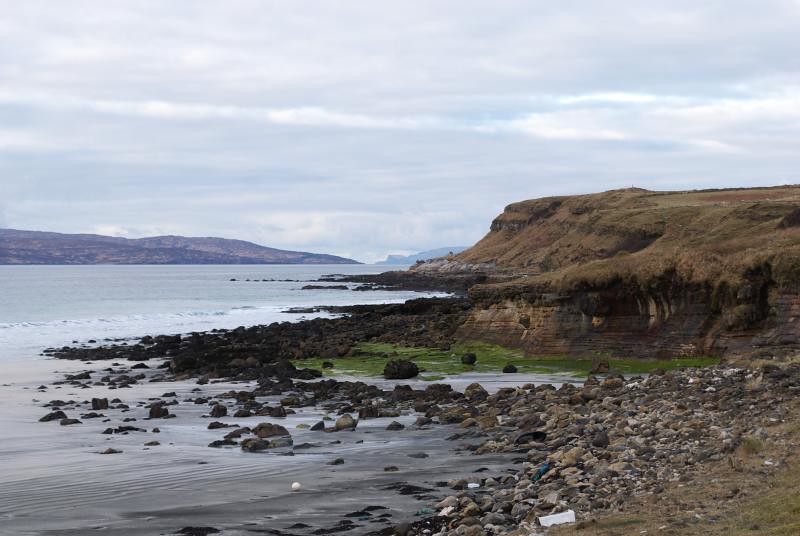
After arriving at the pier, you're greeted by wonderful views back to the mainland, in two different directions:

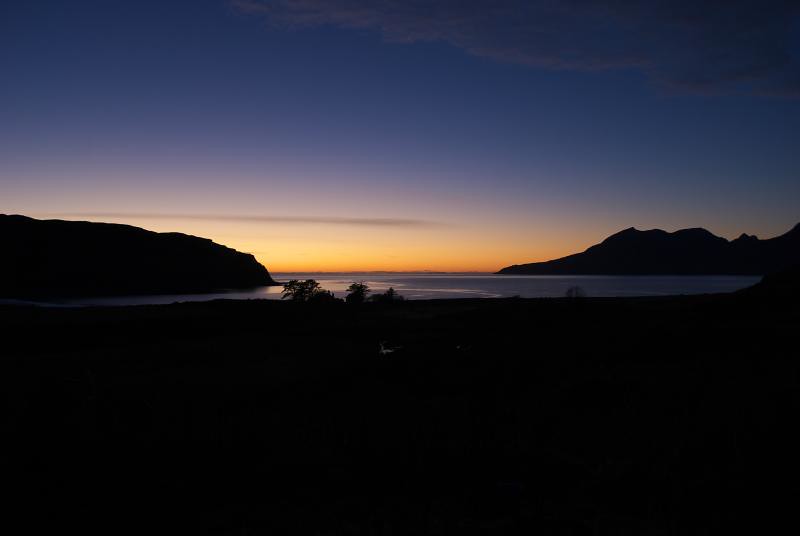
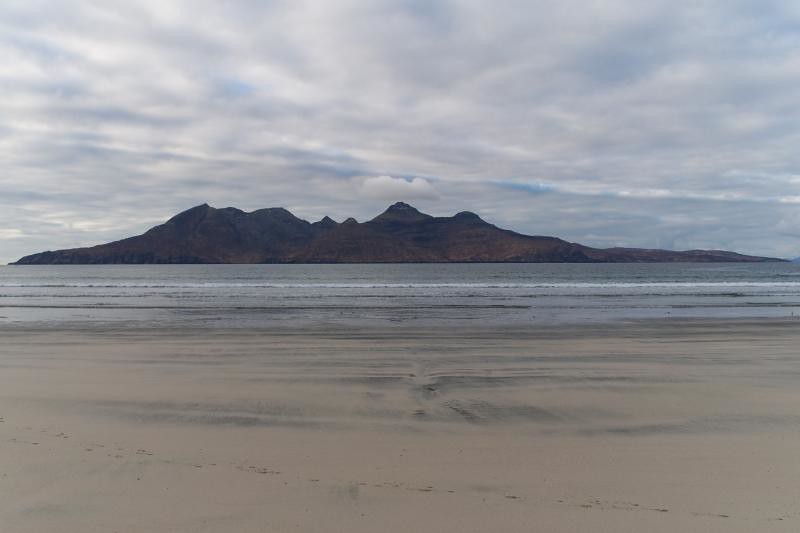
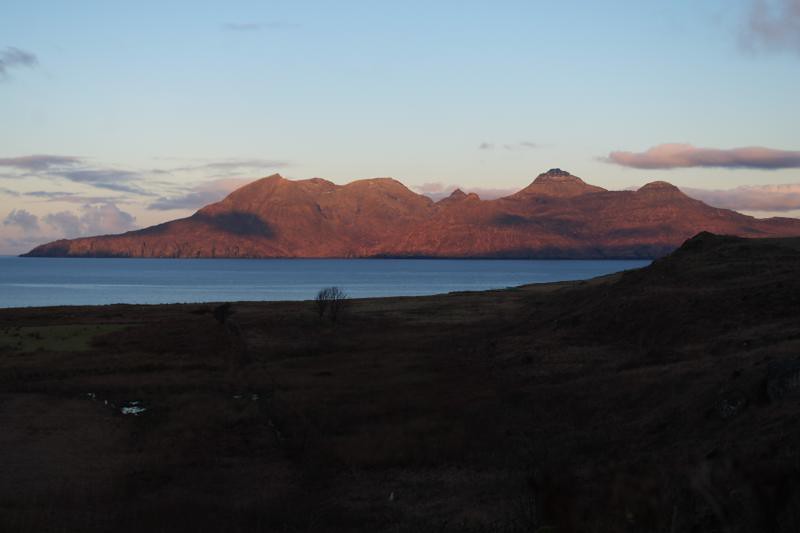
I was there for work, so had some meetings at the Isle of Eigg Heritage Trust office, and then headed across to my accommodation over at Laig Bay, where I arrived just in time to catch the end of the sunset, with the Isle of Rum across the sea:

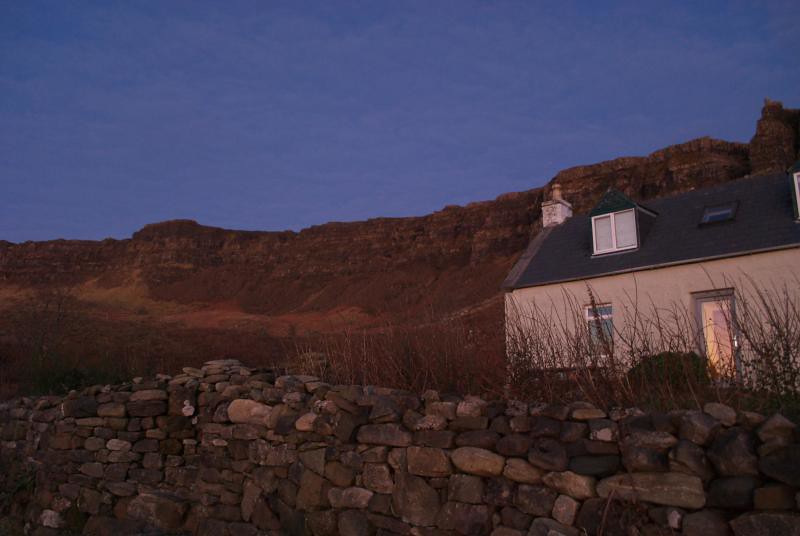
which was lighting the guest house and the cliff behind it in red:

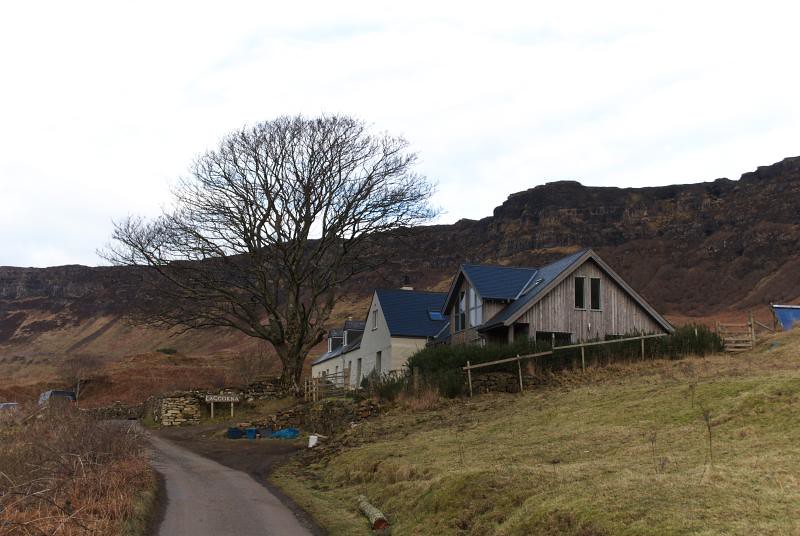
Here's a better picture of the place I stayed:

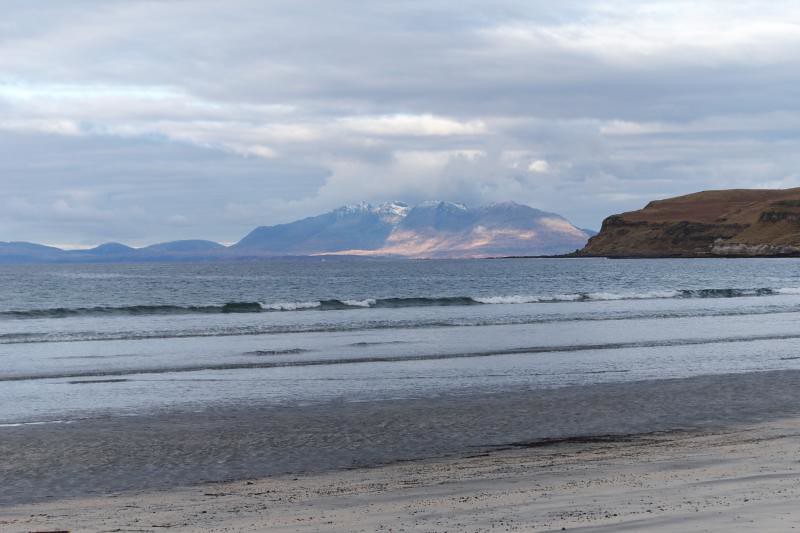
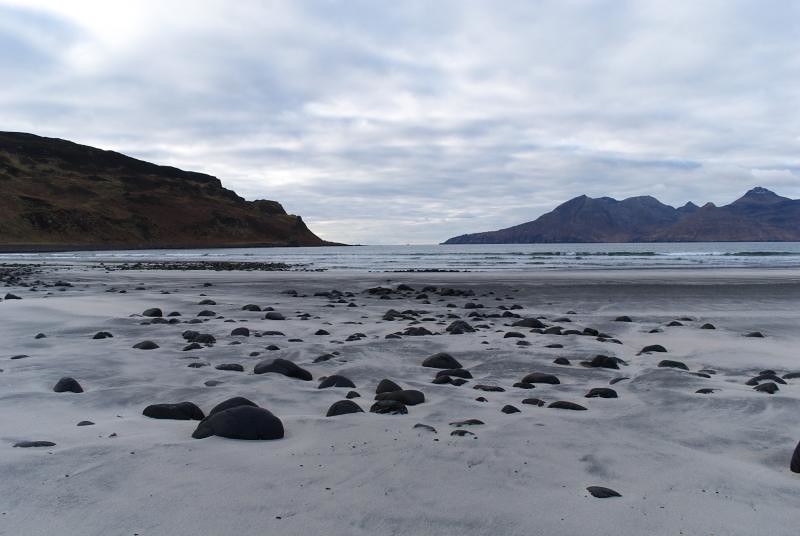
It's Lageorna, and includes a self-catering cottage and two double en-suite B&B rooms. Sue, who runs the place, also cooks a great evening meal. I'd strongly recommend this as a place to stay, especially given the view from the nearby Laig beach to Rum and Skye:

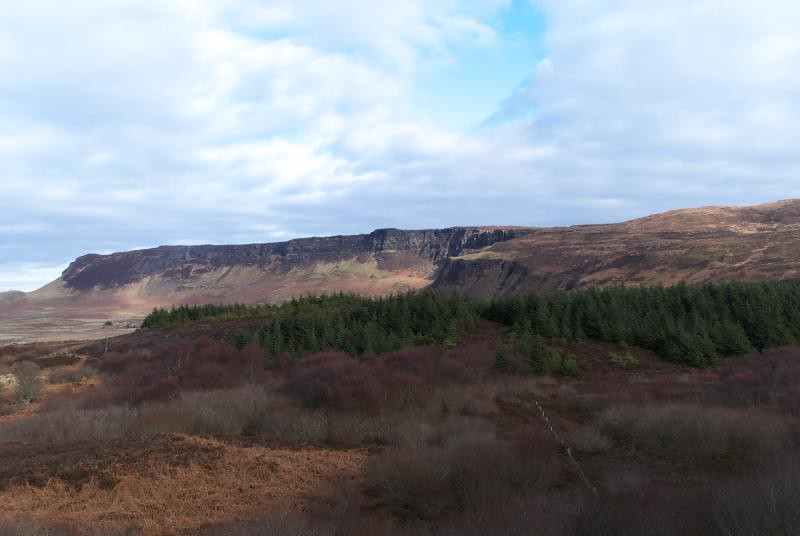
The next day I went on a guided tour of all the renewable energy facilities of the island (more on that in the next post), and took in some great scenery as a result, such as the Sgurr

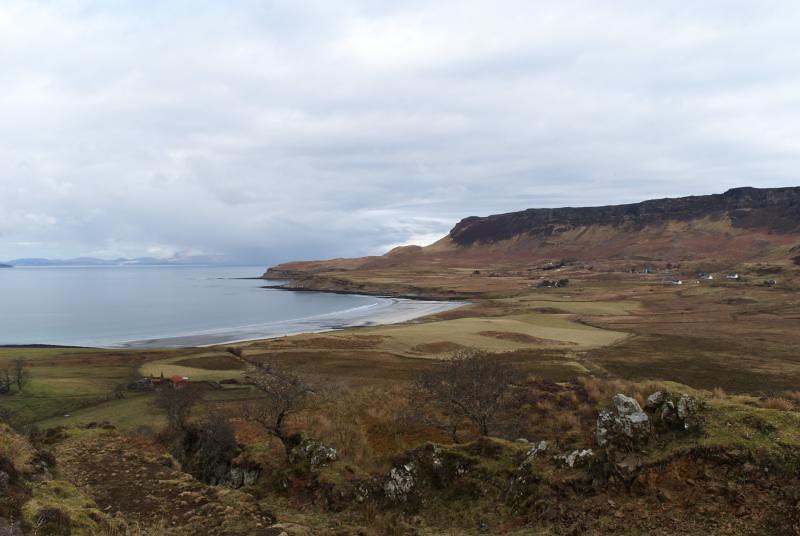
looking back to Laig bay:

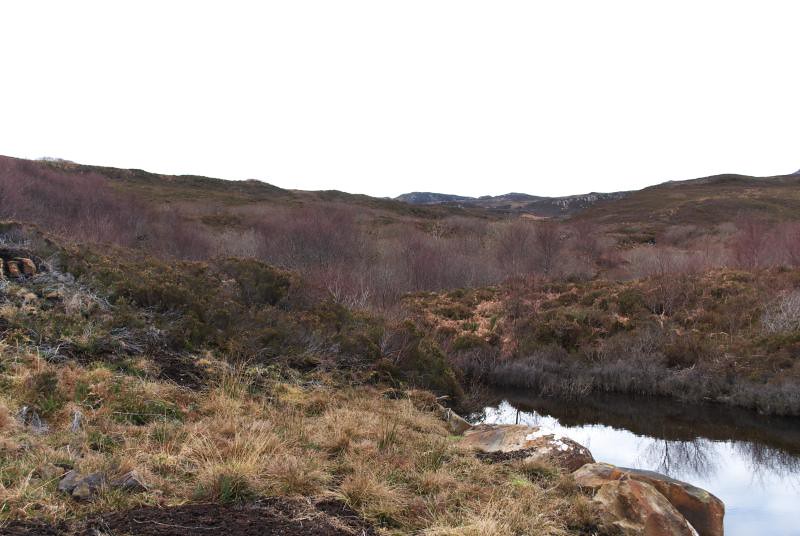
Some of the higher parts of the island are quite barren:

but there's actually quite a lot of woodland too, both deciduous and coniferous:

There's various interesting sites to be seen as you go around, such as the remains of homes left derelict after the Clearances in the mid 19th century.

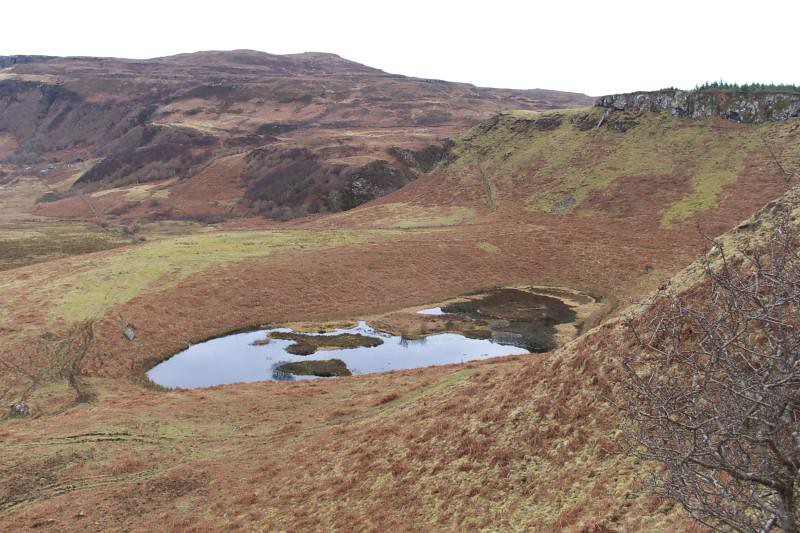
and the "Giant's Footprint", a small pool with floating islands of vegetation in it:
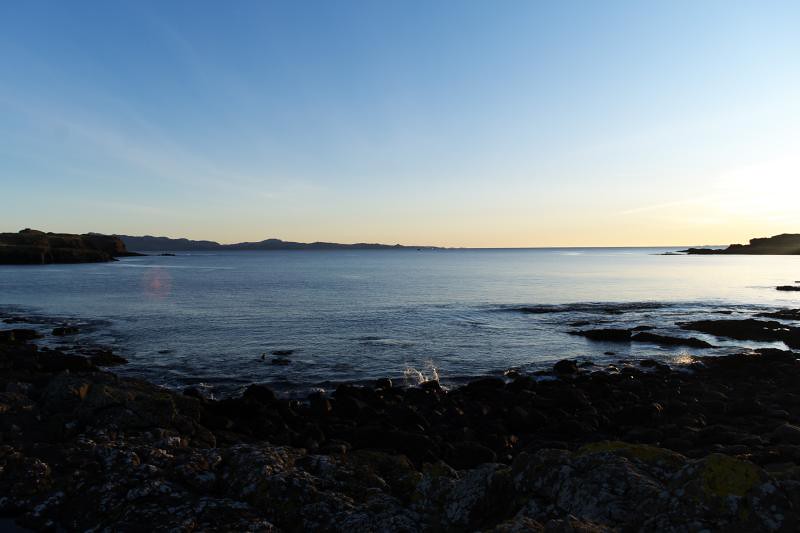
My next post on Eigg will show the real reason I went there - the renewable energy installations and the work done to reduce their carbon footprint, but for now I'll leave you with some more pictures of Laig beach.
and last of all, the Isle of Rum lit up by the sun rising over Eigg behind the Lageorna guest house:

Mike

Read part 1 of Visiting the Isle of Eigg
Read part 3 of Visiting the Isle of Eigg

Click here to read the rest of this post.

Tuesday, 27 July 2010

Visiting the Isle of Eigg (part 1)

Back in February I was fortunate to visit the Isle of Eigg, part of the Inner Hebrides off the NW coast of Scotland. I didn't blog about it at the time, as I was visiting to assess the island as an Ashden Awards applicant, but now they've come through the judging process and emerged as a winner, it's time for me to share some of the amazing photos from the trip.

There's a lot of photos, so this post will just cover the trip to Eigg, and I'll do another one shortly.

The first thing to say is that it's a long way to Eigg, but well worth the trip. I actually started from near Manchester, having visited another applicant in that area, and I left at 7am, arriving in Glasgow around lunchtime. From Glasgow, I got the train to the port of Mallaig, which took until about 5:30pm, but was one of the most amazing scenic train rides ever.

Not long after leaving Glasgow you're into the Loch Lomond area, with views like this:

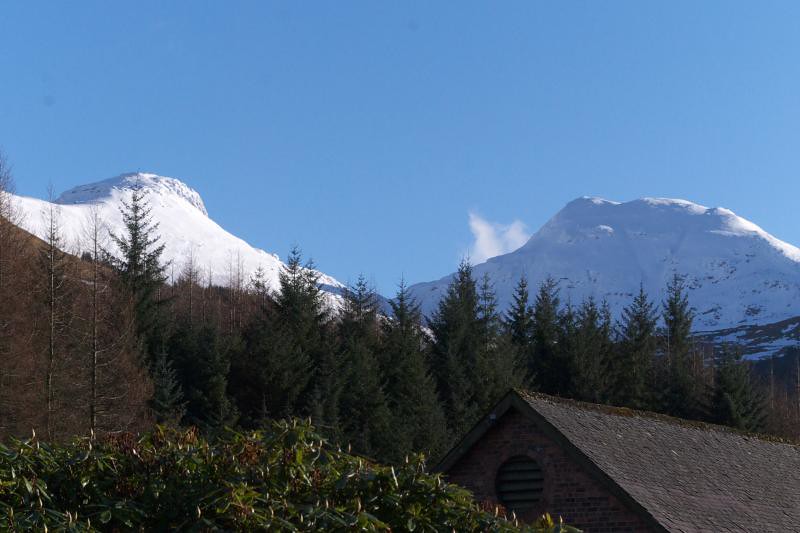
but it's not much further and you really feel like you're in the mountains, like at this little station where we stopped for a few minutes:

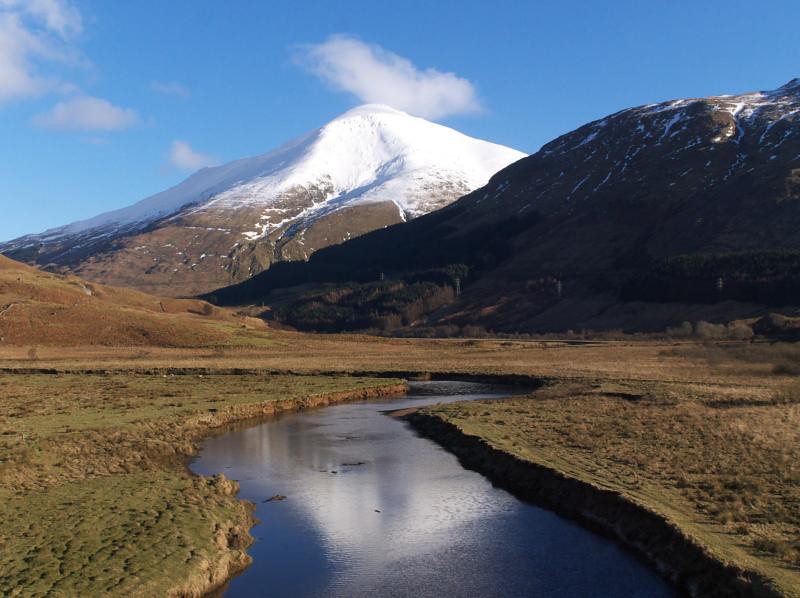
I was very pleased to have a clean train window, so I was able to get some nice pictures through it. Every now and then I'd time one just right, like this:

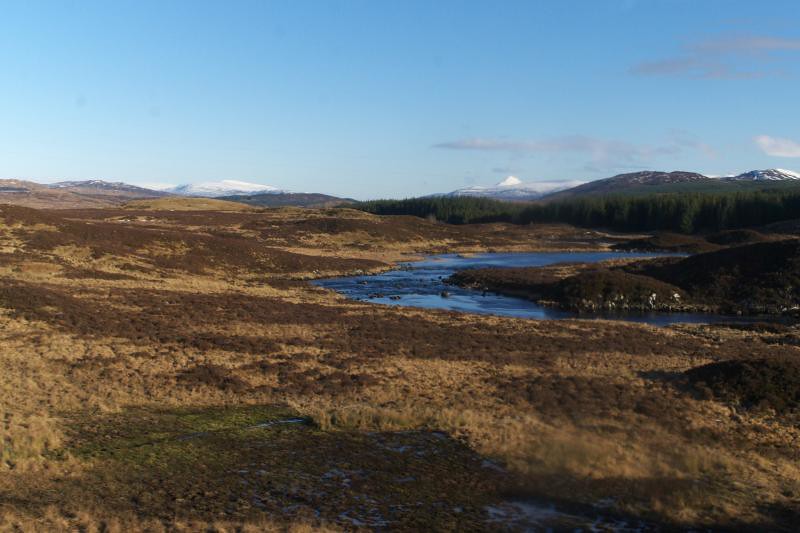
As we carried on, it became very desolate but still beautiful:

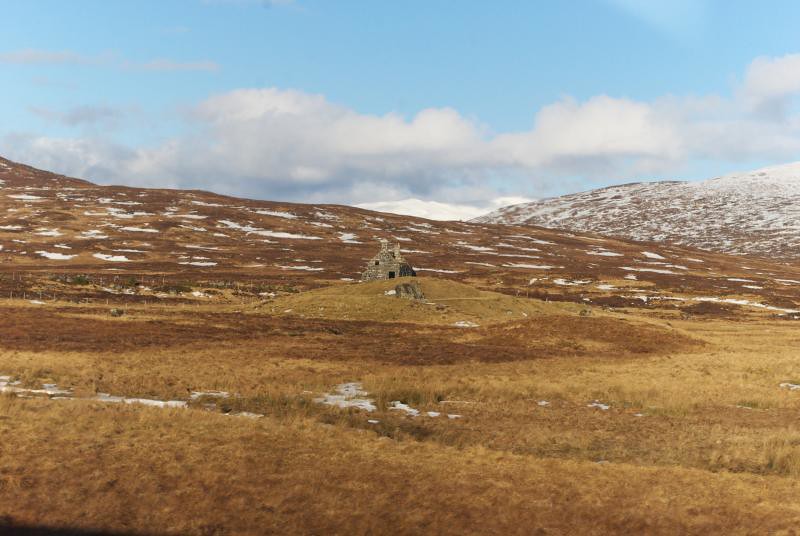
but a few hardy souls had clearly lived here in the past:

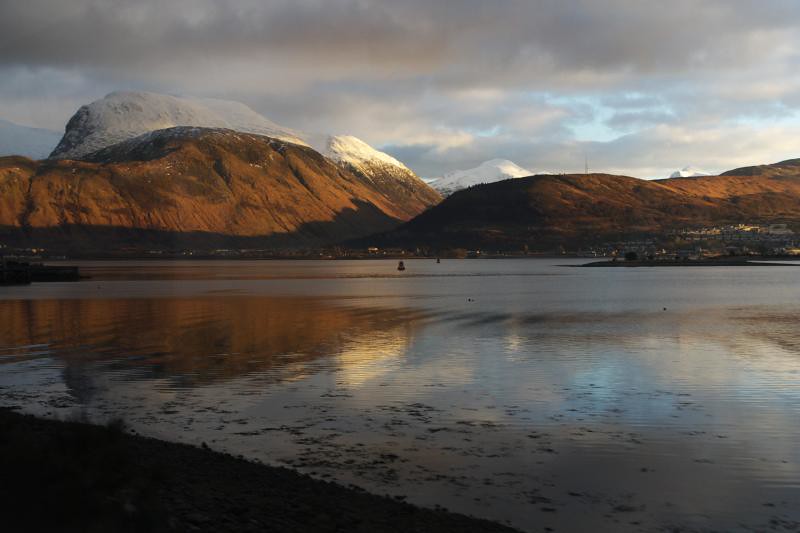
The sun was setting as we were in the Fort William area:

which sadly meant I had to do the rest of the trip to Mallaig in darkness, including the bridge the train in the Harry Potter films drives over - apparently in the summer you can ride on the actual train!

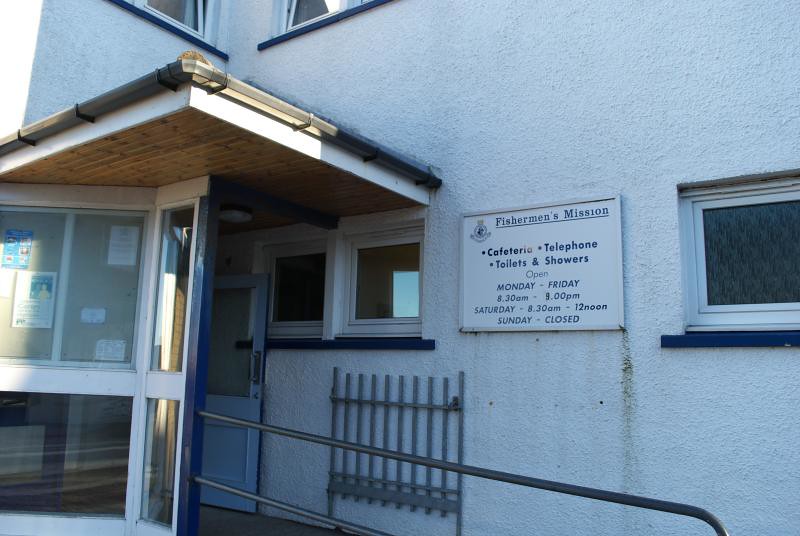
I stayed at a lovely pub/B&B in Mallaig, the Clachain Inn, although seeing as it was February they weren't serving dinner (and had kindly forewarned me of this), but neither was anywhere else, except...
the Fishermen's Mission! I had a good and cheap dinner there of egg, chips and beans, and then went to rest, ready for my ferry trip the next morning.

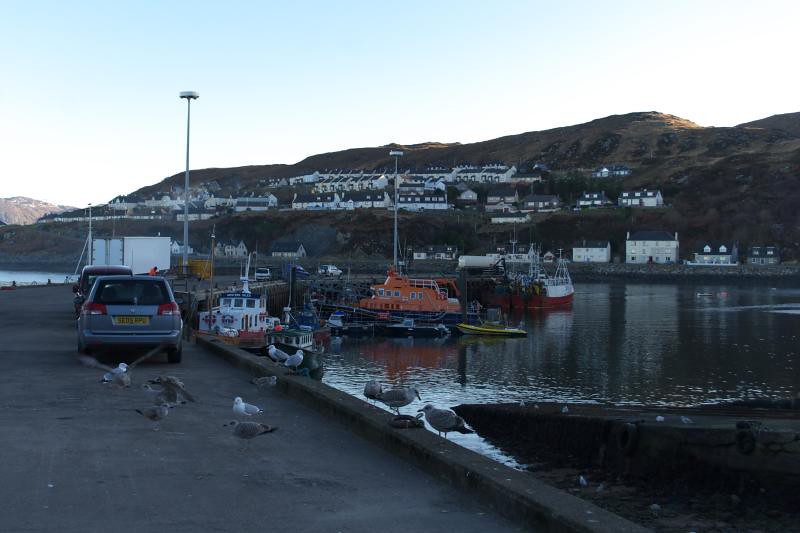
The ferry left mid morning from Mallaig, but I went down to the harbour a bit early to get a few pictures.

before long we were cruising across a calm sea, with a nice view back to Mallaig:

The weather was most uncharacteristic for mid February!

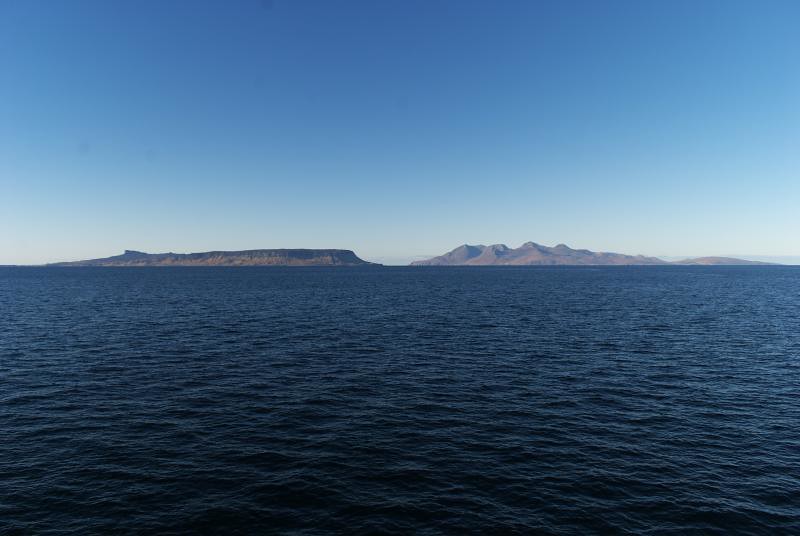
It's not really very far to the Isle of Eigg, and quite quickly I could easily see Eigg and Rum:

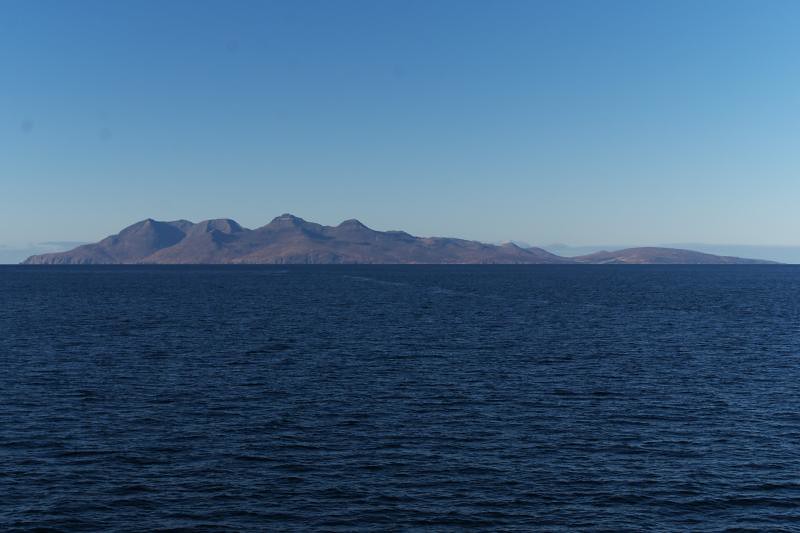
Here's some closer pictures, first of Rum:

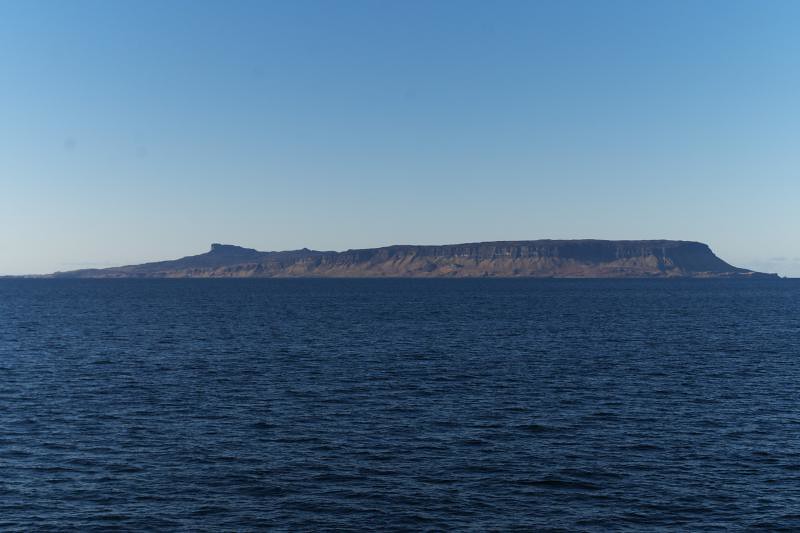
and then Eigg:

Some parts of Eigg look quite desolate, like this bit (with Rum poking up behind it):

But other parts are much more gentle, and you start to notice houses dotted around:

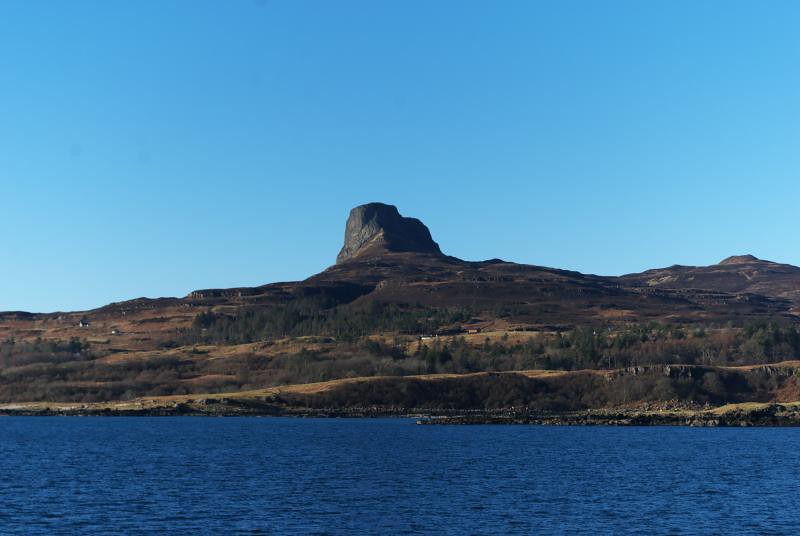
Prominently visible is The Sgurr, which is apparently the left over from an eruption of the volcano which formed Rum (according to Wikipedia...)

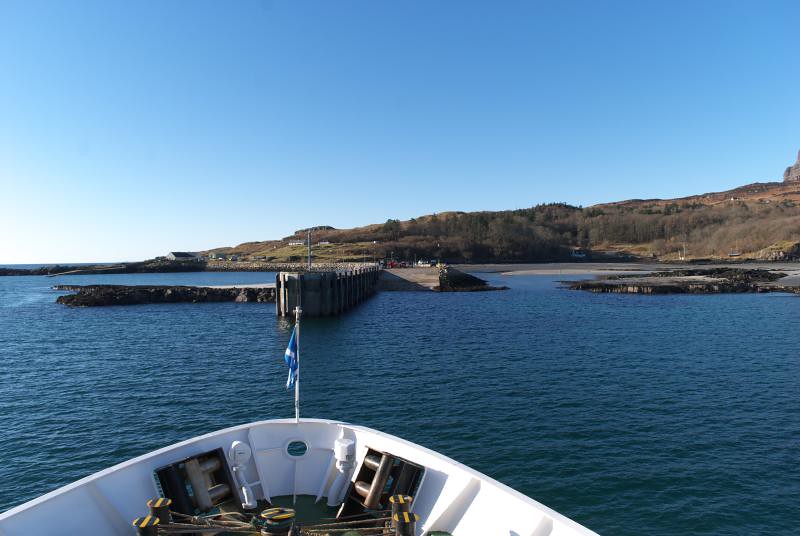
There's a pier the ferry docks at - although this was only built a few years ago. Prior to that, you had to transfer to shore in smaller boats I think, and if you brought a car to the island, it wasn't going to leave again!

I was promptly welcomed to the island by a sign, but also the friendly people who were my hosts for the next couple of days.
to be continued... (in the meantime, read about why I was visiting Eigg)

Mike

Read part 2 of Visiting the Isle of Eigg
Read part 3 of Visiting the Isle of Eigg

Click here to read the rest of this post.