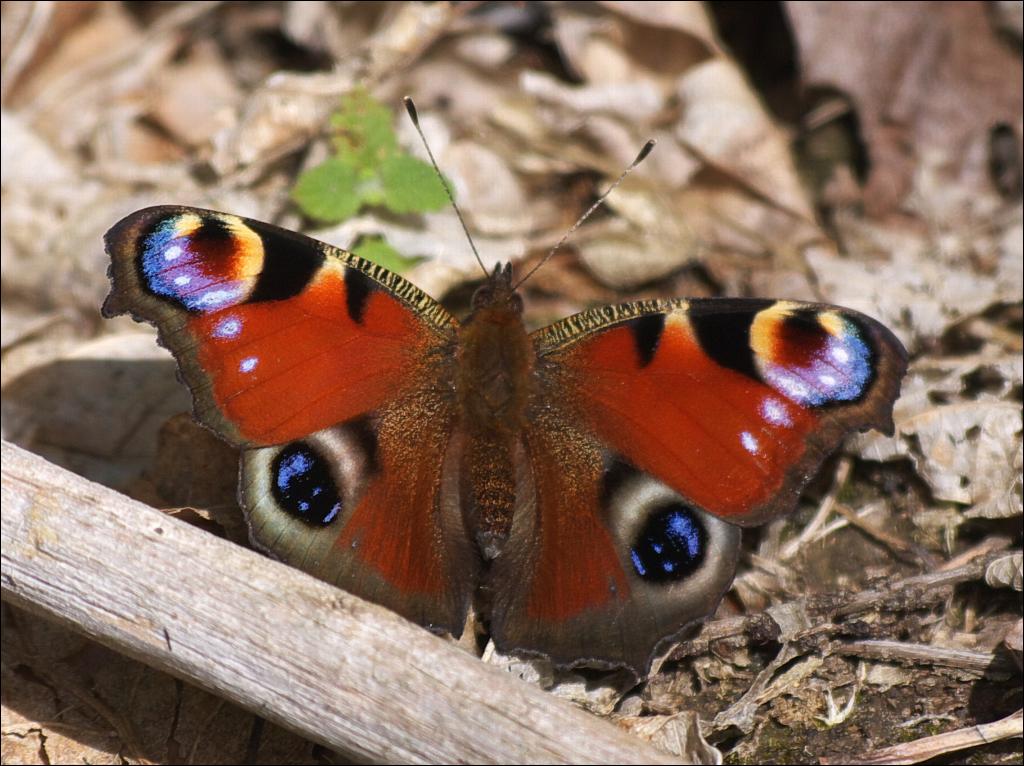
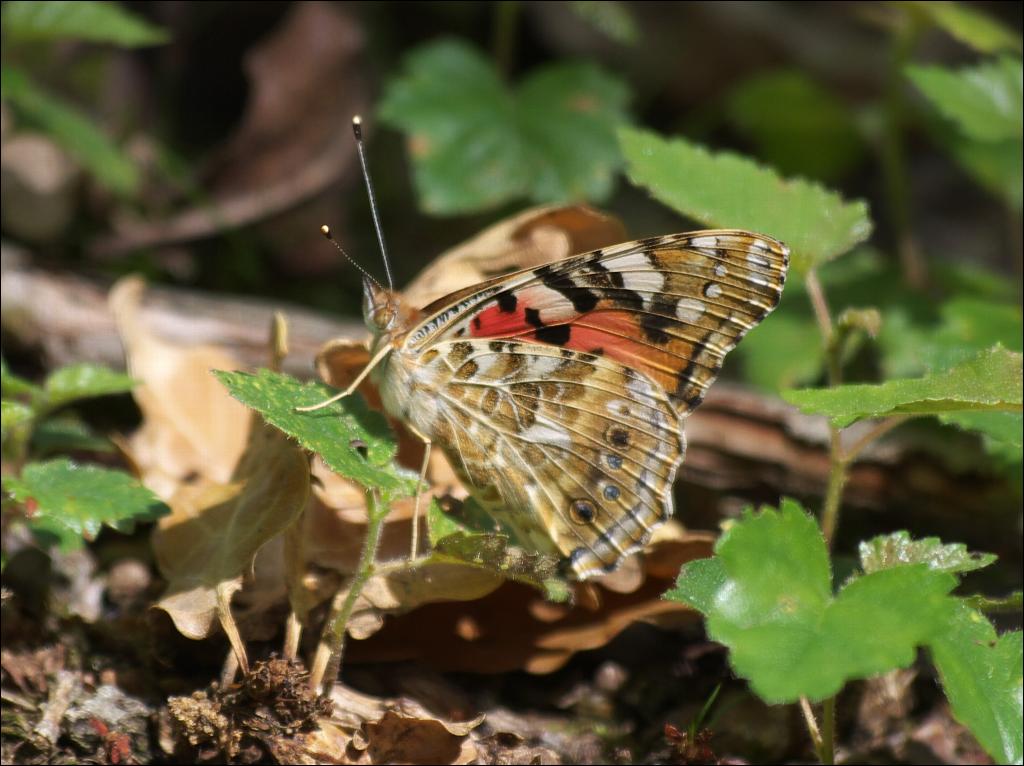
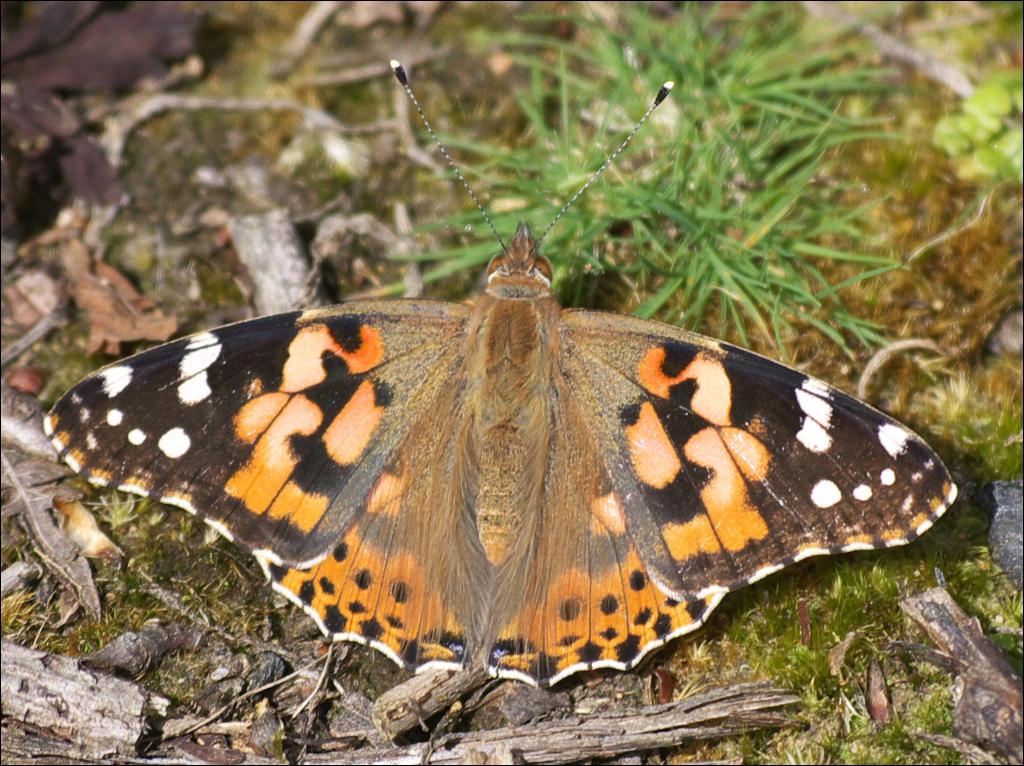
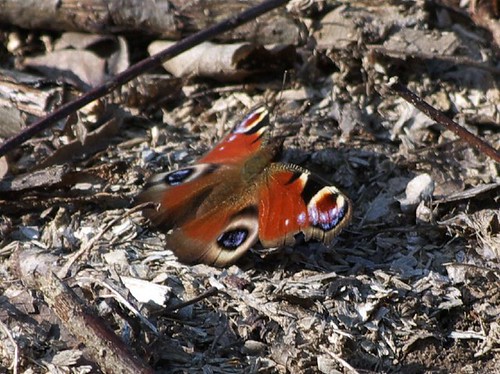
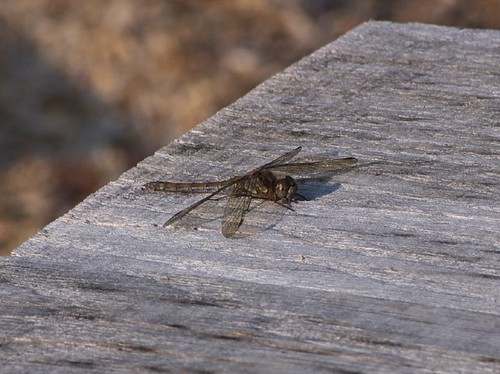
We're much more organised this year, starting coppicing just before the beginning of October, rather than December like we did last year! But before I get onto that, here's a few pictures of some creatures that still think it's summer. A peacock butterfly and a dragonfly, both sunning themselves in the afternoon:
 The robin however was busy shouting, perhaps marking his territory for the coming winter?
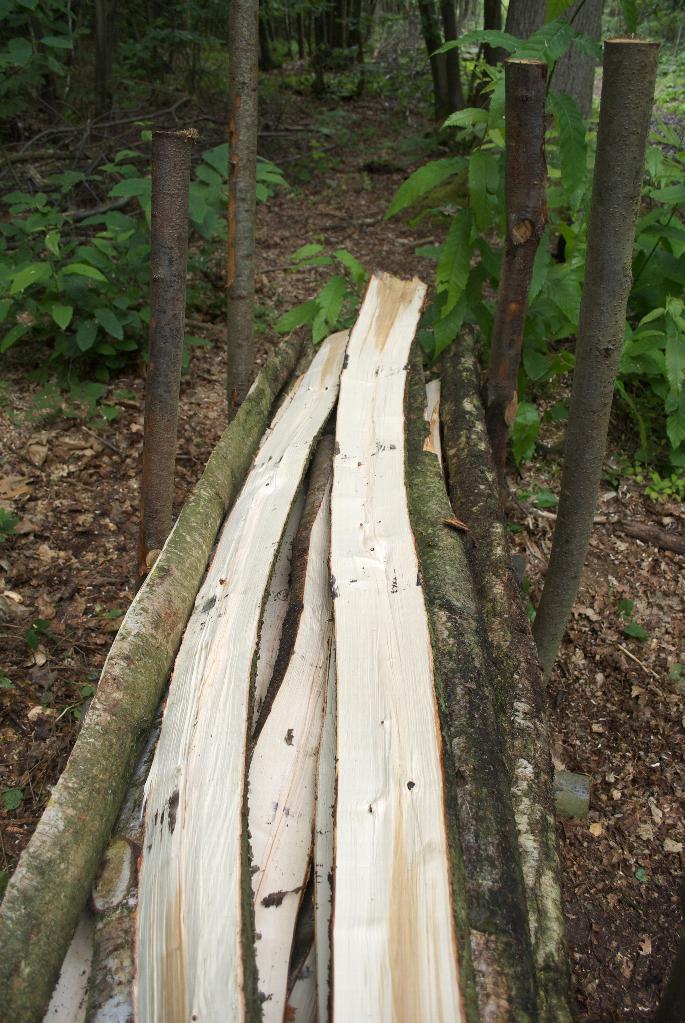
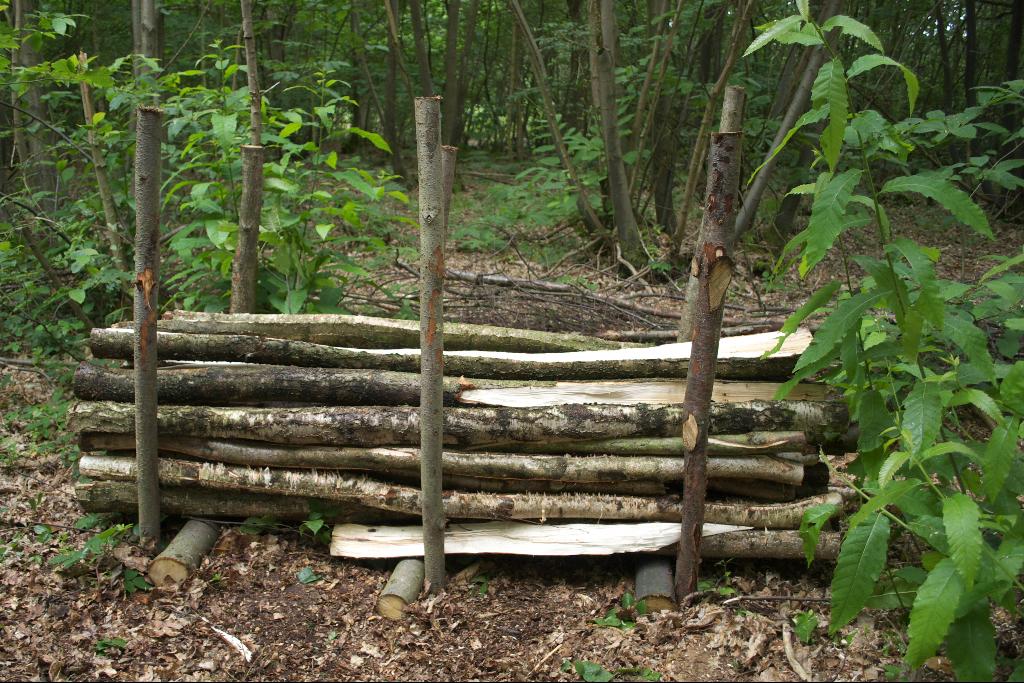
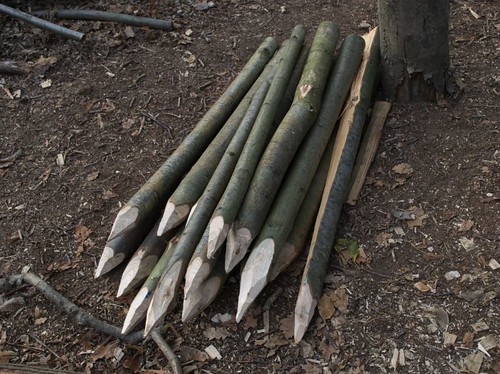
 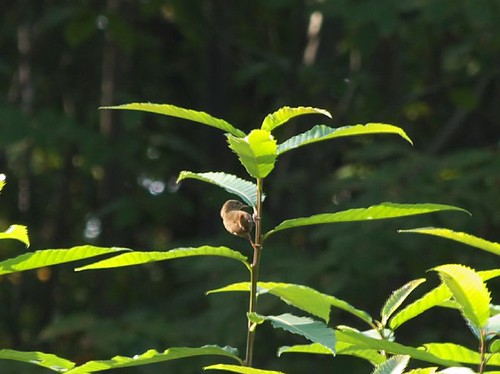 He took great interest in the work I was doing, which was making stakes ready for log stores (this was on Sunday).
 The rabbits are still out and about in the wayleave, as I expect they will be all through the winter:
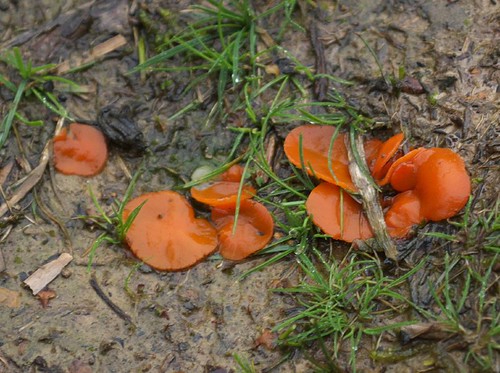
 The fungi, however, are clear that it is time to be fruiting...
 This one's growing on a chestnut coppice stool:
 These are fly agaric, but almost finished and have changed in colour dramatically from how they look when fresh,
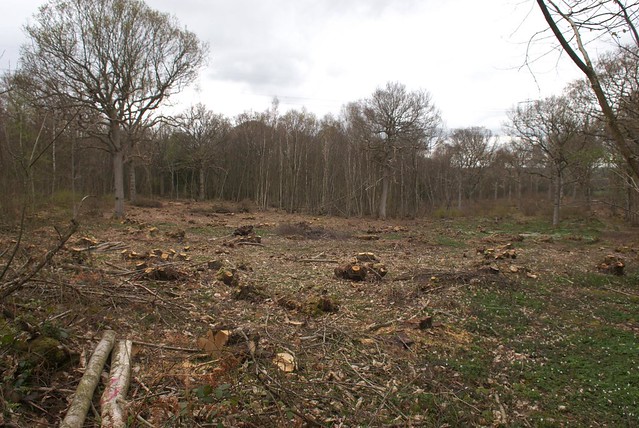
 Anyway, I had today off work, and Tracy had a bit of time free late morning, so we went up the wood and started on the coppicing. This year we're cutting a few metres on either side of all the rides and paths that border or run through Chestnut Coppice and Sweep Wood. As we're working nearer to the public we've taken out third party insurance, though today not a single person walked down the public footpath!
The reason for cutting these areas is to create wide "corridors" with more light, which will allow a greater diversity of plant and animal life, as well as yielding some useful wood for us to sell. Butterflies and birds in particular should benefit from this work, as some of them don't fly through dark woods, so the corridors will form routes they can follow to get to other parts of the wood.
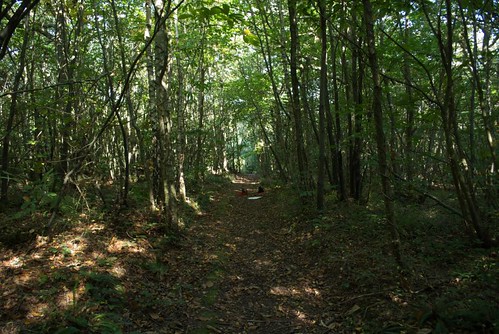
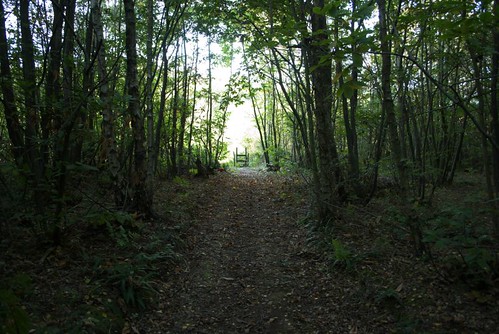
Here's how the public footpath looked before we started, it'll be interesting to compare this photo to one when we've finished...
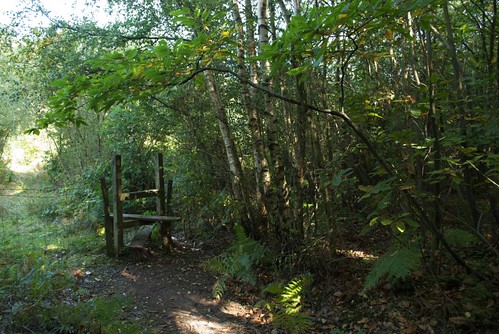
 The area we started on today was where the footpath meets the wayleave:
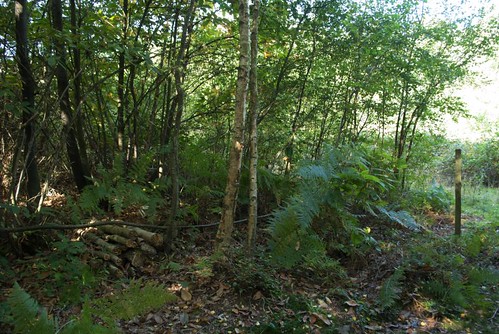
 On either side were some birch, some of which had already been coppiced once before:
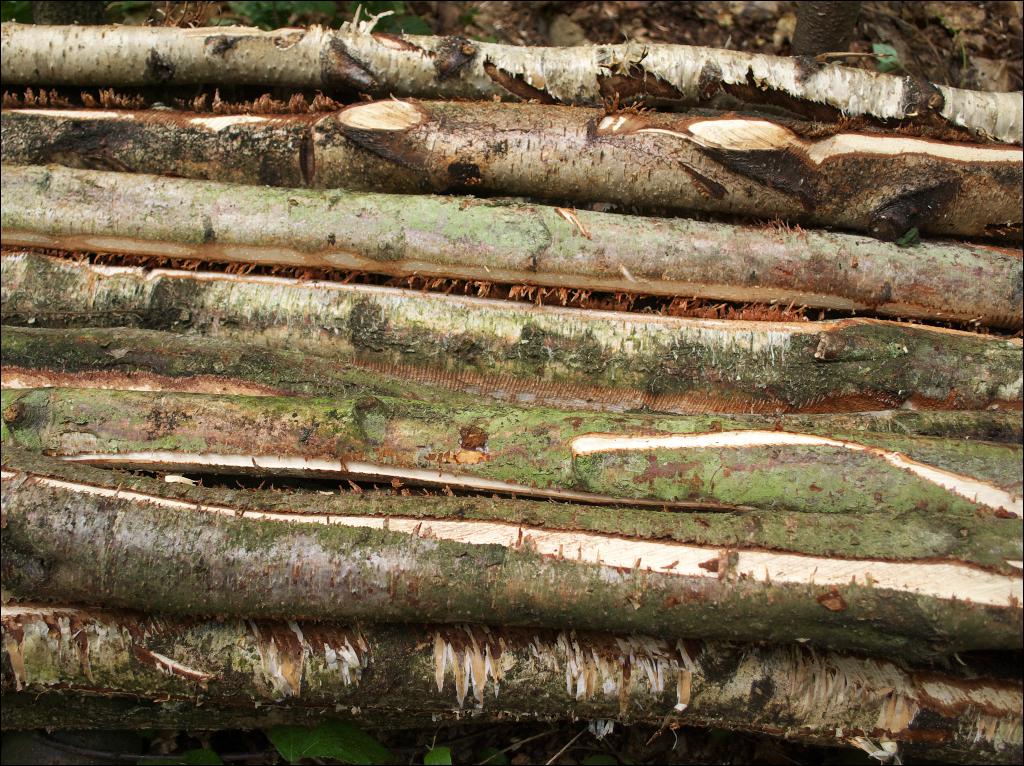
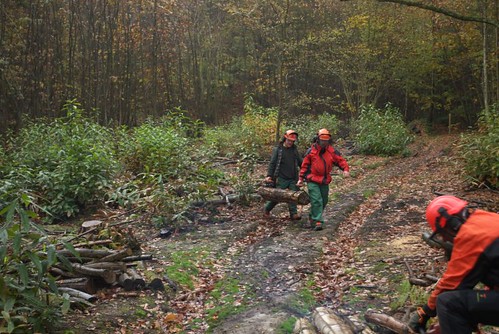
 Having learnt from last year's work we're taking a different approach this year. The trees will be felled, then if we know the final use they will be processed where they land, and stored at the side of the ride ready for extraction in the spring. This should minimise unnecessary carrying around of wood, and also ensure our firewood is thoroughly dry.
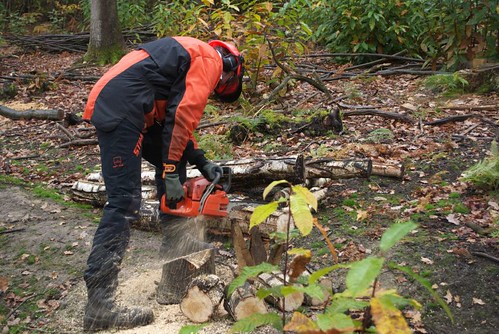
For the birch we were felling today, this strategy meant cutting them into short logs as they were felled. We're planning to save up all the splitting work until the weekend, so we can minimise chainsaw noise for the neighbours.
While I was doing the logging, I came up with a neat way of holding a log firmly to be sawn up:
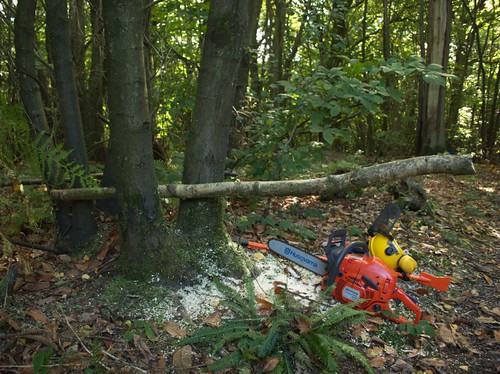
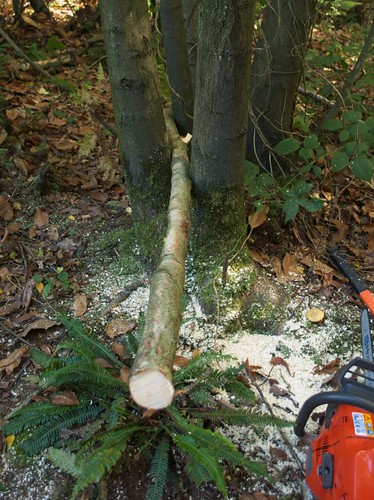 Tracy felled a few trees further up the path (as we worked two tree-lengths apart for safety), but then had to go to work at WoodNet, and I carried on near the stile. I felled about 10 trees, plus a lot of smaller birch out in the wayleave, to make a clear path for the wildlife to make its way in. The extra light getting in was immediately apparent:
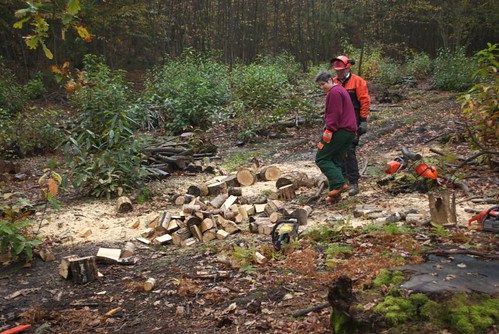
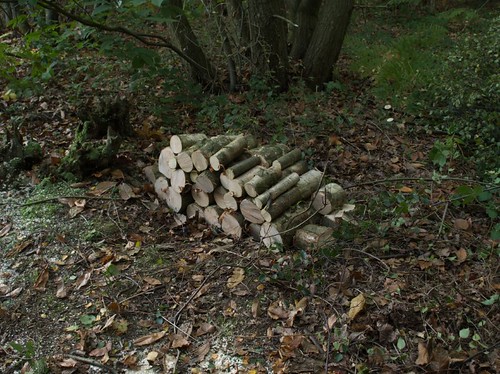
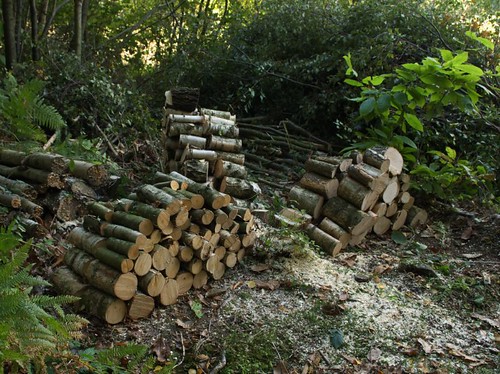
 I was left with a few neat piles of logs ready for splitting:
 and was particularly pleased to have been able to avoid cutting this honeysuckle, which I managed to drape over the fence and a tree that we won't be felling.
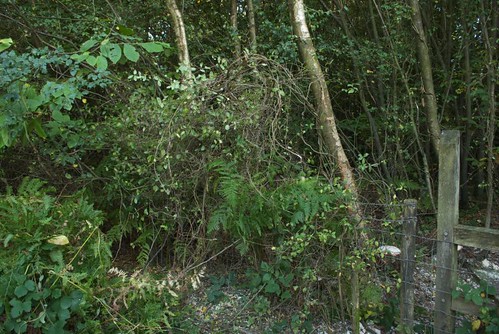 There are still a couple of birch stems to fell in this spot, but time ran out. We'll be up there again on Thursday or Friday to carry on, and on Saturday we're hosting a Fungi ID event, as the wood it should have been held in has no fungi right now, while ours has loads.
Mike
Click here to read the rest of this post.