I had numerous jobs to get done yesterday, including visiting a firewood customer to see if we can get the car and trailer into their property. In the afternoon I went up to the wood to split some firewood, while Tracy was teaching. I found a strange thing on top of a pile of offcuts when I got there: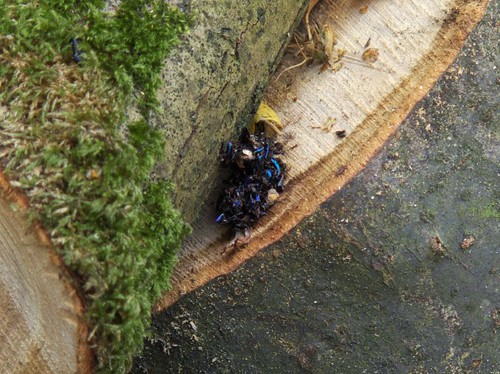 It's a pile of dead beetles:
 I can only imagine a bird had been eating them there. Any other ideas?
Anyway, I got on with the splitting. Last year we left the offcuts until later, and they got very hard to split, so this year I'm doing them as we go along: I split up some more birch too:
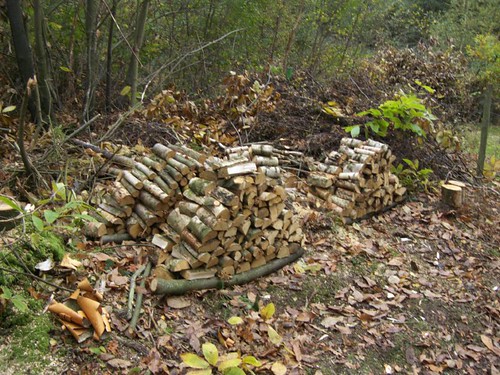 However, we have a new plan for how to process the firewood quickly, that we learned from Tim Saunders (the guy who did our oak thinning for us) of Rother Forestry. He was teaching a training course on Coppice Products that Tracy had organised. It's a bit difficult to explain the firewood plan without some pictures, so when we try it I'll write about it.
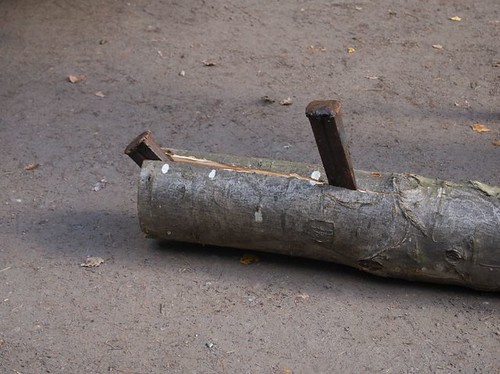
Tim also showed us how to split chestnut for post&rail fenching: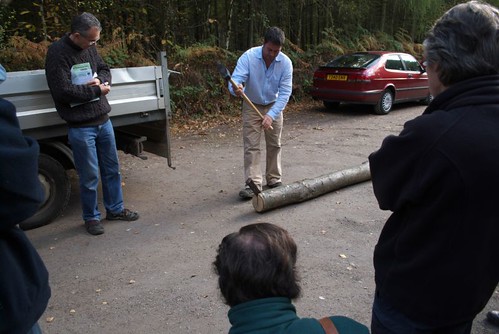
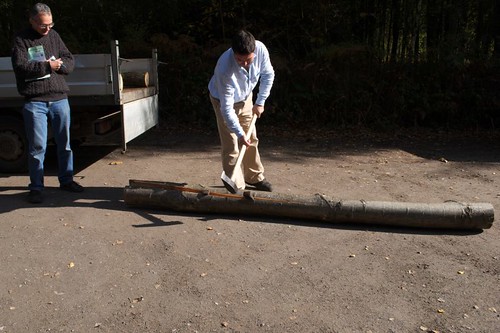
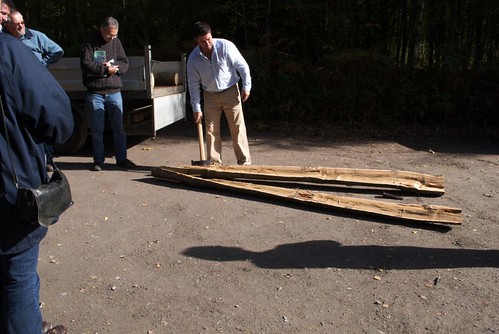 We're at the wood again on Friday to do various bits of work, including some more firewood processing and delivery.
Mike
Tuesday, 21 October 2008
Firewood and beetles


Friday, 25 July 2008
Badger video!
We went badger watching again this evening, after doing a bit more work on the shelter. This time, rather than use the SLR with it's somewhat noisy shutter, I used our compact camera and took a video instead. Here you go:
Mike
Sunday, 6 July 2008
Sunshine between the showers
Well it did rain most of the day, but the sun came out in the evening, and a quick check on the radar image on the Met Office website confirmed that there was likely to be a couple of hours before the next shower, so we jumped in the car and nipped up to the wood.
First thing we saw was a medium-sized oak branch had come down in the wind: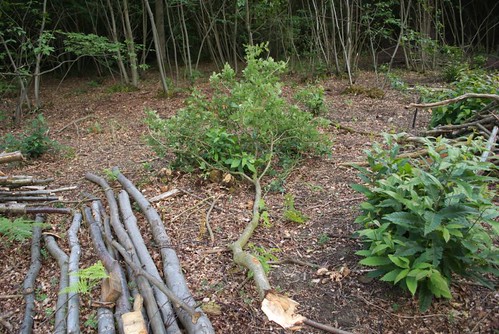
Also, in Sweep Wood, we had a slow wander along the path my Dad had marked out, and saw some interesting trees. There were several naturally regenerating chestnut and hazel, and also a couple of oaks, which was nice to see, though it made us want to fell the coppice there to give the oak a better chance! What was interesting was finding a young hawthorn and what I'm pretty sure was a beech - I'm only doubting my judgement because there are no large beech trees in sight, so I've no idea how a seed got there.
Anyway, we'll keep an eye on them - the beech was up to about 8 feet, racing for the light as it's overshadowed by the chestnut - the beech is known as a shade-tolerant tree. If it keeps growing like this I'm sure it will produce some lovely timber in about 100 years, and along the way plenty of nuts for animals to eat and also some offspring!
In an earlier post I included a picture of some chestnut coppice cut last winter in another wood, here it is again: I commented that ours is less well stocked, here's an example from one bit:
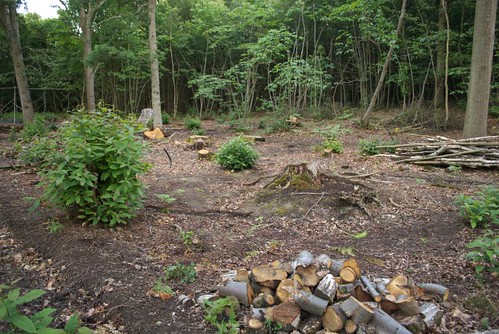 and here's part that's a bit better:
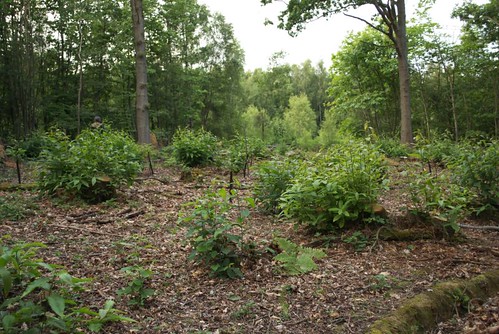 There's also a notable difference between the stools, such as this poor one:
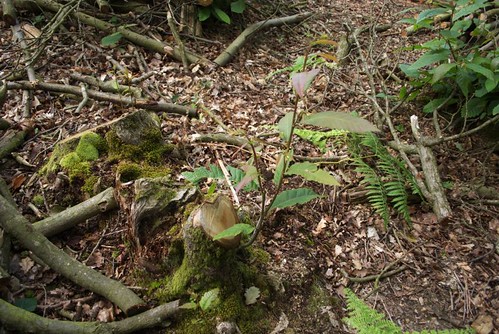 and this pollard that's growing like crazy:
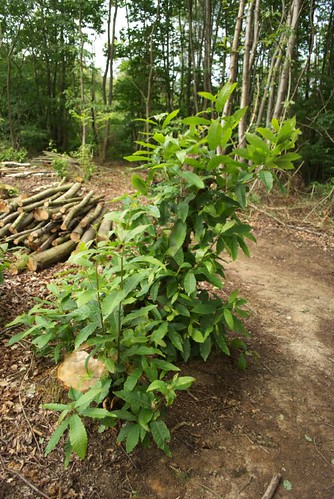 I guess when we come to do the layering we'll use the stronger stools to create the "cloned" new trees.
Mike
A visit to Ben Law's wood
Yesterday (Saturday) we went out for the day to visit Ben Law's place - Prickly Nut Wood, over in West Sussex. You can read more about him on his website: http://www.ben-law.co.uk/
He was having an open day for the Small Woods Association, and although it was an 80 mile drive for us, it was well worth it as we learned a lot - his wood is similar to ours in some ways, and he's been managing it for many years. It would take me too long to write a detailed article, so I'll simply put in the pictures from the day with some explanation...
The visit started with a 3-hour tour of Ben's woods, with lots of explanations and many chances to ask questions on management, wildlife and anything else. The woods were beautiful:
 One thing I noticed immediately was that the stocking rate was well above what it is in our wood:
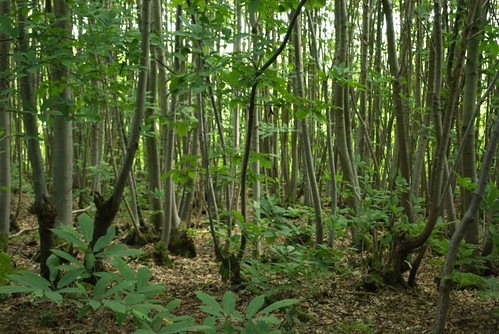 On asking Ben about this, he thought the reduced number of chestnut stools was probably due to our oak standards not being managed for many decades - they should have been periodically felled and new ones planted. At least we've made a step in the right direction by thinning some of the oaks. Ben's advice was for us to use layering (see last section on this page) in winter 2009/10 to increase the stocking rate.
One other thing I'd like to encourage is some chestnut standards for nut production. I was amazed to see the size of some of the chestnuts in Ben's wood: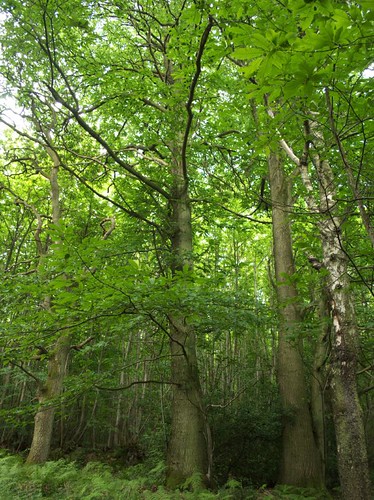 We have some larger stools that are healthy, so perhaps we can single some of them, allowing the best stem to grow into a mature tree.
Unlike our wood, Ben's is partly on a hillside, which makes extraction harder, though at least the entrance is at the bottom of the hill.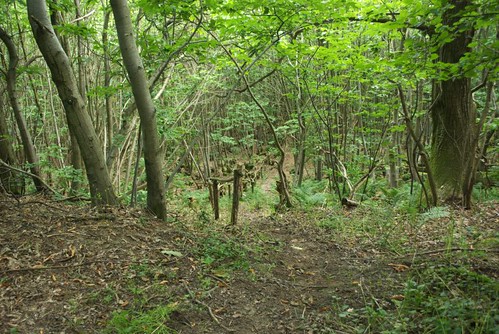 Here's a ~2 acre coupe Ben cut last winter, looking similar to our area, just a lot bigger!And here's an area that was cut the winter before - so this is what our cut area should look like in a year's time! Apparently this is where nightjars like to nest, so it's good to always have a patch that's around this height.
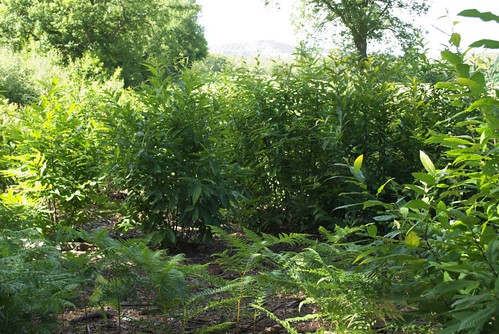 Ben also showed us some areas where the coppice has been neglected. As you can see, the trees self-single and grow large, with little of the ground-level plants that so many species of wildlife need to live in.
 Ben was asked why he's not cut this section yet - the answer was that he doesn't cut a tree until he knows who he's going to sell the produce too. Once the right buyer or market is ready, he'll cut this section and bring it back into cycle for timber production and biodiversity.
One of the keys to bringing coppice back into management is having a market for the wood, unless you have the spare cash to just get the work done without selling anything! Charcoal burning is one way of turning otherwise low-value wood into a high-value product, although the demand for charcoal depends on how the summer weather turns out... Here's a large kiln waiting to be emptied: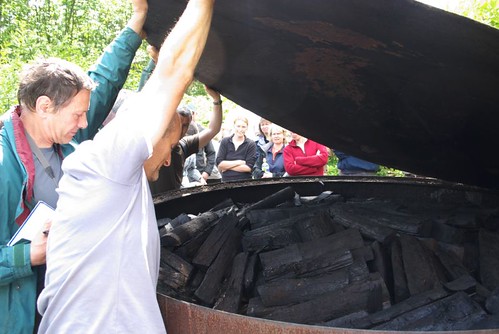 Back at his base, we had lunch in his outdoors kitchen: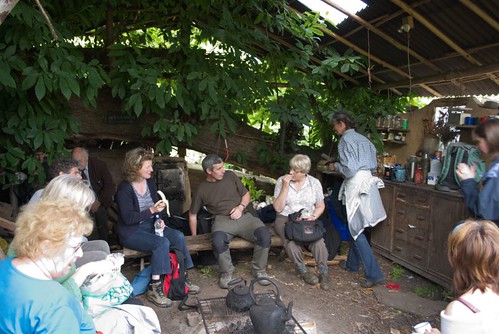
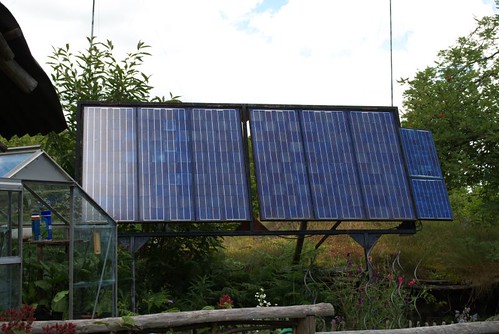
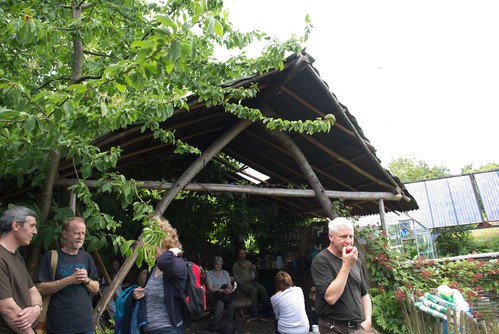 We al admired Ben's house, which he managed to get planning permission for after 10 years of living in caravans and under canvas. It's largely built from materials from his own wood, with strawbale and lime walls for good insulation. It's heated by wood stoves (naturally), with solar water heating, mini wind turbines and solar PV panels for electricity, using a large battery bank to store power for use overnight. Water comes from a spring, and composting toilets are used. So the house is totally off-grid, for both energy and water. He does have a backup diesel generator that sometimes gets used in the winter though.
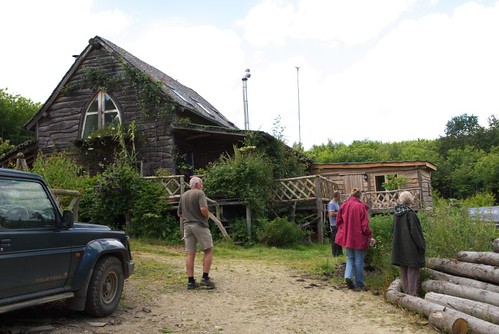
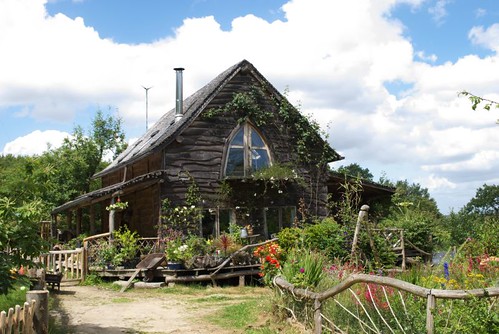
 Next to the house is the workshop: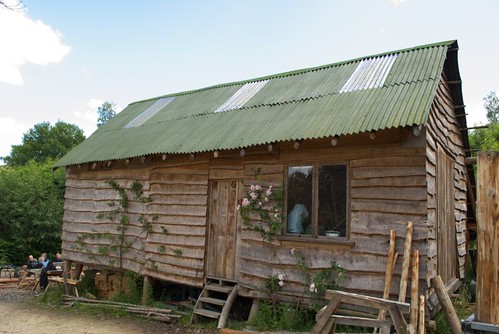
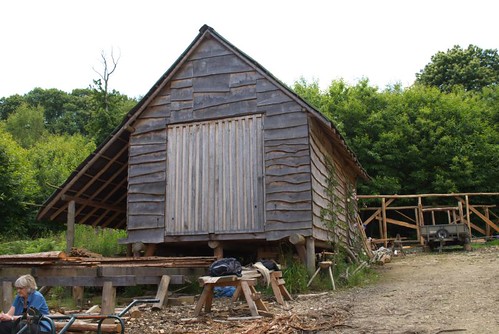
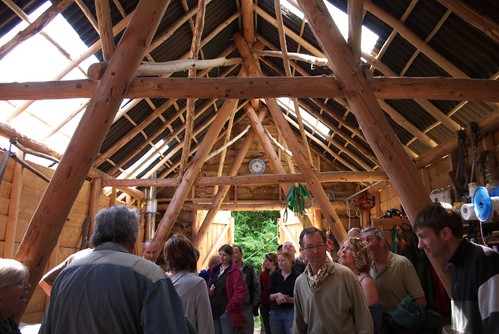 This is where Ben actually makes a living - turning the trees he's felled into useful products.
A highlight for me was the demonstration of a "logging arch". The pictures speak for themselves, I want one now!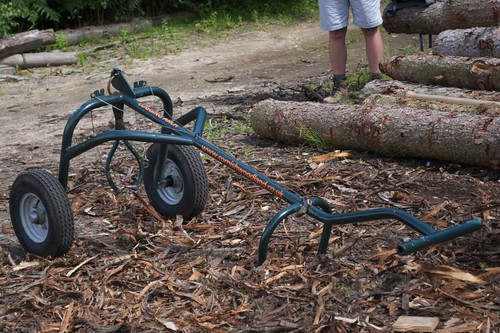

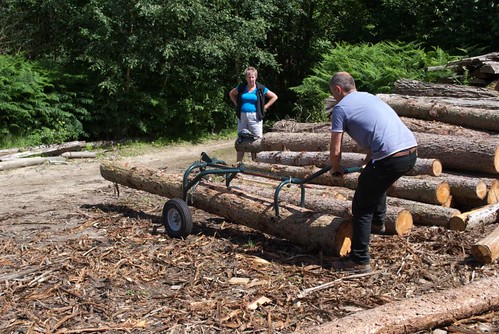
 I think I would also like some big cant hooks like these. Not sure about a sawmill though - perhaps hiring one for a day is a better option for now...
 Another handy tool was a debarker:
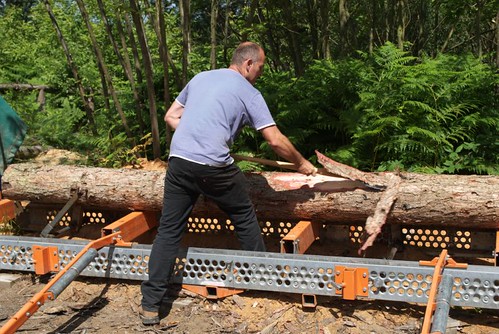 Ben doesn't only produce wood though, he also grows food. We saw a stack of logs impregnated with spores for mushroom production, and also several small orchards, such as this one nestled amongst the chestnut:
 That's all for now. It's been raining all afternoon, but is drying up now, so we might do an evening trip to the wood to consider our plans in the light of what we learnt yesterday...
Mike
Sunday, 18 May 2008
Test drive!
No, not a car, a track! After lots of digging by us and helpers over the past few weeks, we finally thought it was ready for a test run with the car: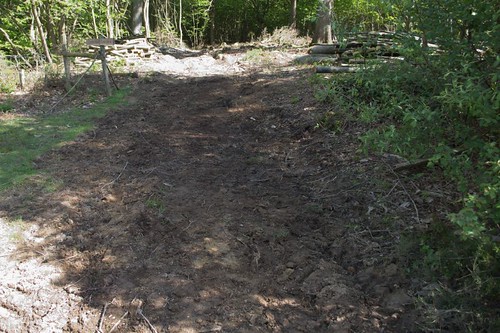 More follows in the rest of the post, including the rest of the "test drive" pictures, pond repairs and a weird fungus....
The car came in (backwards, in case it got bogged down!)....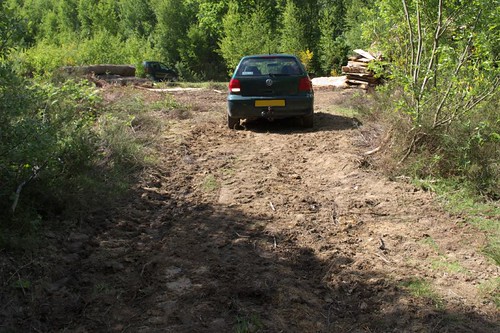 and out again:
 and the track held up nicely:
 The interesting thing was that the soft bit, where we'd laid a load of birch in the mud, sank a bit, but then sprang back up again! We'll continue with this method.... We've also heard from someone with more experience than us at managing a coppice that brash of all kinds can be helpful buried into the wheel ruts, as long as it's cut short so it doesn't flick up when a vehicle passes over.
We also did a bit of digging at the pond to fix the damage by the boar. We don't mind this, it's the price to pay for having them around.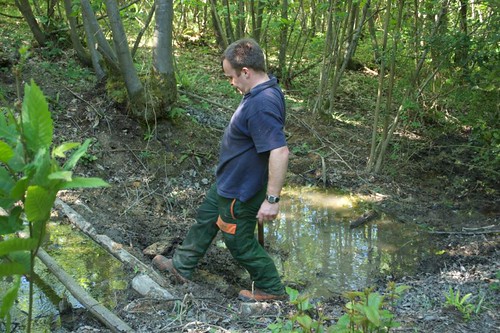 we also saw a strange fungus over in Sweep Wood, growing on the side of an ash tree:
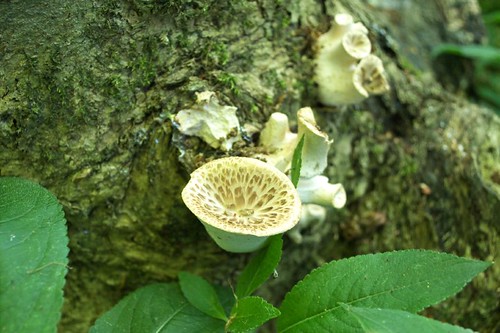 Mike
Mike
Sunday, 27 April 2008
People, planting and butterflies
Today was one of those days when it seemed like half the population of East Sussex turned up in our wood! Good job we like visitors!
The first thing we saw when we got there though was several Peacock butterflies fluttering around in our clearing. Here's one of them: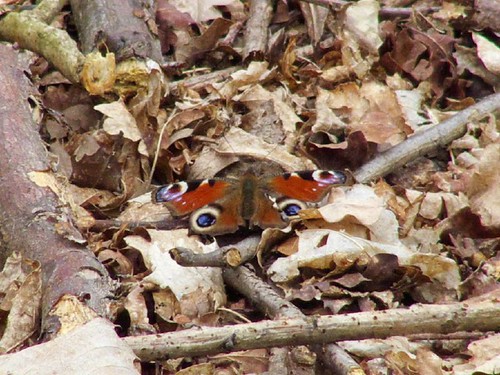 As the day was going to include more clearing up and burning, the first job was to resurrect yesterday's fire, which Cath and I got on with:
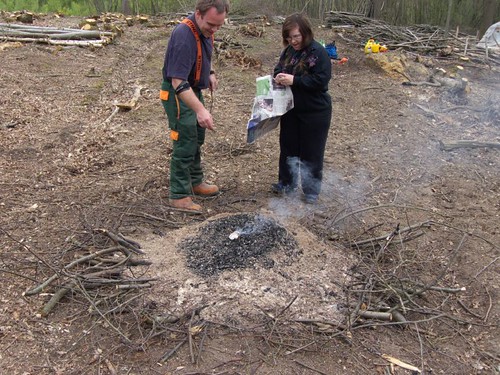 Shortly after that our visitors started arriving, and helping with the clearing up, as well as a range of other woodland activities, such as practising shelter building skills...
Charlotte, Lauren and Emily made a good start here: But succumbed to the temptation of a tea break...
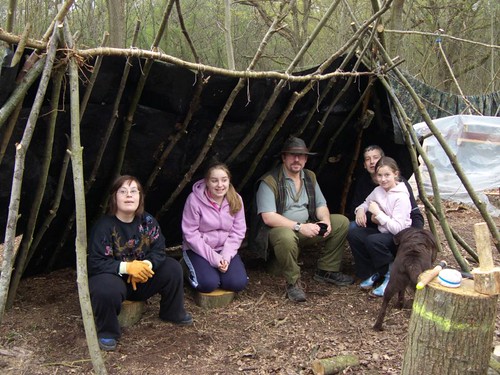
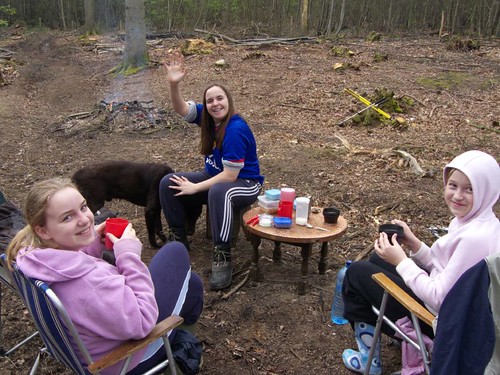 leaving Paul, Jason and Cath to finish the job:
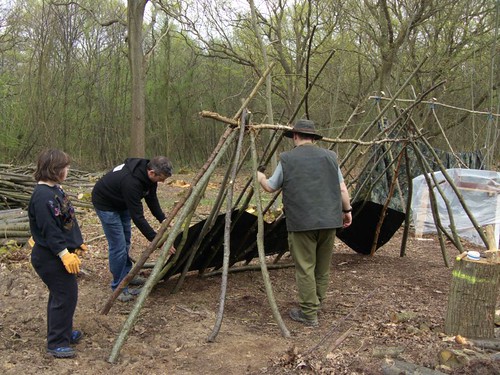 It did the job, keeping off the odd shower, though a gust of wind did blow the cover off!
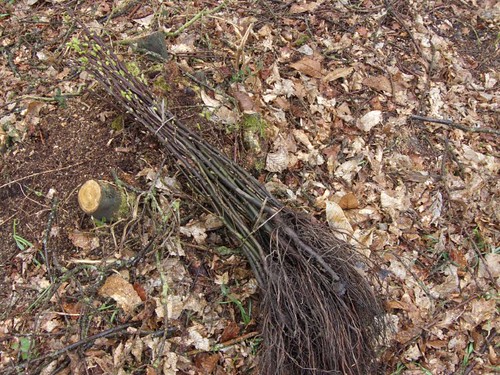
 The other neat thing that happened today was that Alison and Charlie popped over from Fantail Wood - they'd been given some chestnut whips (young trees) by someone who had a few spares, but didn't want them themselves. So, they came to offer them to us. It's getting late for planting, but hopefully most of them will make it. Here they are, about 20 of them:
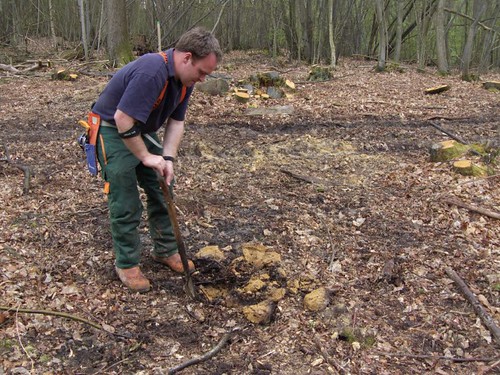
 Paul and I got busy digging holes:
 while Tracy (having been on a tree planting course) directed Charlotte and Lauren in the planting
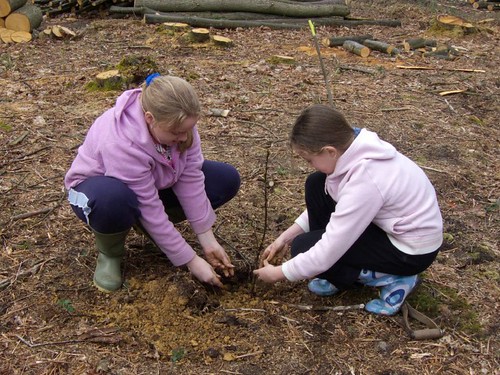 We planted them wherever there were larger gaps between the other chestnut stools, to fill the gaps as they grow up and encourage them to grow straight, to make them more useful to people next time they're harvested. There's plenty of info on the BTCV website about the appropriate densities for different species:
http://handbooks.btcv.org.uk/handbooks/content/section/3754
We saw another interesting thing on BTCV about the history of coppicing on this page:
http://handbooks.btcv.org.uk/handbooks/content/section/3703
Mike


