One clearing was just about finished today, and another one started. The new one is where a ride comes down to join the public footpath, near the pond, and Tracy's been busy there:
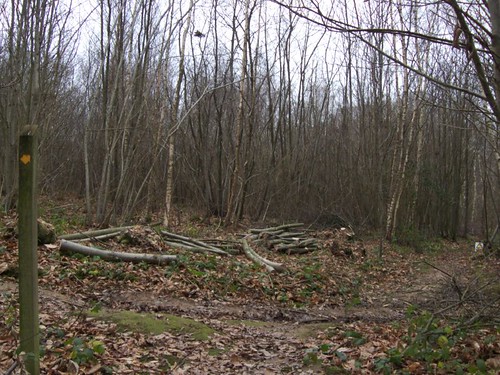 The one that's just about finished is where we've been for a while now - it's taken longer than I thought because some of the chestnut stools have had over 10 stems on them. In addition to felling them, I've also been processing them as I go along. For example, those destined for use as fuel are being split (when large enough):
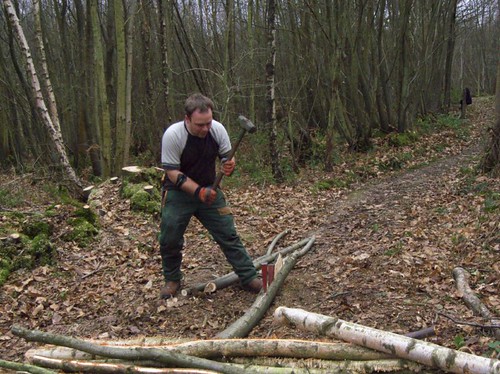 and the stacks are filling up now:
 I'm also making stakes, 5ft for the log racks, and 8ft to go down to the allotment, where a customer wants to use them for some fruit trees. Back at the "camp" we use a side axe to sharpen the stakes, which is enjoyable and you can chat while you're doing it, but if you happen to have a running chainsaw in your hand...
Find a couple of stumps on a coppice stool and wedge the stake between them: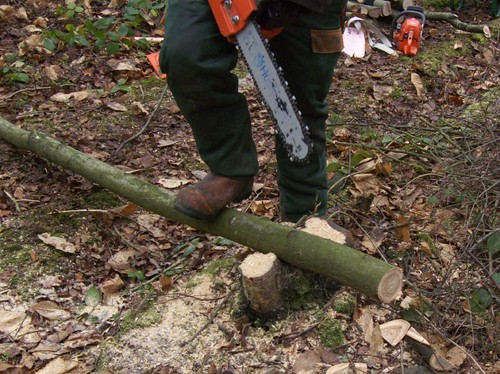 Cut off two sides using a pulling chain (i.e. bottom of the chainsaw bar):
 Turn it 90 degrees and cut both sides again: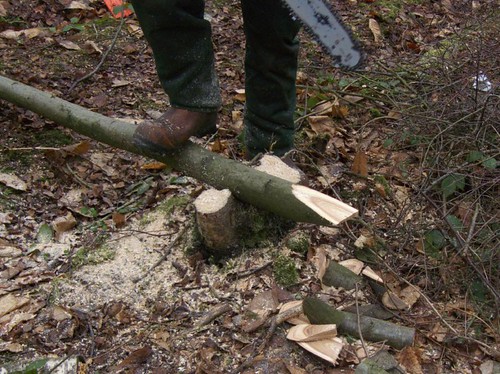
 Tidy up any edges that have too steep a slope - using a pushing chain (top of the chainsaw bar) worked better for this bit:
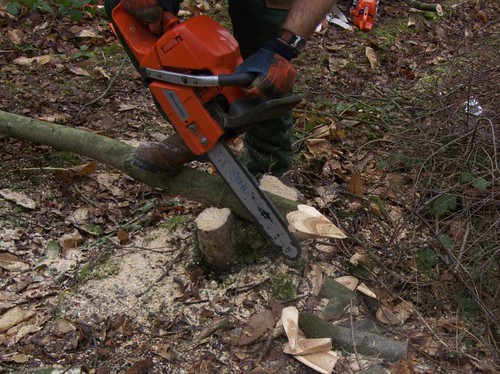 Anyway, here's the clearing, before:
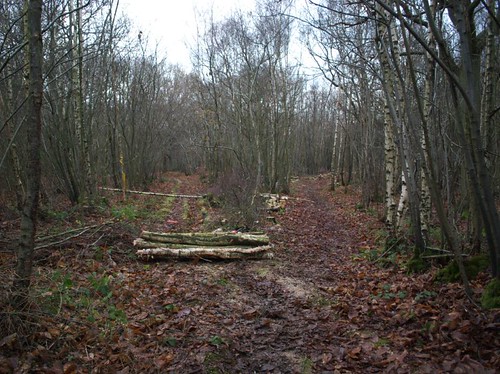 and after:
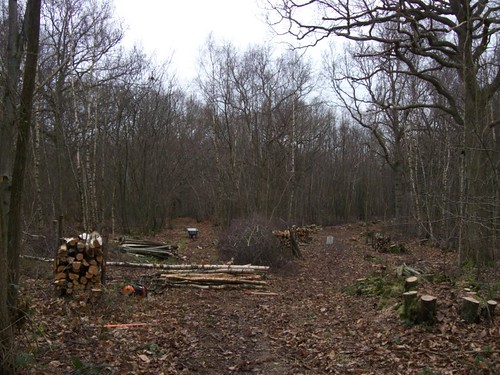 When you look up, you can see how much sky has been opened up - I'm looking forward to summer...
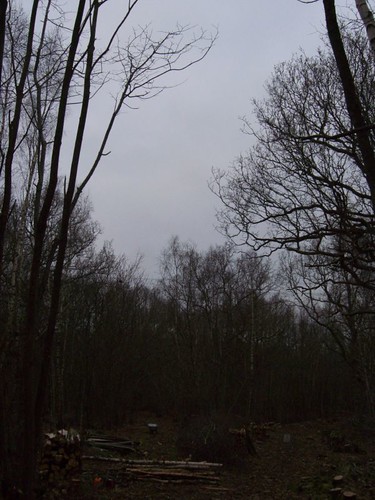 Finally, here's a view from the other end:
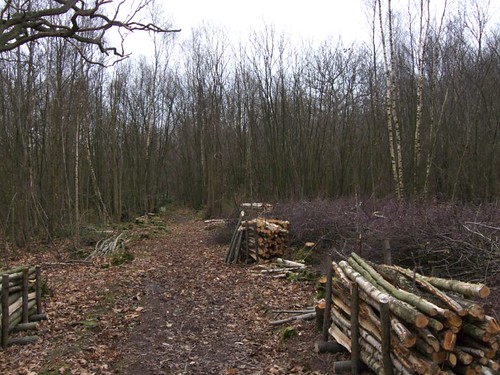 It does look a bit odd with the "dead hedge" down the middle, but hopefully this will provide cover for birds and other wildlife.
We're taking tomorrow off, and visiting Tracy's Mum. We'll be back up on Friday, but minimising chainsaw use so as not to disturb people who are out walking too much - I imagine there will be some roast turkey dinners to be worked off, so there may be more people around than usual...
Mike
Wednesday, 24 December 2008
Clearings


Monday, 8 December 2008
The start of a new clearing
As I've said before, we're coppicing along the edges of the rides and footpaths in and around our wood, to widen them and let more light in, so benefiting wildlife like butterflies, other insects, and the creatures that feed on them. So what happens where the ride from inside our wood meets the footpath at the edge of it? Well, we're shaping it to be a small clearing. Here's the progress so far:
first a photo from last week: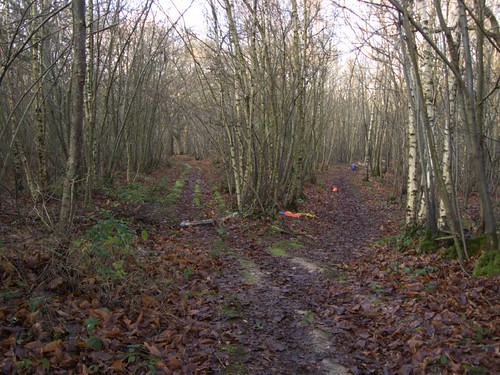 then one from the end of today:
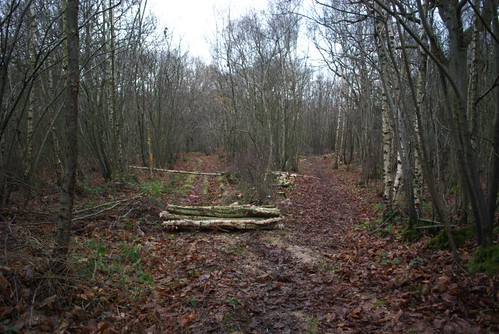 Don't worry - I've not blocked the public footpath, the ride on the left goes into our own wood, while the footpath goes right, and you can still walk round the log pile anyway.
The sky is opening up above the rides, just waiting for that springtime sun to come in...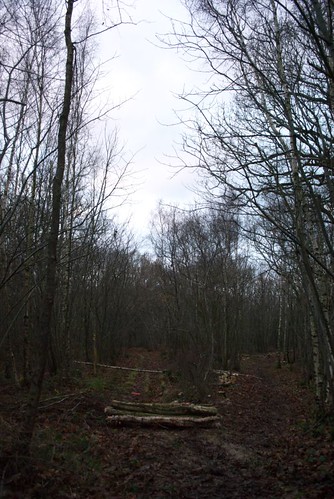 It may look like I missed a few small trees just where the rides start to diverge, but there's a reason:
 The clearing-to-be is filled with honeysuckle! This will be great for White Admiral butterflies, if they decide to venture down the newly widened rides next summer... There's more in other spots around the junction too:
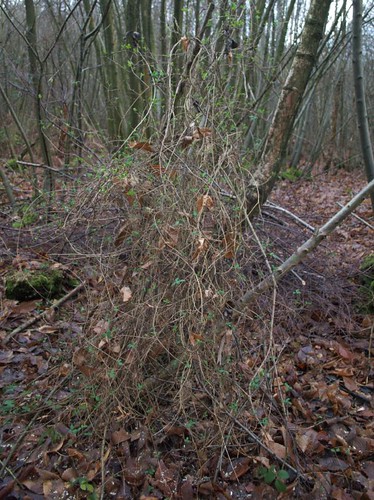 As always, we're working hard to preserve it during the felling, and leave standing dead wood and the occasional live tree where it is growing.
Tracy's also got some preservation work to do, starting with felling this group of birch trees: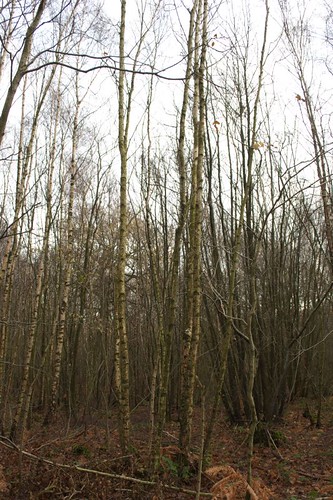 The reason? There's a young self-seeded oak next to them, that will benefit from the light that will be let in:
 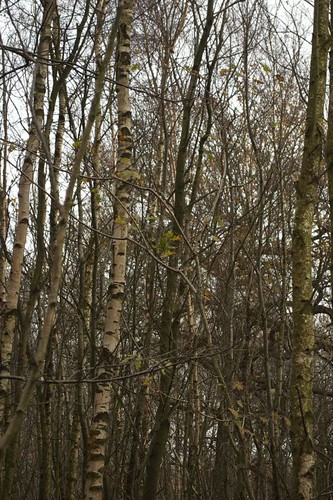 She didn't actually get to fell those birch today though, as other trees needed to be felled first to make a space for them to fall into. She did cut 15 other ones down though!
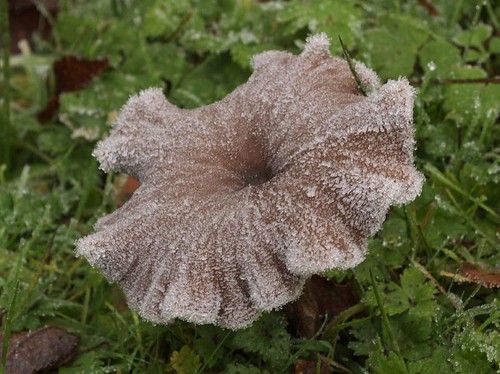
A couple of interesting odds and ends now. First, another piece of woodland archaeology, in this case what looks like a fuel or oil tank of some sort - there's a filler cap on the end of the cylinder, which is itself made of metal gauze. I guess coppicers in years gone by didn't bother taking machinery home when it broke...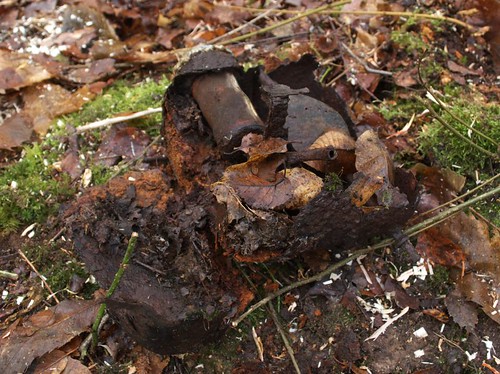 And second, what is probably the last large mushroom of this year, still frozen this morning:
 That's all for now, we're working in the wood again on Thursday and Friday.
Mike
Friday, 4 July 2008
Clearing windblown trees
I had Thursday off work this week, so while Tracy was busy in meetings about training people in woodland management, I was in our wood doing some of it! There are a number of chestnut stools in our wood that have blown over in the past, before we bought the wood, and I spent today clearing some of them up.
But first, some pictures of an interesting piece of machinery that our contractor had left at the wood: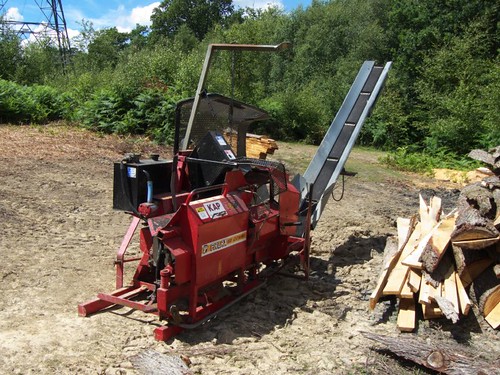 Basically, it can cross-cut a log, split it, and load it into a trailer or truck!
You can see the teeth on the circular saw for crosscutting here: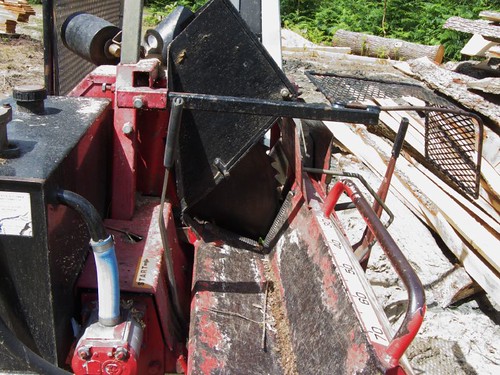 and here's the splitter in the foreground:
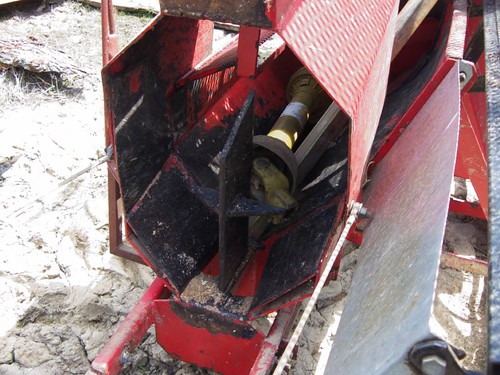 stored behind the splitter is the driveshaft, which in operation would link a tractor coupling to this point:
 Anyway, back to the work I was doing. There are several reasons to take down windblown coppice stools:
There is a potential downside in that a dead tree is a useful wildlife habitat, but this is less of an issue for chestnut, which is durable and rots very slowly, so is not much help to wildlife anyway.
No felling license is required for windblown trees, and as the majority of the ones I dealt with were already dead, there was no downside to cutting them in the summer either. A few stems were alive, but in such as state that I thought it best to deal with them right away and give them a chance to get a bit of new growth in before the summer is gone. I was focusing on the areas where we expect to coppice later this year, to save us time in the winter.
Here's a typical windblown stool, where all the stems were long dead: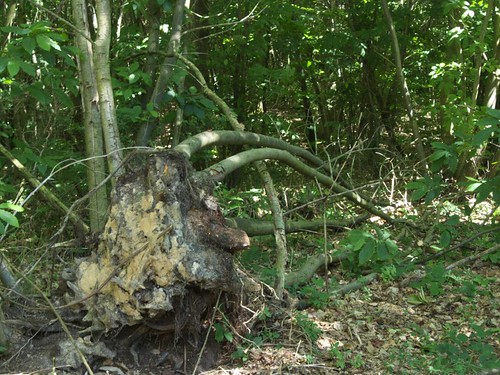 After clearing all the stems, I found that the stool itself was completely uprooted - we'll have to think about what creative use we can put it to...
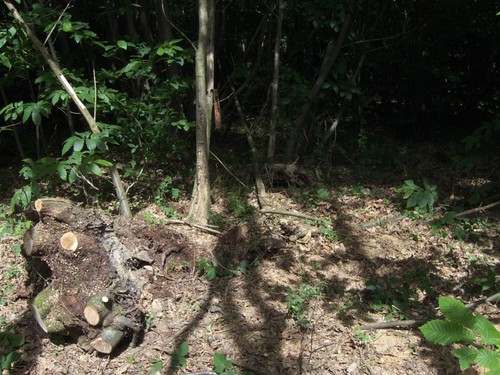 Here's another dead one after cutting the stems - very satisfying work to do!
 This one was a bit more tricky, as I wanted to preserve the honeysuckle (I only get rid of it where it's interfering with regrowth on coppiced stools):
 It worked out OK, I was able to avoid cutting the honeysuckle and trail it over another nearby tree:
 At the end of all this I had quite a pile of logs, all thoroughly dry as the trees had been dead for several years:
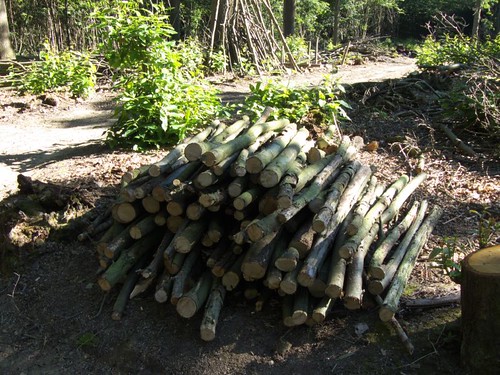 I'll be saving some this to convert to charcoal, as it should be ideal for that, and the rest will make great camp fires when needed.
While doing all this work, I saw the most butterflies ever in a single day at the wood. See the post on them here. I also saw a small lizard, but didn't have my camera with me.
Mike


