Yesterday Tracy cycled to a place she usually drives to once a week for work. It was 15.5 miles each way, and the other end is 140 metres higher than our house! She did it in about 1hr10m, with a short break, and one battery has sufficient capacity to do the round trip, although she's able to charge up at the other end. A good result we think, and well done to Tracy (who had a slightly sore bum after 31 miles in the saddle)!
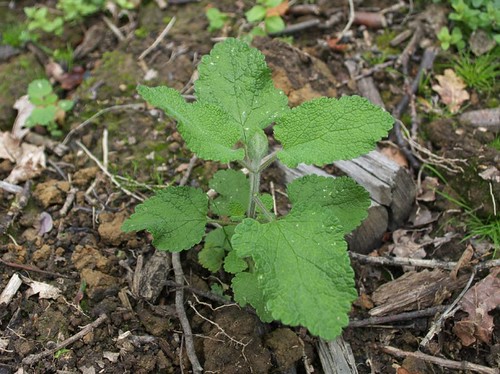
Also, an ecology expert (Patrick Roper) that Tracy knows through work tolds us that the plant we thought was Common Calamint is in fact Lesser Skullcap, which is somewhat rare. Here's the picture again: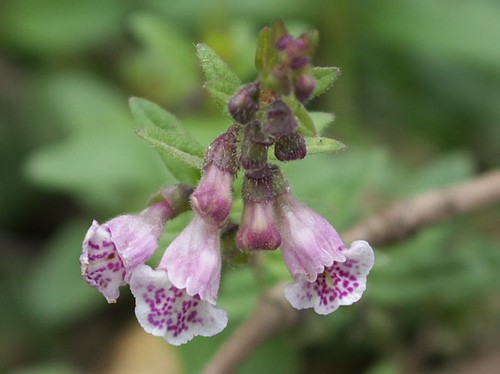 Mike
Mike
Showing posts with label common calamint. Show all posts
Showing posts with label common calamint. Show all posts
Wednesday, 10 September 2008
Electric bike update


Tuesday, 26 August 2008
Bank holiday weekend - Monday
On Monday we had to be at the wood to meet a customer, who was collecting chestnut poles or making garden furniture. We went up a bit early and Tracy tidied and sorted some of the poles while I split the birch we'd sawn on Saturday, stacking it in the drying shelter: I've worked out that once the second part of the shelter is full, we'll have almost 2 cubic meters of firewood in there!
After our customer had visited, I took a few pictures of the things that are growing. We're certainly going to have no problem with regeneration in the wood. Here's a birch, of which there are hundreds around. Many will be eaten though, so not all will grow up into trees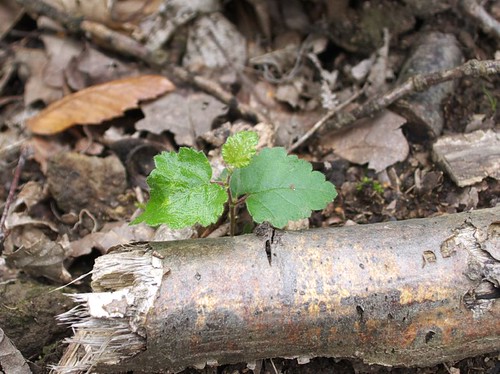 Here's a chestnut. There aren't as many of these self-seeded, but they don't seem to get eaten as much, so I think more will grow up to full size trees.
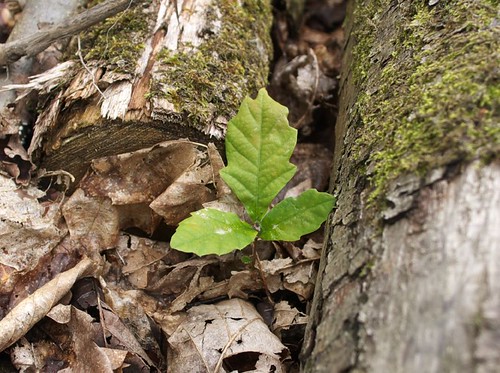
 Here's an oak. These are the ones we're trying to watch, as they seem to struggle when they're small, getting eaten and shaded out. We tried small plastic tree shelters, but they didn't seem to work so well, so we're looking for another approach...
 While we're on the subject of oak, we've found a number of acorns on the ground that have had gall wasp eggs laid in them. This one's a Knopper Gall. Apparently the insect requires both Pendunculate and Turkey oaks to complete its lifecycle.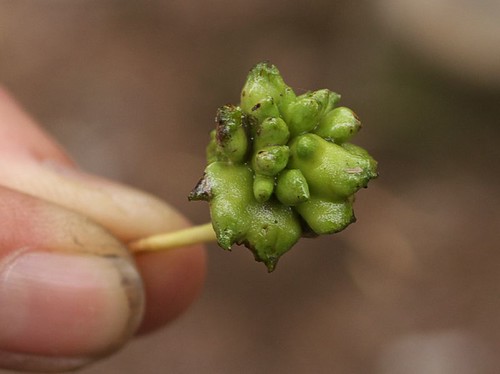
 There's also lots of new wild flowers coming up in the cant we cut last winter. These were not in evidence last year, so seem to be a direct effect of the work we did. We're not great on flower ID, but we think this is a Black Nightshade (which is poisonous):
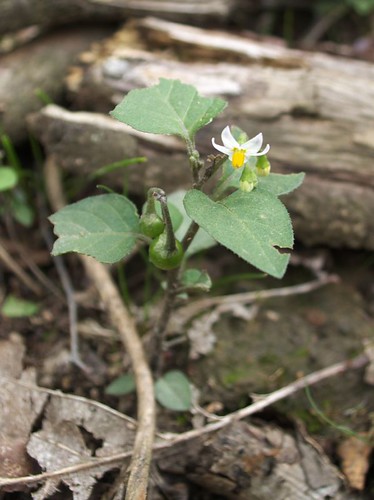 and we think this is a Common Calamint. UPDATE - it's not, it's a Lesser Skullcap, which is somewhat rare.
 There's also a lot of this, but we have no idea what it is. Hopefully it will flower and then we'll have a chance to ID it.
 Mike
Mike
Subscribe to:
Comments (Atom)


