If there's one thing that's important in managing a woodland it's access. If you can't get your products out of the wood, then there's not much incentive to produce them, and the woodland may become neglected. So, today's job was all about improving access to the wood we cut last winter.
Here's where the public footpath crosses from the track in the wayleave to the corner of our wood, where the stile is:
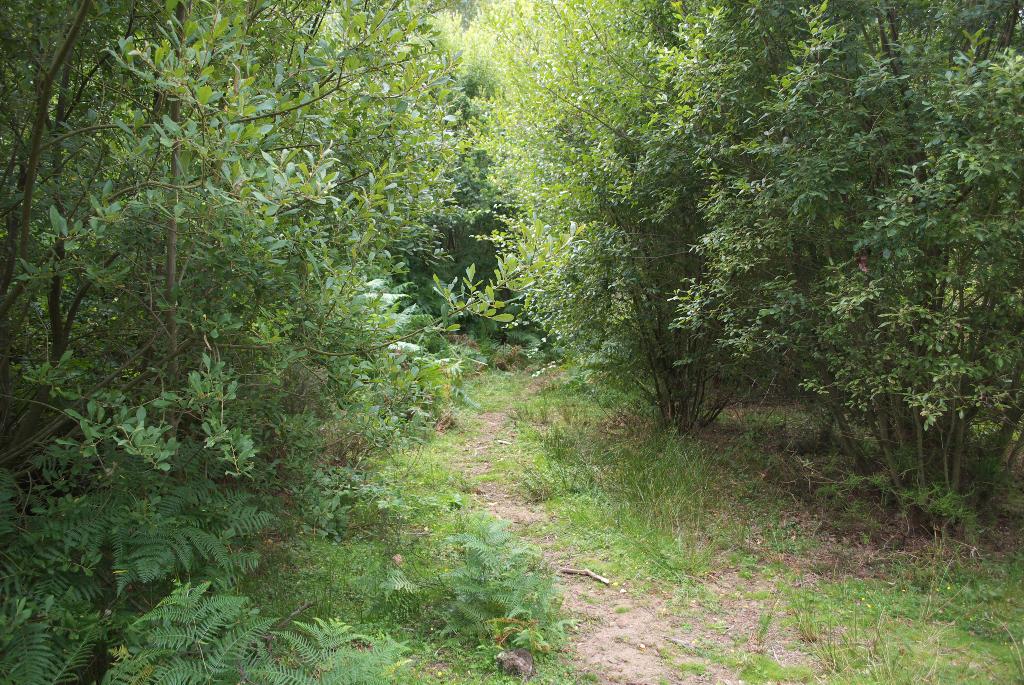 We have a right of way through here and along the footpath to get to our wood, but at the moment you would struggle to get a vehicle through. So, I got to work with the chainsaw cutting back the trees at the edges, while Tracy cleared the brash to the sides. I also used the saw to cut any stumps off low to the ground and round off their edges, to prevent damage to tyres.
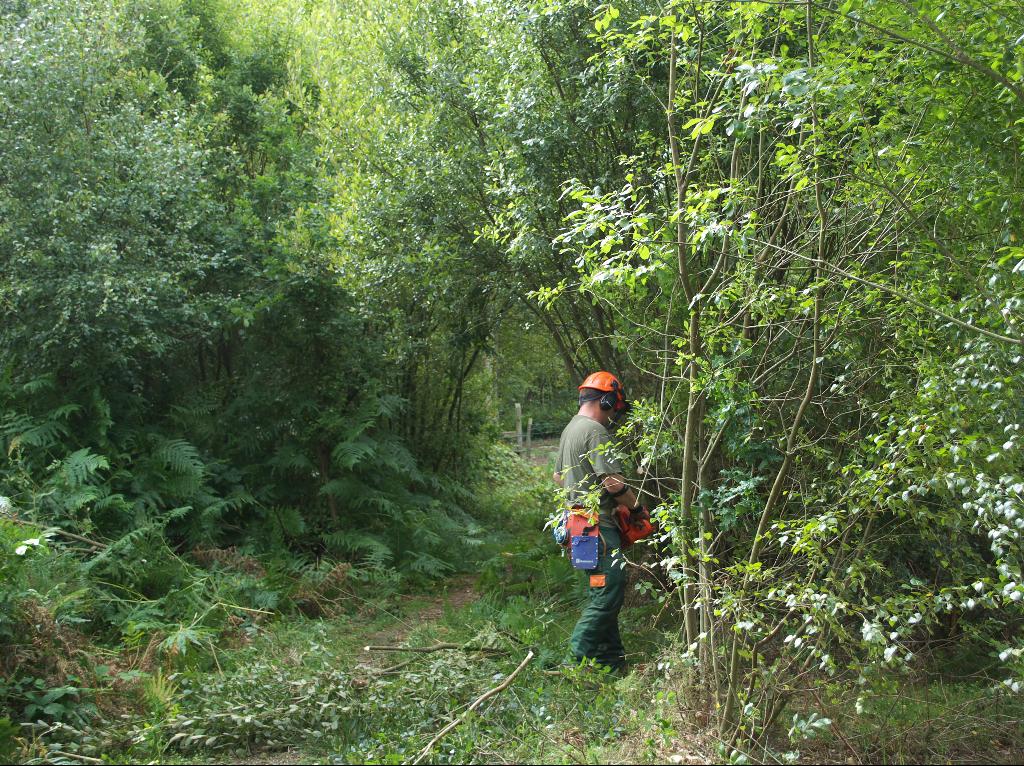
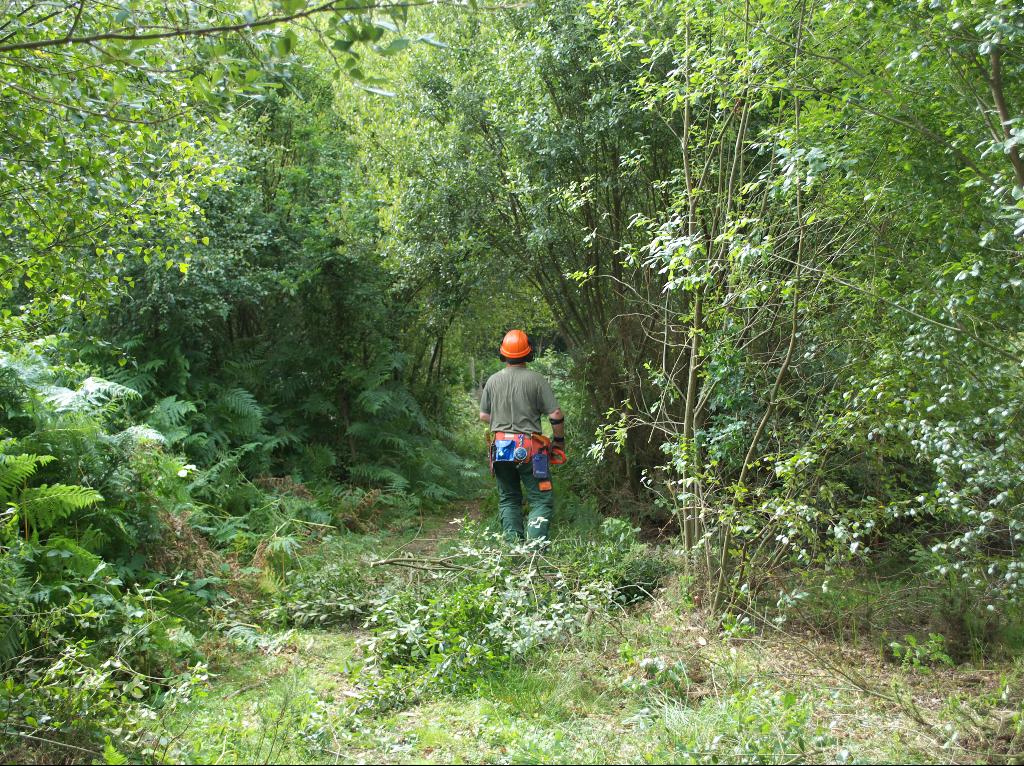 before long we had the trailer in there and loaded with logs (the fence by the stile can be unhitched):
 after which I backed the Defender in (reversing in low ratio is great!), and towed the trailer out:
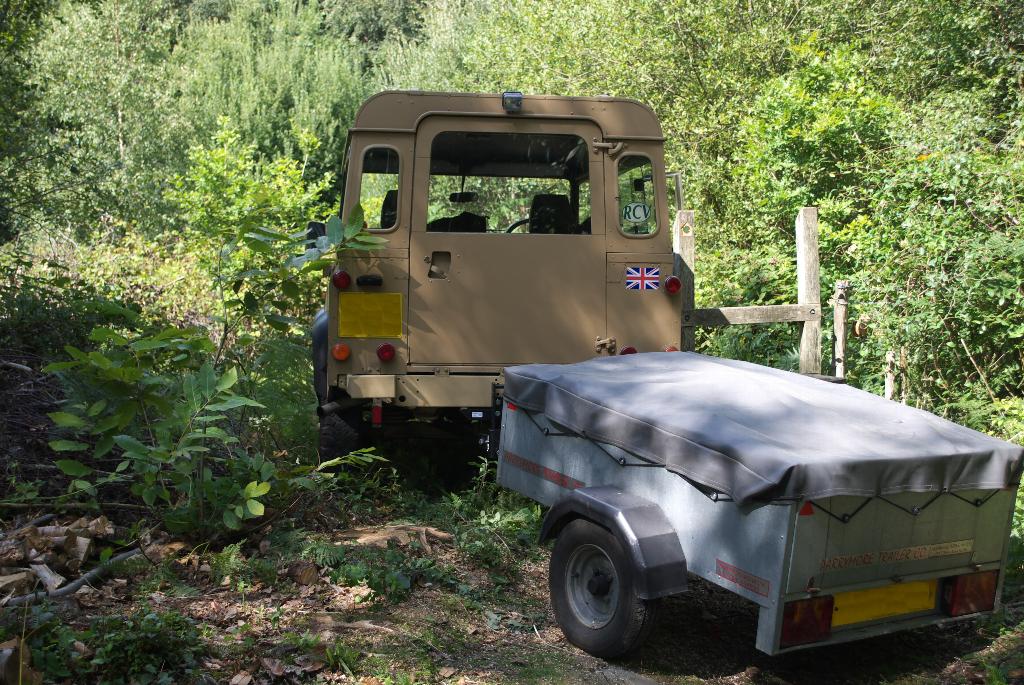
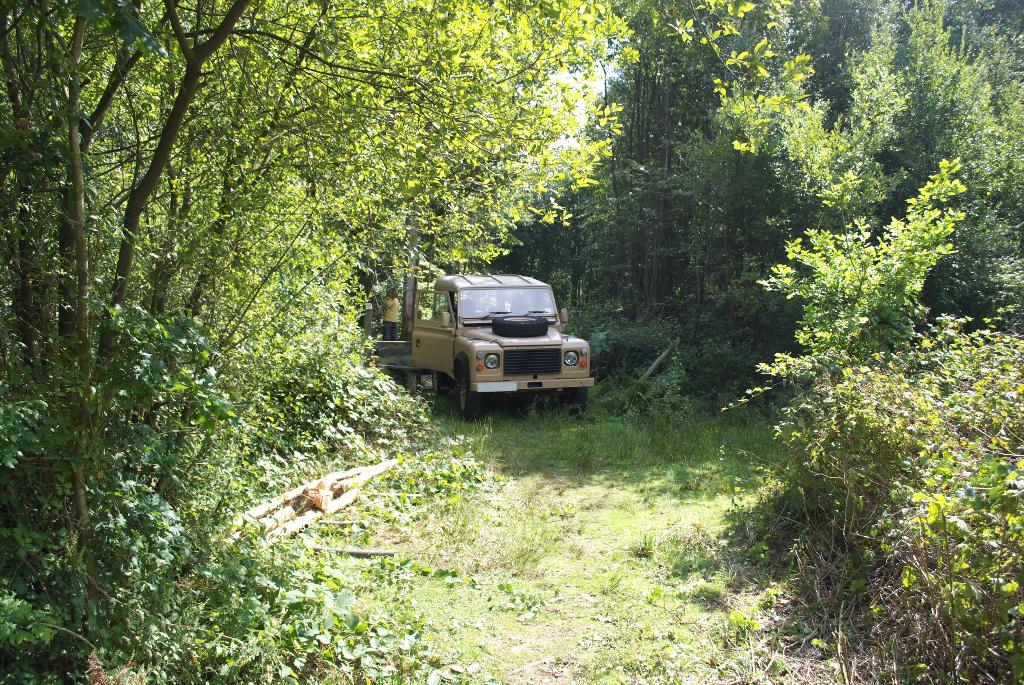 Hopefully walkers on the path will appreciate it not becoming too overgrown as well.
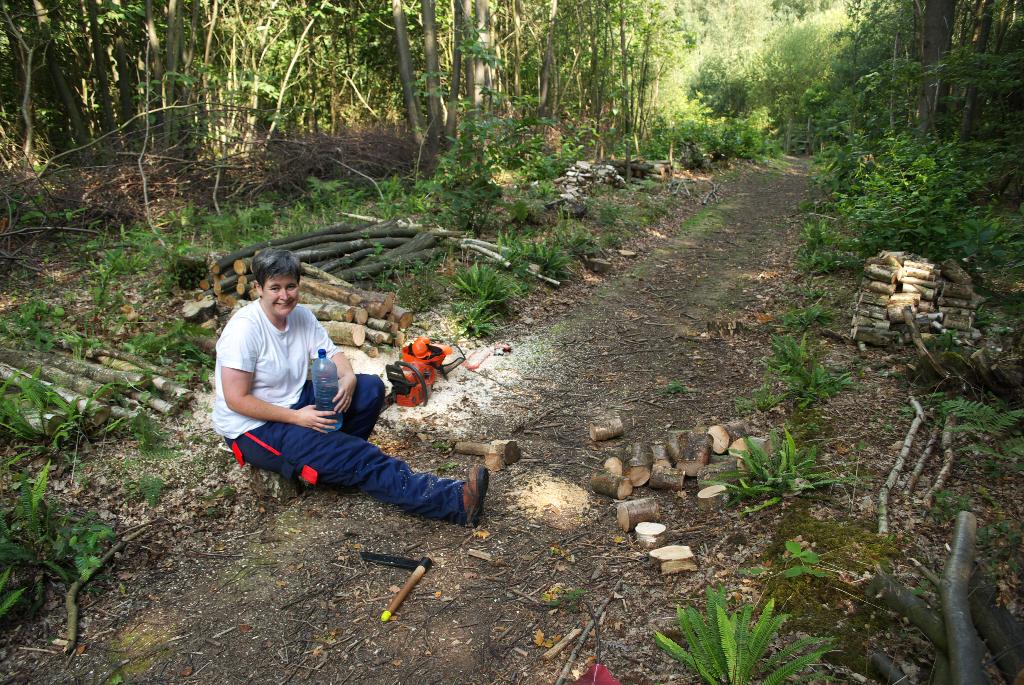
We'd been working in the same area yesterday, with Tracy cutting up and splitting some logs that had been there drying over the summer:
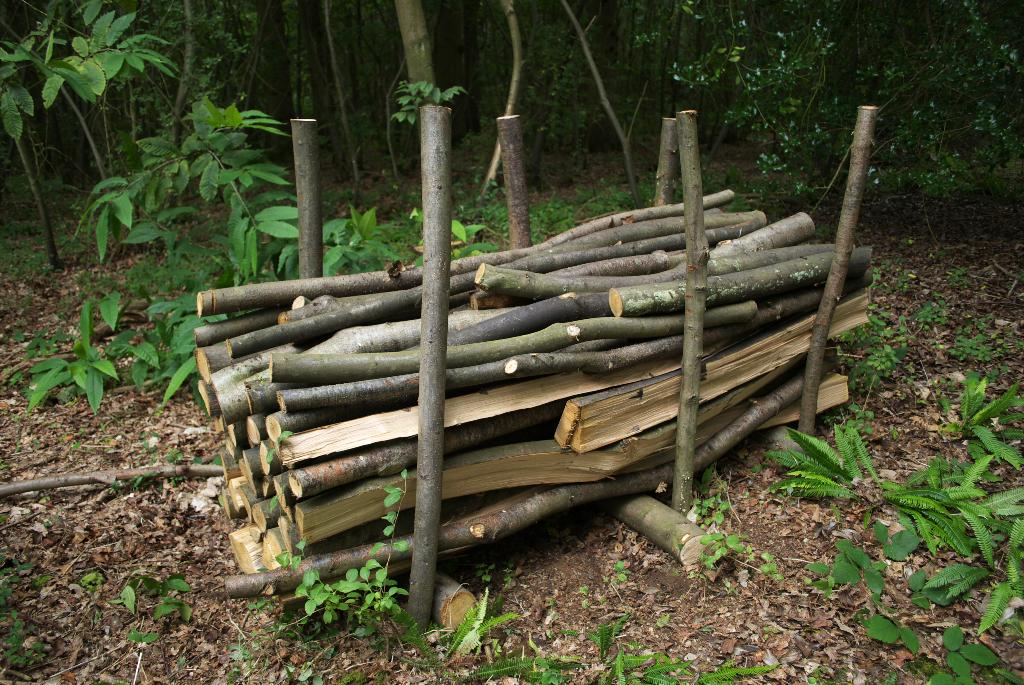
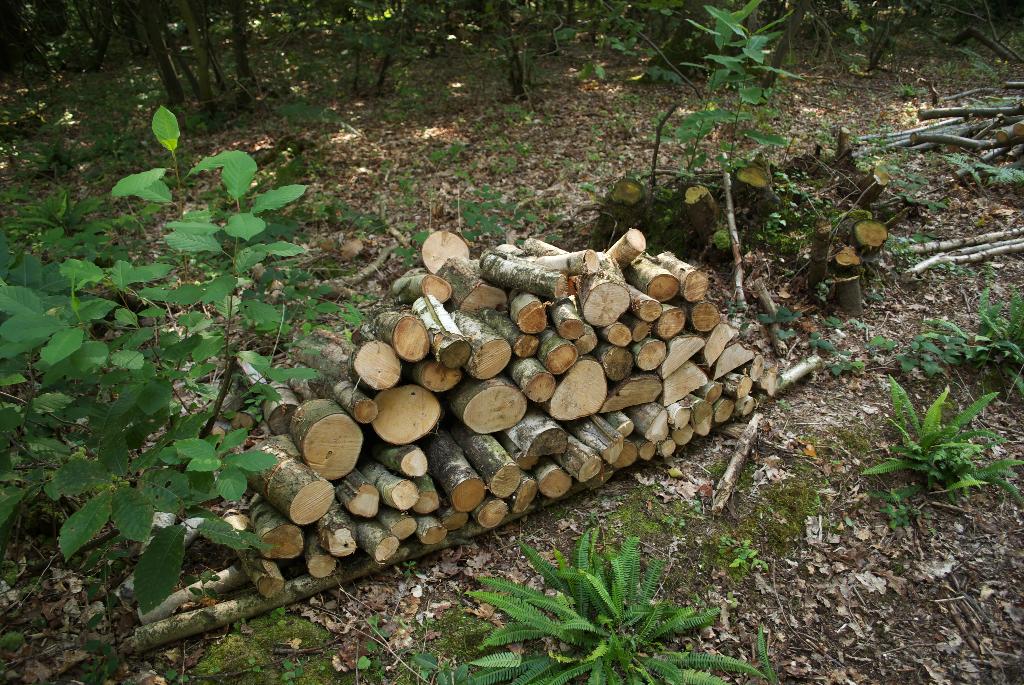 I'd also been filling racks of lengths of birch and chestnut, to cut up later on:

 One other job we did yesterday was preparing some 6ft poles for a customer to use at their allotment. Rather than measuring each pole individually, you normally measure one, and then hold it next to other poles and cut them to the same length. This time though, I came up with a neat idea to make this easier. I often use an off-cut with a "V" cut in it to raise a log off the ground for sawing - this time I made one with two "V"s, one for the measured pole, and the other for the pole being cut:
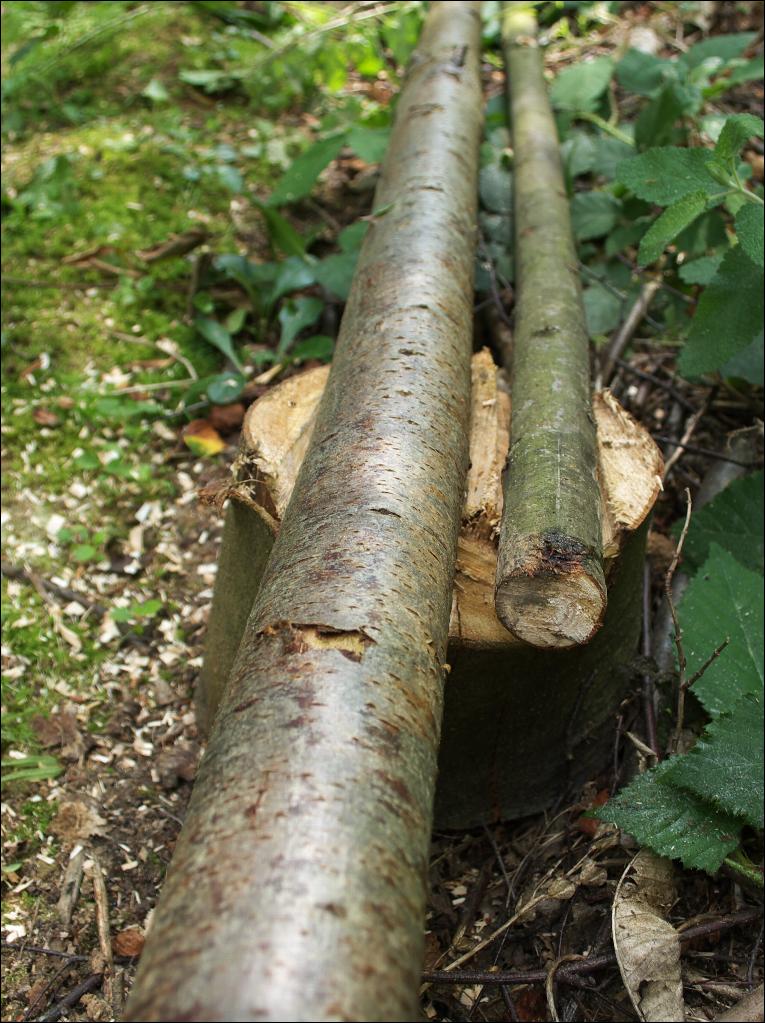
 Then the poles are exactly parallel, and it was easy to cut accurately to length.
That's all for now. We're up in the wood again later in the week...
Mike
Tuesday, 11 August 2009
Access, access, access...


Monday, 21 July 2008
A busy weekend
Wow, that was hectic! After Alex visiting on Friday, we went to the SWOG meeting Tracy had organised on Saturday, and then on Sunday tried out some electric bikes in London and carried on up to Oxford to catch up with various friends and visit our old church in the evening.
The SWOG event was very worthwhile, and Tracy will be posting a summary on the SWOG website later. For now though, here's a quick summary:
Nigel Symes, RSPB Woodland Advisor and author, told us about the disturbing loss of species of birds known as "woodland specialists" - i.e. they only live in woodland. These included the Lesser Spotted Woodpecker, Marsh Tit, Hawfinch, Redstart, Willow Warbler, Woodcock, Lesser Redpoll, Willow Tit and Tree Pipit. These species have all declined significantly, some drastically, since about the late 80s or early 90s. As far as the RSPB can tell, the main reason for their decline is the progressive cessation of woodland management since the 1940s, with a time delay before the effects became apparent.
The RSBP recommended strategy to help these birds includes:
David Plummer, wildlife photographer, gave an excellent talk on badgers. He's been watching them in his wood for some time now, and has had guests to watch them too. He illustrated his talk with excellent pictures, all taken by himself. The interesting thing when it comes to watching badgers is that they have very poor eyesight, but excellent smell, so as long as you sit downwind you can get really close! To find out more about David's badgers, and also his photography training courses, visit his blog and photogrpahy website.
Alan Sage, woodland manager and craftsman, spent the afternoon explaining the practicalities of managing woodlands, covering far more than I can write about here, and answering questions from anyone who asked. He's worked in coppicing and other forestry activities for many years, and specialises in using his craft skills to produce valuable products from the wood he manages. His key message was that it is possible for any woodland owner to make some money from the produce of their wood, and that this money would enable them to manage the wood better for biodiversity and enjoyment. A great many woods are neglected because the owners do not have the time to manage them, or the money to pay someone else to, and the biodiversity suffers as a result. Therefore, helping people get woodland products to market can be a big help, as well as displacing unsustainable materials such as metal, plastic concrete, brick and fossil fuels. To find out more about the training courses and other services offered by Alan, visit http://www.ajscrafts.co.uk
OK, so that was quite a detailed summary!
We went up to the wood today (Monday) to do various things, and I have some pictures, but I'll have to wait until tomorrow to post them...
Bye for now, Mike
Sunday, 13 July 2008
Management planning and a fox.
We had a meeting today in the woods. Steve Wheatley came to advise us and some of the other woodland owners on management of the woods for biodiversity. Steve's particular focus is on butterflies, but he knows about other wildlife too, as he's trained in conservation, ecology and other useful things! We had people from Grist Wood and Fantail Wood, and we were representing my parents as well as our own wood.
Steve gave us lots of useful advice on designing a management plan that will work for parts of the wood and the wood as a whole - we have some work to do now...
One thing that's clear now is our plan for this winter's work - we'll be coppicing a few metres at the edge of the rides and footpaths that run along and through our wood, creating "scalloped" areas at intervals as mini-clearings and to break up any wind-tunnel effect. We'll also be avoiding damage to the occasional interesting trees along the way, such as a few youngish oaks (very pleased to see these!), hornbeam and holly - simply because they're different to everything else growing there, so add to the diversity. We may also find a few chestnut stems we can leave to grow on as standards, maybe increasing their nut production...
After everyone had gone, I wandered off on my own with the camera. The wood is still full of birds and stuff, you just can't see them as easily because of the leaves. I managed to get a couple of shots of a blue tit though:
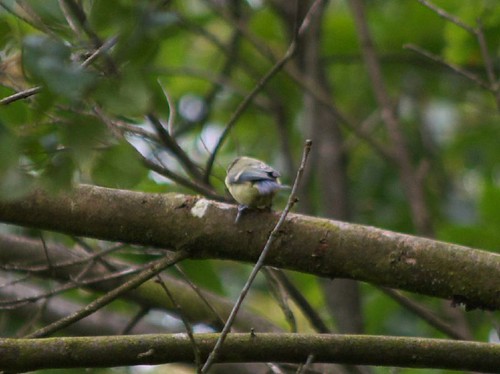 I saw a coal tit too, plenty of different butterflies and a huge dragonfly, though it wouldn't sit still for a picture! It's amazing how much you see when you stop and stand still for a few minutes...
Most exciting though was getting to the style from the wayleave onto the public footpath and seeing a fox! It was nearly 100 metres away and about to disappear round the bend in the path, so I didn't have time to get a good photo as I had the camera set up for the sunny wayleave, not the shady wood, but here's a blurry cropped image of the fox: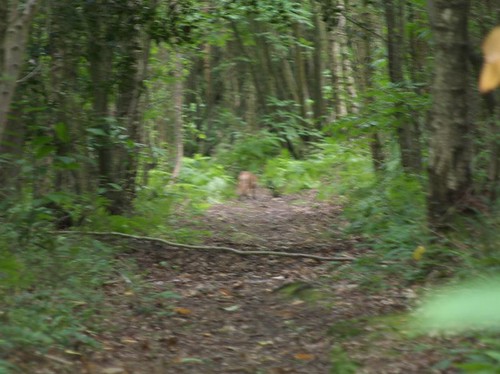 We thought they were in the wood, but this is the first one we've seen. Cool!
Anyway, got to go, there's a lot to do, as we've just rented a garage out the back of our flats (sharing with a neighbour), so there's stuff to be sorted and moved...
Mike


