I was up in the wood to do some work on Thursday (see earlier post), and saw more butterflies than I ever had before in one day there!
The area I was working was where we'd seen the White Admiral last weekend, and as I was in the at spot for several hours, I saw a lot more of them. At one point there were three at once, chasing each other around! It's exciting to see that we've created a habitat for them - they were not to be seen in our wood at this time last year - especially as they are a priority species on the Biodiversity Action Plan. I got some better pictures of several of them:
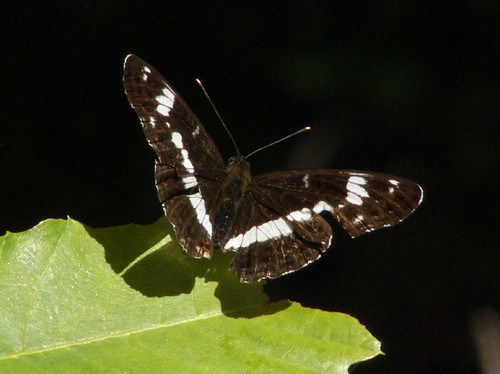
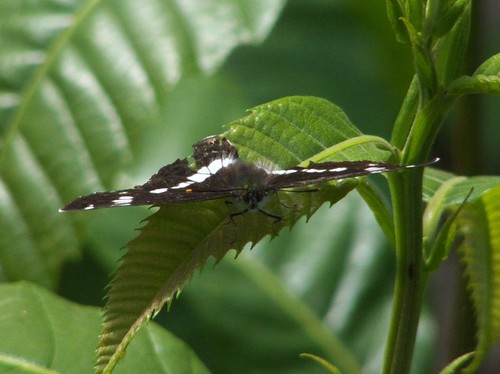
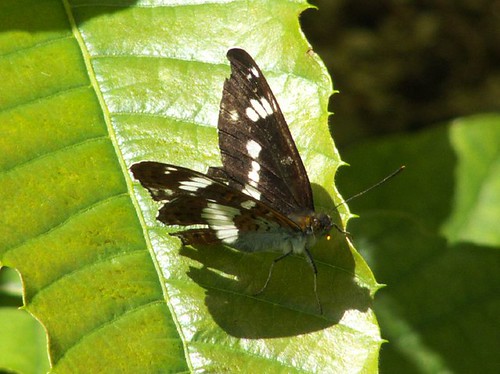 However, the first butterfly I saw in the wood was before I'd even dumped the stuff I was carrying. It was fluttering around a clearing we'd made felling birch on the ride edge almost a year ago:
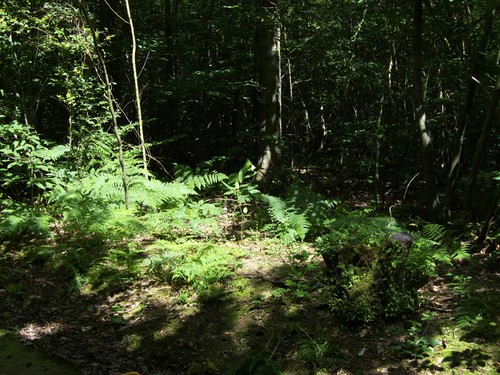 Here it is: the Speckled Wood:
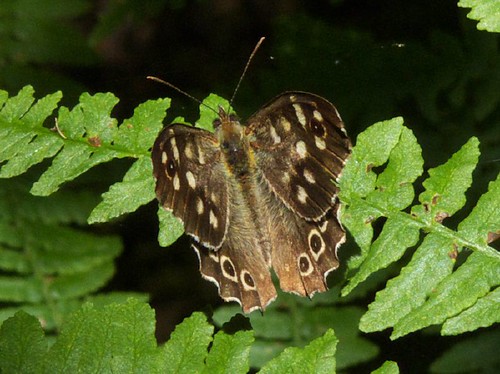 While I was working, there was a small orange and brown butterfly zipping around, but never stopping for me to get a photo. However, while on a break I wandered over to our entrance, and caught one on the ground - it's a Meadow Brown
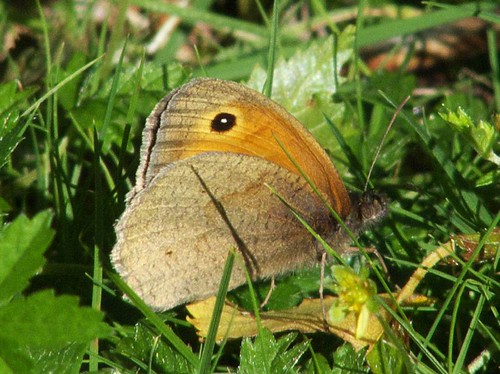 Nearby was another as yet unidentified butterfly: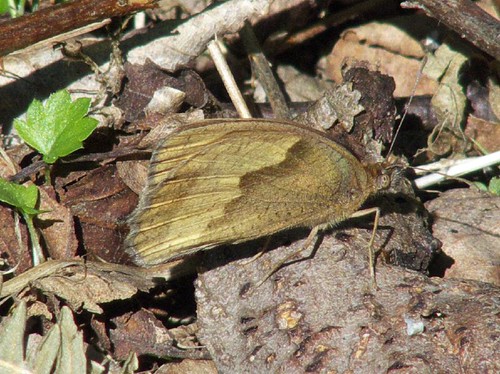
 I also saw (but did not get to photograph) a Brimstone, what was probably an Orange Tip and something small and blue!
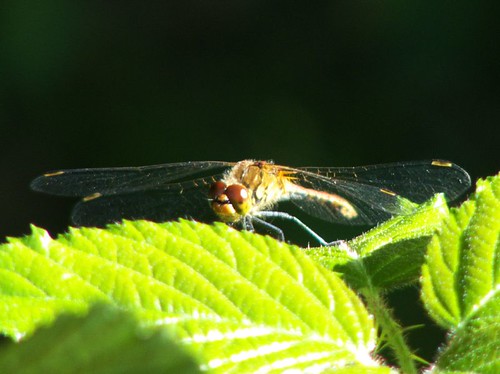
Of course, there were other insects around too, such as these dragonflies: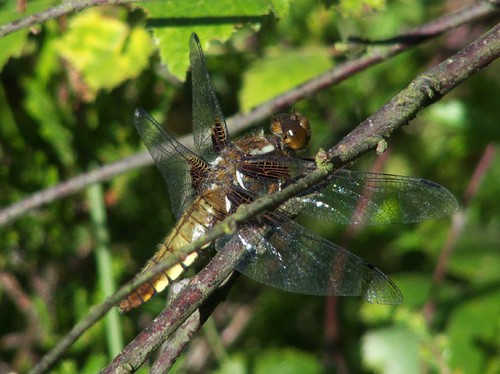
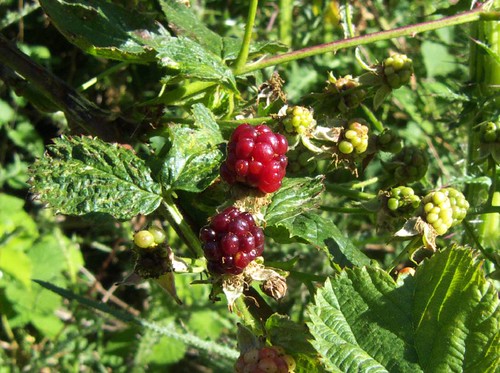
 The very first blackberries are now beginning to ripen:
 and something strange has happened to our pond - the green foam has gone:
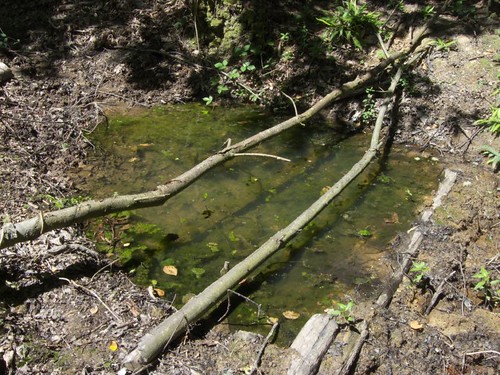 This happened to the smaller downstream pond too, so maybe it's just a stage they go through? There are still plants growing in it, so we will wait and see what happens...
Mike
Friday, 4 July 2008
Butterflies!


Clearing windblown trees
I had Thursday off work this week, so while Tracy was busy in meetings about training people in woodland management, I was in our wood doing some of it! There are a number of chestnut stools in our wood that have blown over in the past, before we bought the wood, and I spent today clearing some of them up.
But first, some pictures of an interesting piece of machinery that our contractor had left at the wood: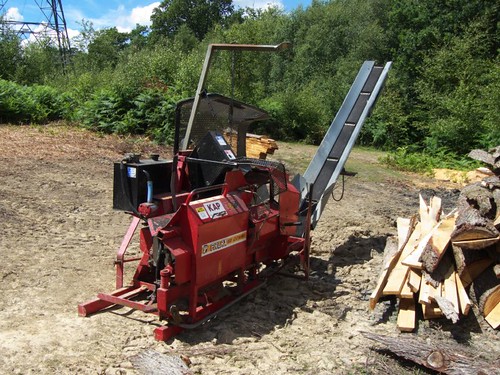 Basically, it can cross-cut a log, split it, and load it into a trailer or truck!
You can see the teeth on the circular saw for crosscutting here: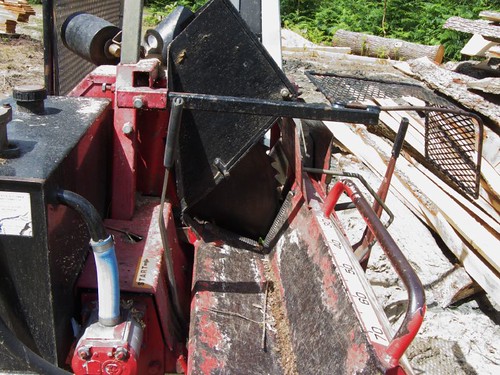 and here's the splitter in the foreground:
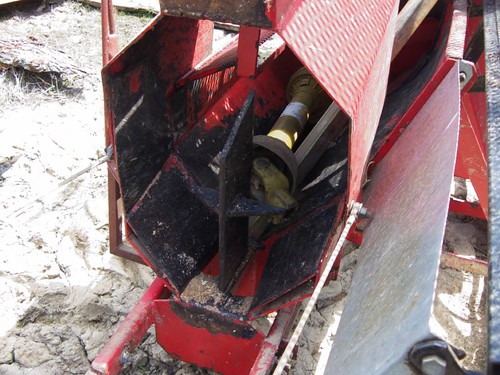 stored behind the splitter is the driveshaft, which in operation would link a tractor coupling to this point:
 Anyway, back to the work I was doing. There are several reasons to take down windblown coppice stools:
There is a potential downside in that a dead tree is a useful wildlife habitat, but this is less of an issue for chestnut, which is durable and rots very slowly, so is not much help to wildlife anyway.
No felling license is required for windblown trees, and as the majority of the ones I dealt with were already dead, there was no downside to cutting them in the summer either. A few stems were alive, but in such as state that I thought it best to deal with them right away and give them a chance to get a bit of new growth in before the summer is gone. I was focusing on the areas where we expect to coppice later this year, to save us time in the winter.
Here's a typical windblown stool, where all the stems were long dead: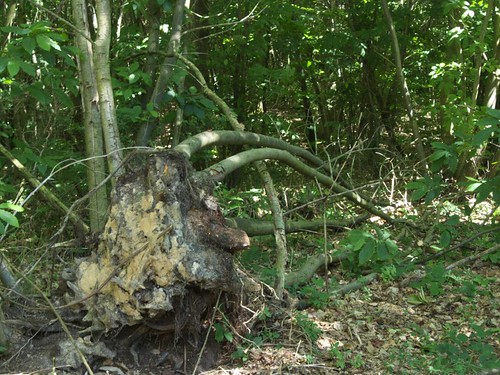 After clearing all the stems, I found that the stool itself was completely uprooted - we'll have to think about what creative use we can put it to...
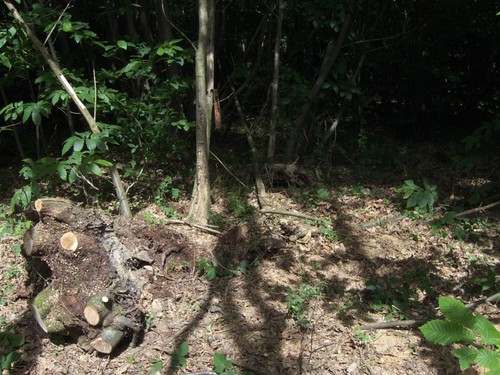 Here's another dead one after cutting the stems - very satisfying work to do!
 This one was a bit more tricky, as I wanted to preserve the honeysuckle (I only get rid of it where it's interfering with regrowth on coppiced stools):
 It worked out OK, I was able to avoid cutting the honeysuckle and trail it over another nearby tree:
 At the end of all this I had quite a pile of logs, all thoroughly dry as the trees had been dead for several years:
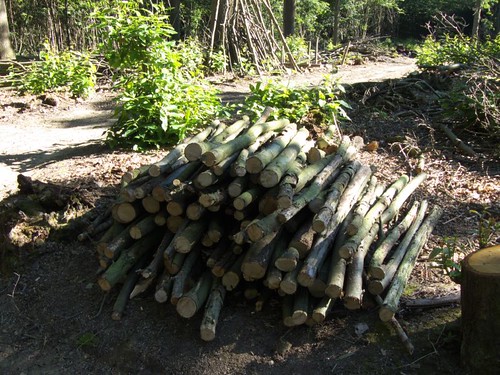 I'll be saving some this to convert to charcoal, as it should be ideal for that, and the rest will make great camp fires when needed.
While doing all this work, I saw the most butterflies ever in a single day at the wood. See the post on them here. I also saw a small lizard, but didn't have my camera with me.
Mike
Wednesday, 2 July 2008
White Admiral butterfly
OK, I know these are not great pictures, as Tracy had to take them while running after the butterfly, but we wanted to put them up for people to see.
We've had a huge number of butterflies and moths in the wood since we coppiced it, including Red Admiral, Peacock, Brimstone, Speckled Yellow, Holly Blue and more. This time though we thought we saw a White Admiral, which Steve Wheatley of Rother Butterfly Conservation has asked people to look out for. So, Tracy set off chasing it, and managed to get these pictures. It looks like it's a female of the species. If you can't see it in the second picture, it's perched on the stick near the centre.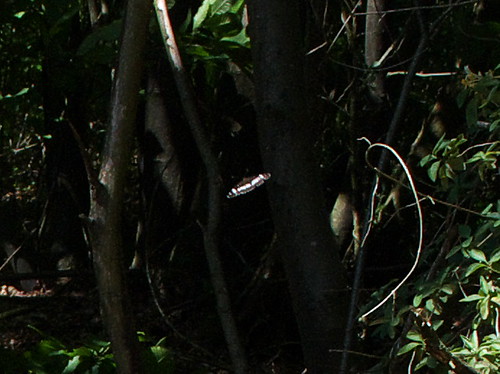
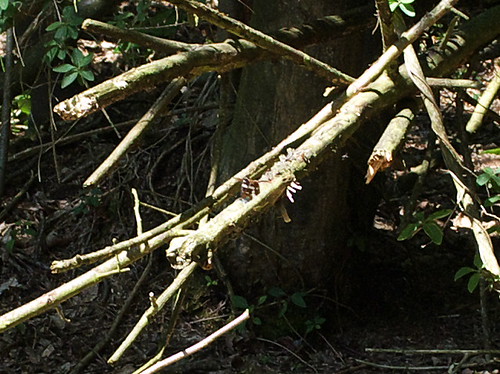
It's also interesting to see exactly why the butterfly was where it was. Here's the area it was flying around: It's on the perimeter of the area we coppiced, between the light and dark portions of the wood. Also in evidence was the honeysuckle where it lays its eggs:
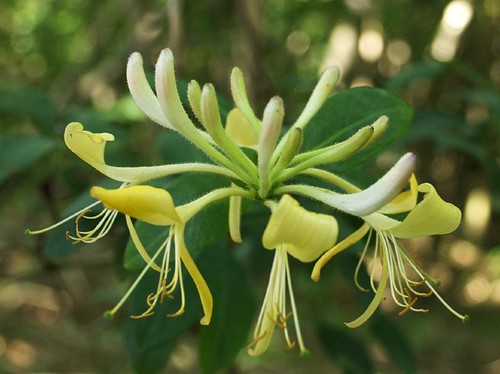 Now I know honeysuckle is a pain when felling trees, as it tangles everything up, and we are making an effort to stop it smothering regrowth on the coppice stools and the small self-seeded oaks. However, we are leaving it where it grows on mature trees, as not only does it look nice, but it is also important for these butterflies and other creatures too.
Mike
Tuesday, 1 July 2008
Moving targets
We were up at the wood on Saturday, and I spent some time photographing flies, just to see what I could achieve with the new camera. I was pleased with the results: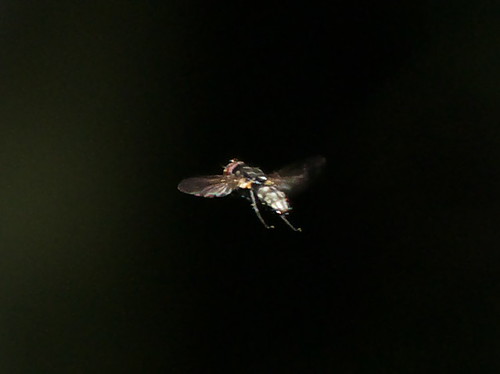
 Of course, there's plenty to attract flies and other wildlife these days, such as the honeysuckle and brambles in flower: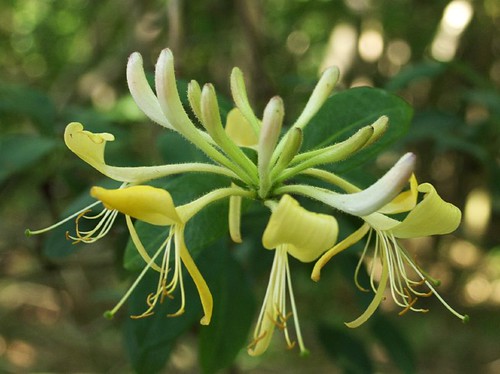
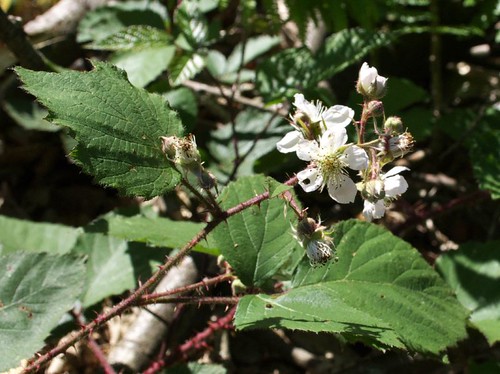 The coppice stools are still growing well, some are now a metre (3 feet) tall:
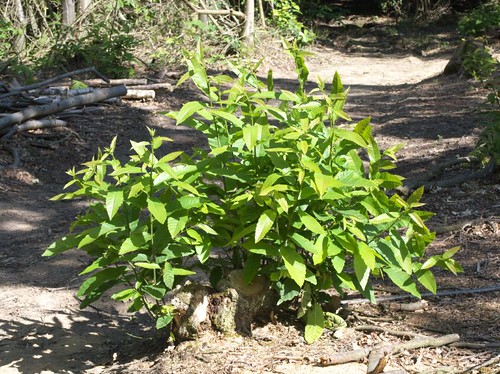 We also had a charcoal burn going - I like the heat haze you get over the kiln:
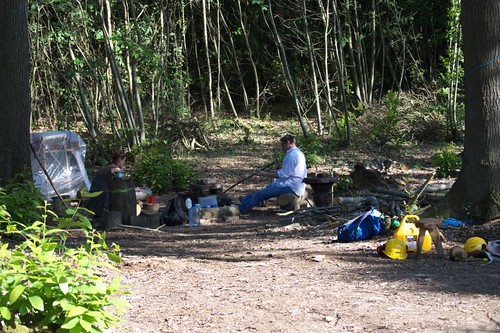
 and our friends Justin and Emma came to visit, just to relax and whittle some sticks.
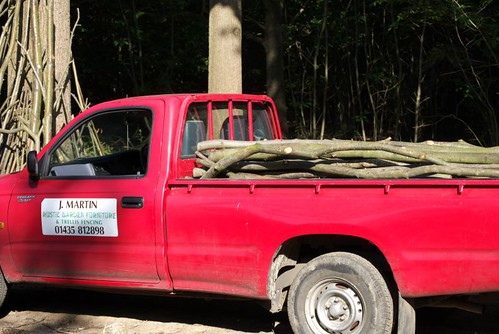
 We had a customer too (J. Martin Rustic Garden Furniture), coming to buy chestnut poles for making garden furniture, taking away a nice truck load:
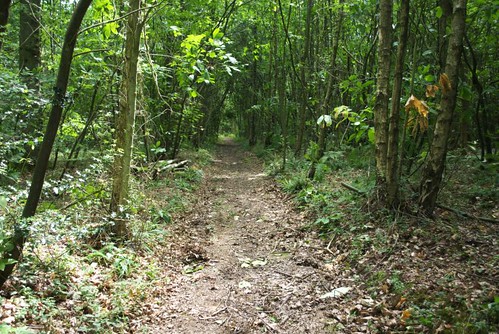
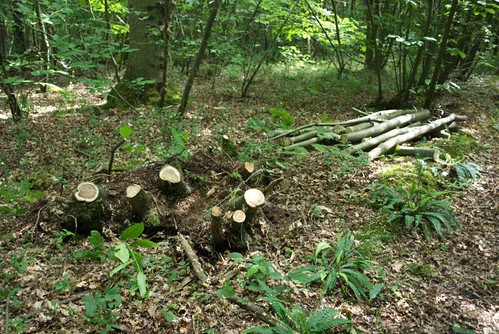
 We had a job to do as well - a coppice stool had fallen over in Grist Wood, across the public footpath into our wood. As Roy and Patricia aren't up that often we offered to clear it up for them, and got to work: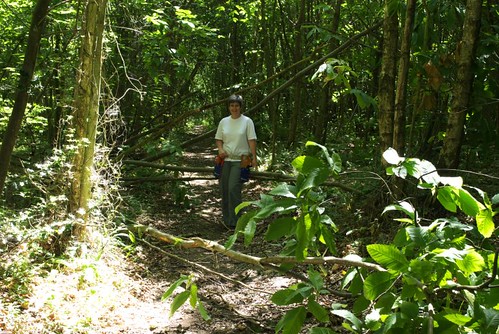

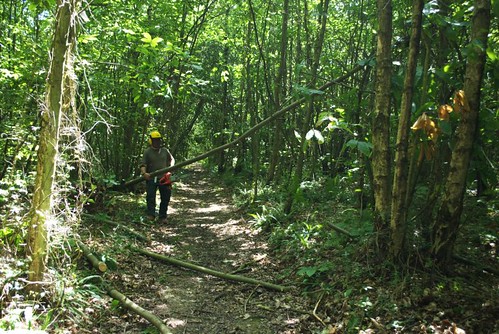
 We've left the stool tidied up, and the logs stacked in Grist Wood:
 Mike
Mike
Thursday, 26 June 2008
First day off
Today was my first weekday off of the summer (I'm working 3 days a week till the end of July), so guess what - we went to the wood!
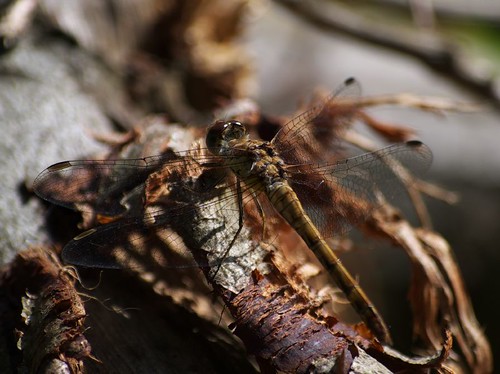
It was sunny, but windy, so the butterflies in our clearing weren't spending enough time on the ground for me to get any photos. I did get some of this dragonfly though: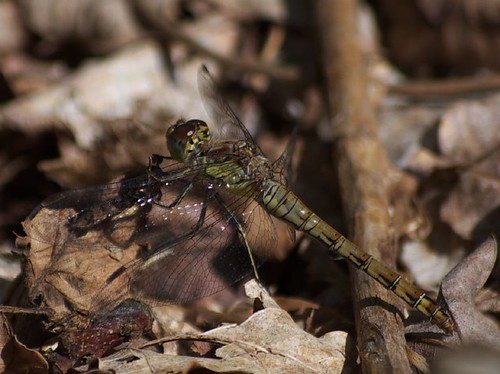
 We also saw that more of the oak stumps are sprouting, and some have avoided destruction by squirrels, rabbits and deer. We're wondering whether we should fence them in for a year or two to give them a chance to regrow.
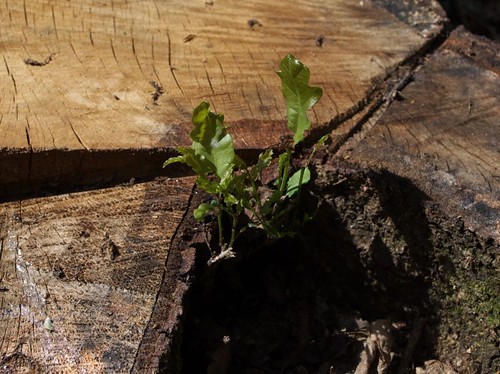 Over in Sweep Wood, the trees my dad so diligently felled in the footpath are trying to grow back: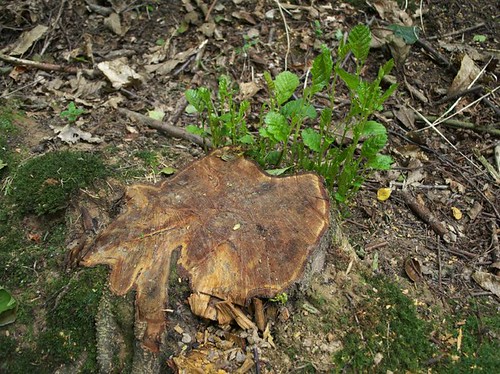
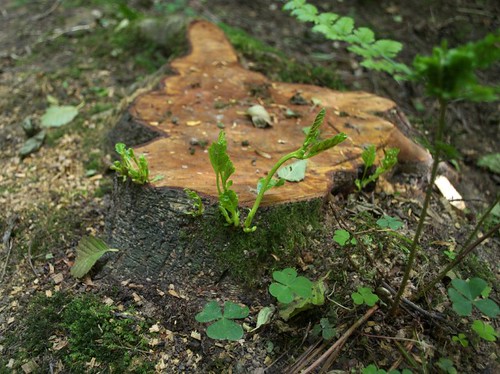 In this case though, the regrowth will be removed every year, as they're kind of in the way! I know we could kill the trees by poisoning them, but it seems more environmentally friendly to just cut them back repeatedly.
Just outside our entrance the grass seed we put down is still doing OK, despite the dryness of the soil this week: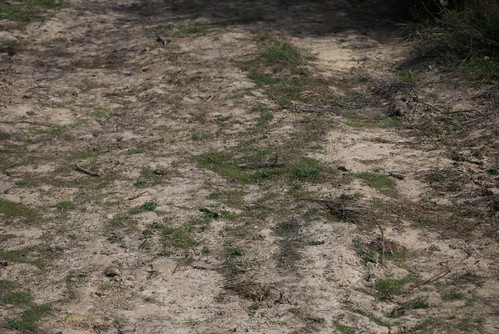 Despite the tractor damage done over the winter, there is still a lot of activity in the wayleave outside our wood. I saw loads of ants, and clearly this is keeping the green woodpeckers interested too, as there droppings are in evidence:
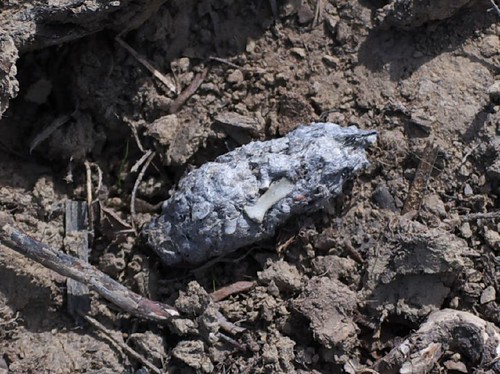
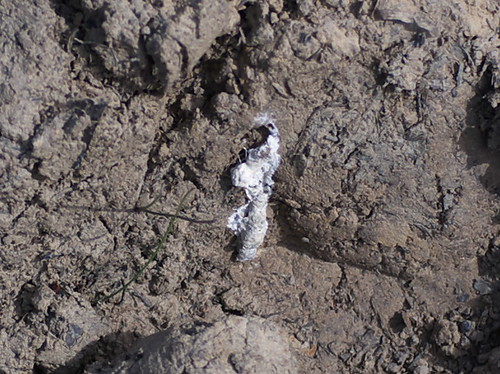 We saw a strange dropping as well, with a small bone in it. Any ideas?
 We weren't just taking pictures though - we also surveyed the trees along all the ride edges, as we're thinking of coppicing a strip either side of each ride this winter. This will require cooperation between us, Sweep Wood (easy, as my parents own it), and Grist Wood (who we're friends with). Fortunately, because the the multi-way split of the land that would be coppiced, no felling licenses will be needed - at least that's what the Forestry Commission told me when I called them today.
The advantage of coppicing the ride edges is that it creates "wildlife corridors" where there is more light and biodiversity. At the same time it helps dry out the surface of the rides, so improving access. After this initial cut, it should be possible to keep cutting these areas on something like a 3-year cycle. This will maintain the wildlife corridors and also yield material that could be good for walking sticks amongst other things!
We have a meeting in mid July with the other woodland owners in our patch who are interested in woodland management, and a professional advisor, to discuss plans for the woods, so we'll be checking out our ideas then before going any further.
Mike


