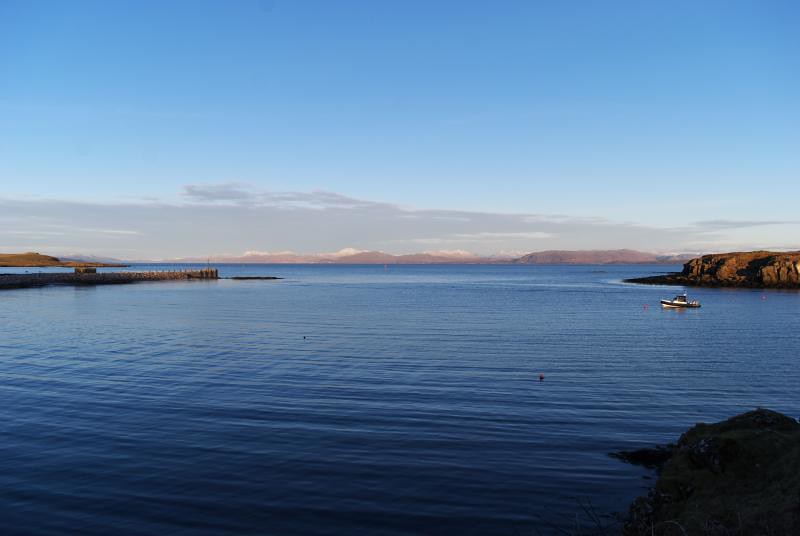
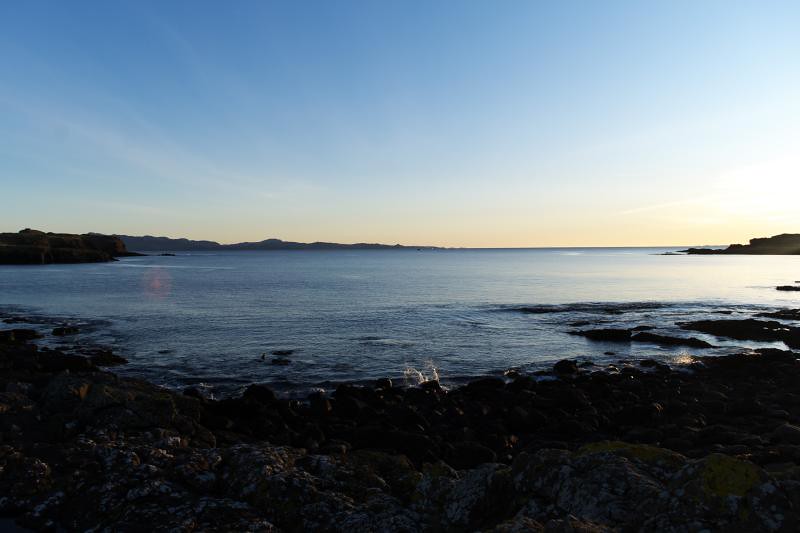
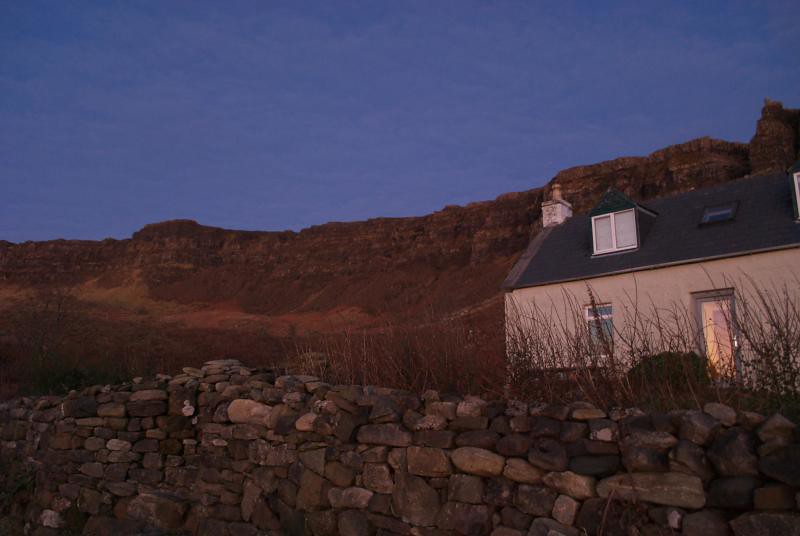
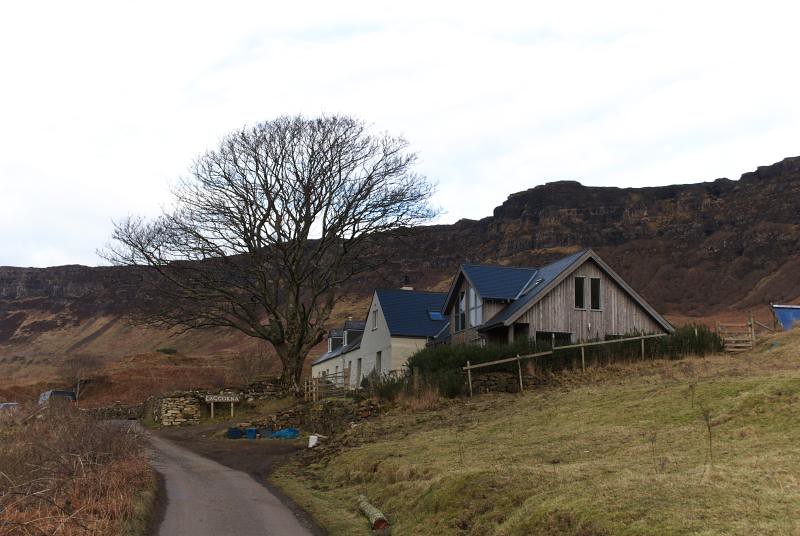
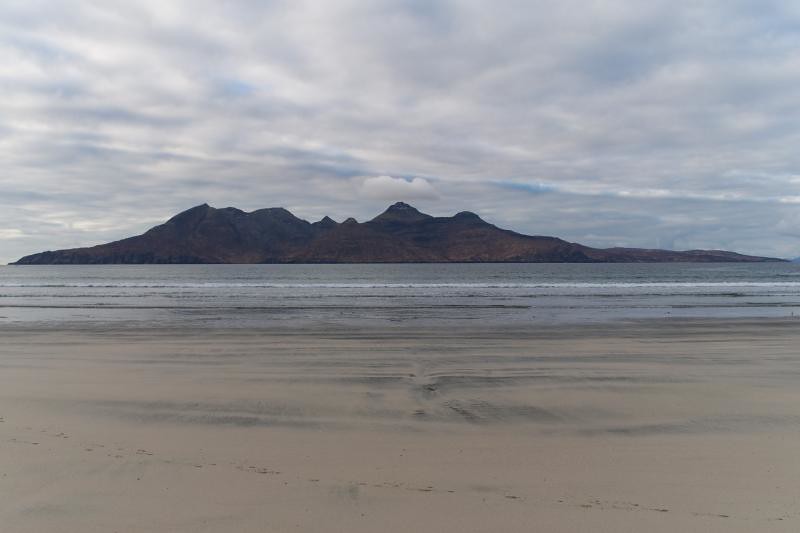
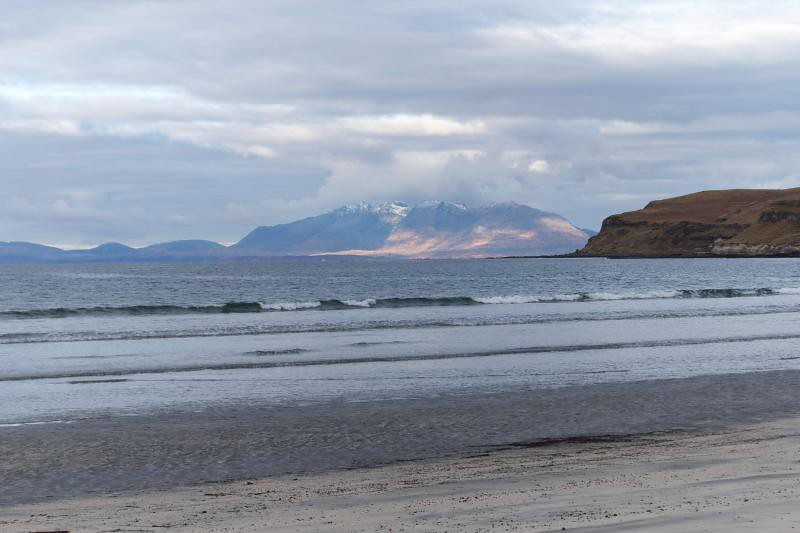
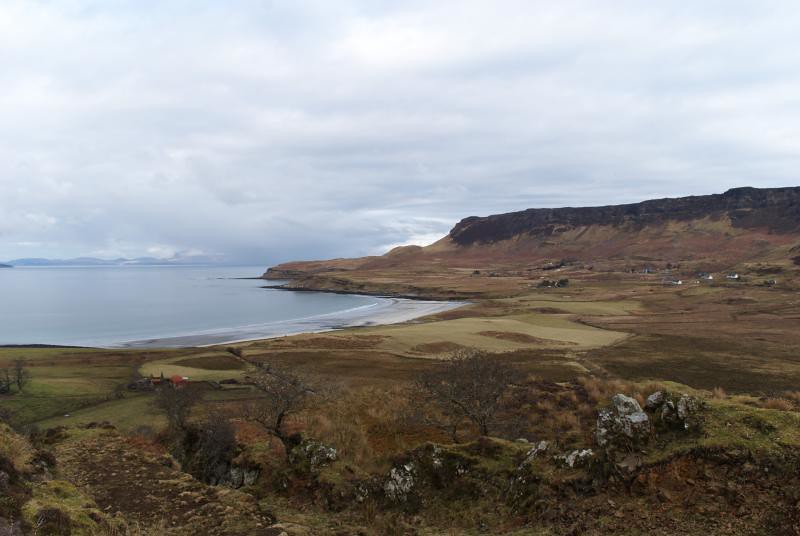
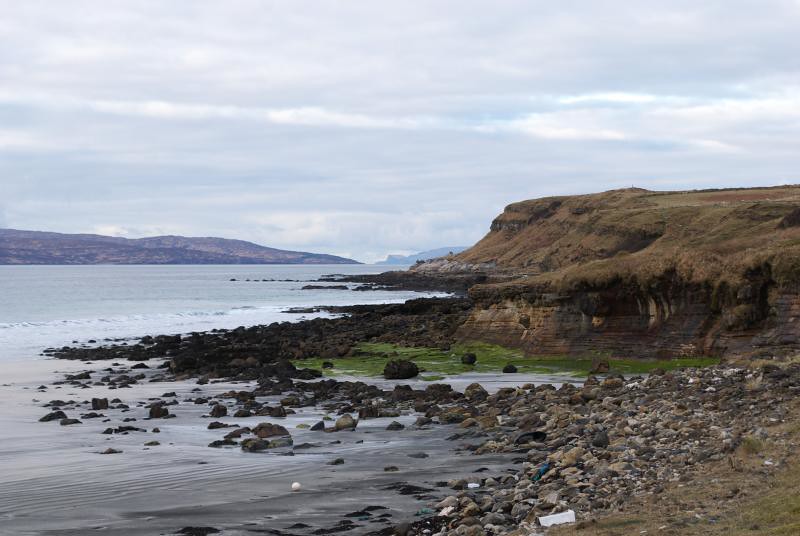
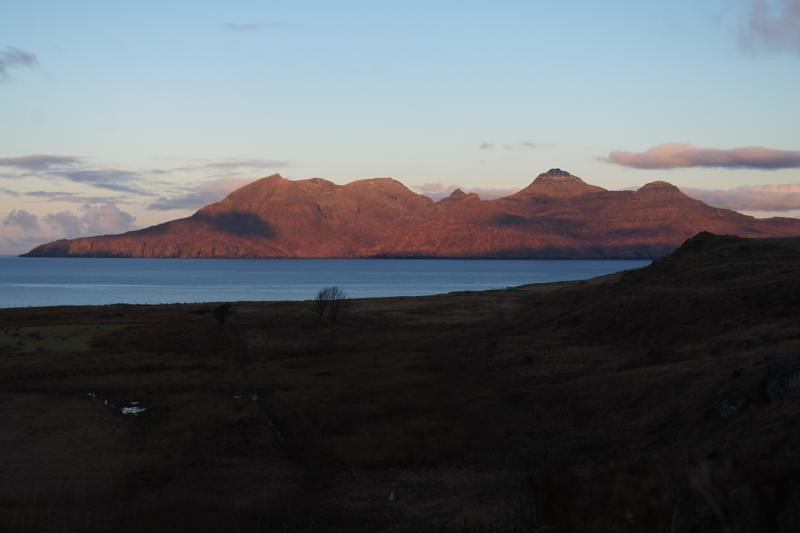
OK, so here's the detail on why I was visiting Eigg. At the time, they were an applicant for an Ashden Award, which they went on to win this summer. The award was given for their work in cutting their carbon emissions by almost 50%! This has been done through a combination of renewable energy generation, energy efficiency and behavioural change. The renewable energy generation is the most visually impressive, so that's what most of the pictures are of - I'll talk about the other stuff at the end of this post.
The heart of the system is a small building which has two main rooms, one housing this huge bank of Rolls lead-acid batteries, sufficient to run the entire island for 24 hours without discharging too deeply: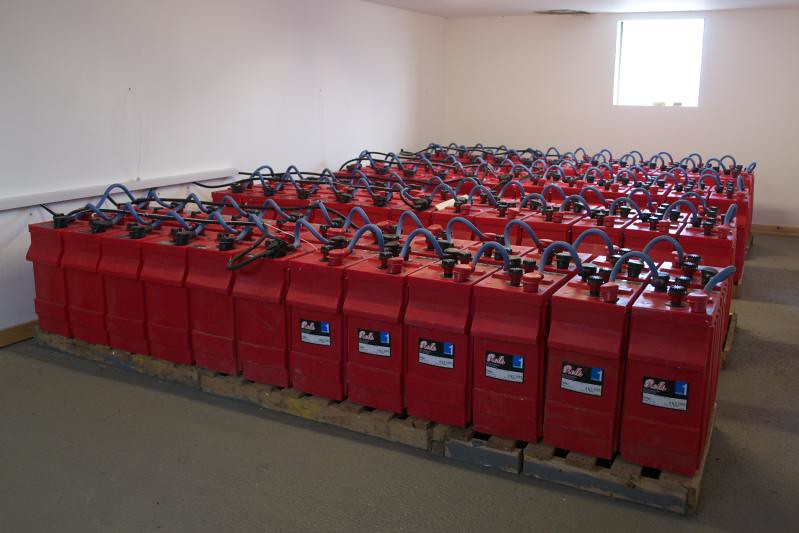

The batteries work to smooth out the changes in supply and demand for electricity over time, thereby reducing the need for backup generation. The connections for these battery banks pass through the wall into the next room, which houses twelve 5kW inverters, four in parallel for each of the three phases used by the grid:
Also in this room is all the control hardware for the system:
including all kinds of live data from the weir and water turbine: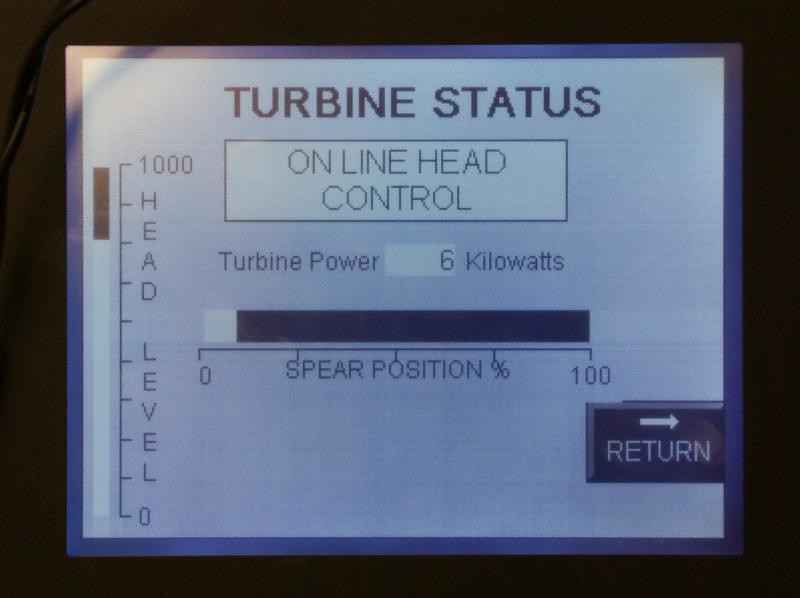

Just outside the control room is a pair of diesel backup generators, which operate alternately to provide redundancy. A generator will come on to top up the battery bank whenever the charge level drops too low. In practice they don't get use much - over 90% of Eigg's electricity comes from the renewable energy sources, and this will increase when they add more solar PV.
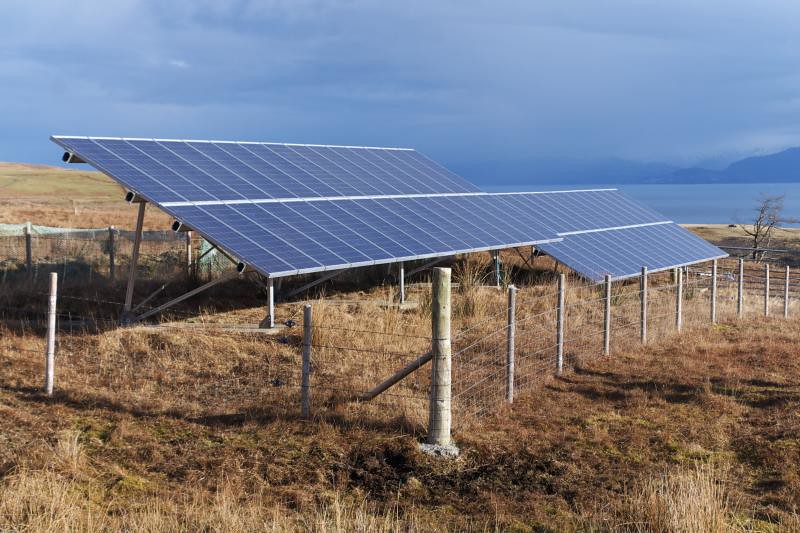
Not far from the generators is 10 kWp of solar PV, which is due to be increased to 30 kWp in the near future. It's in a great location, with no shading and a view of the Sgurr in one direction and the sea in the other: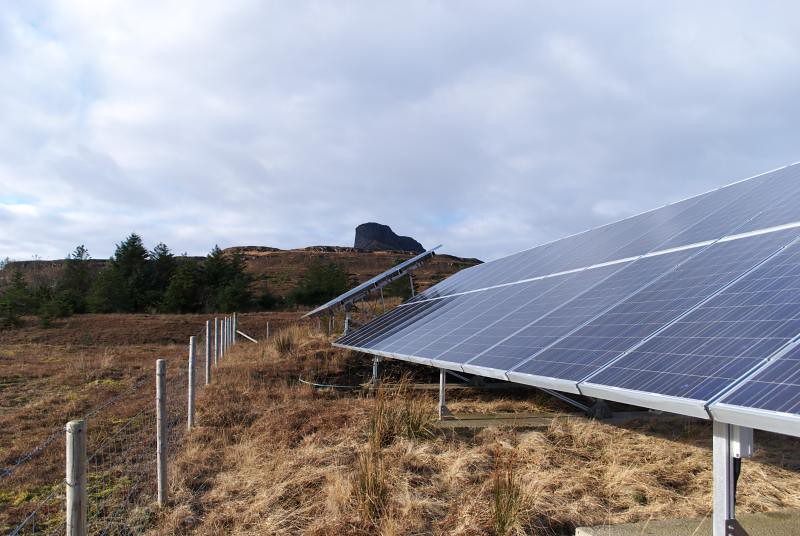
To the south of the Sgurr is the wind farm, which uses four 6kW Proven wind turbines:
Inside the control room for them are inverters and equipment to divert power to dump load heaters in the event of there being excess power. Dump load electric heaters are also used in community buildings, and as the grid frequency rises with excess generation, they automatically come on in stages to make use of the spare power. The dump loads at the wind turbines only come on when all of the heaters in community buildings are already on.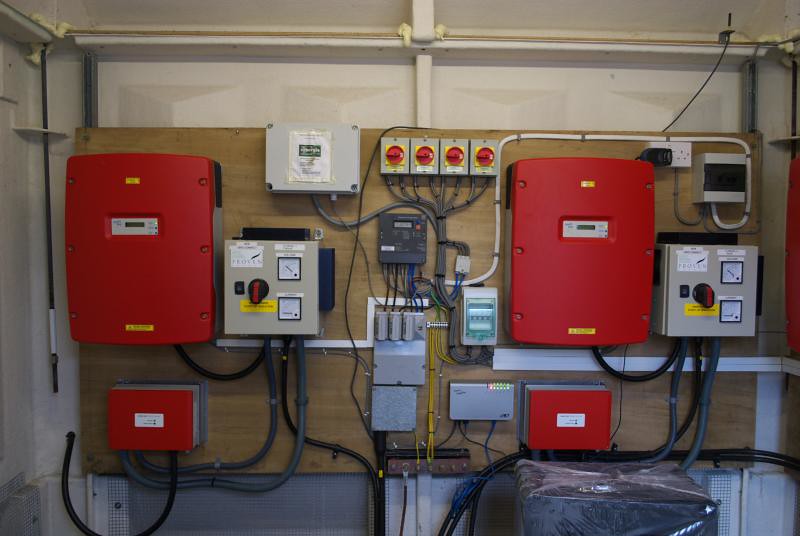
As you can see, some of the roads are pretty rugged, hence the need for a 4x4. At least they don't get driven very far, and there's a lot of lift-sharing as well.
Near the centre of the island is a weir: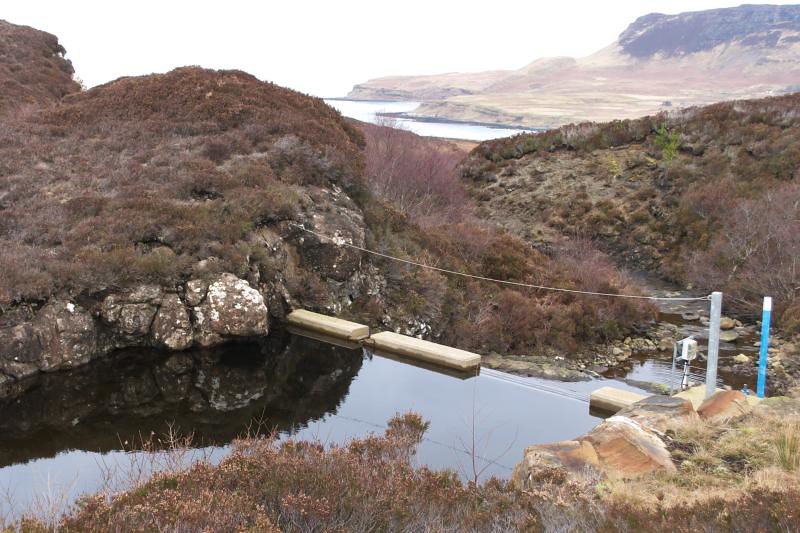

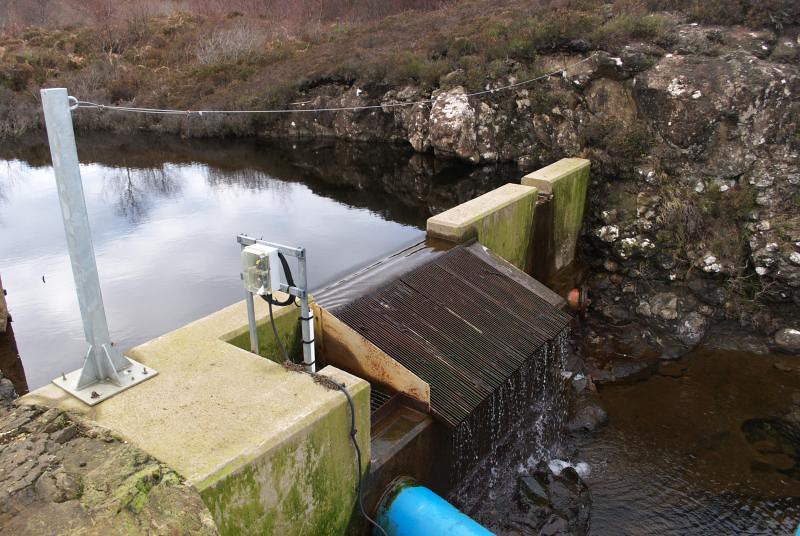
From here the penstock takes water out of the stream for the water turbine, with a valve controlled remotely to ensure some water remains in the stream:
There's a drop of over 100m from here to the turbine, and we walked down it, following the buried penstock across fields and streams: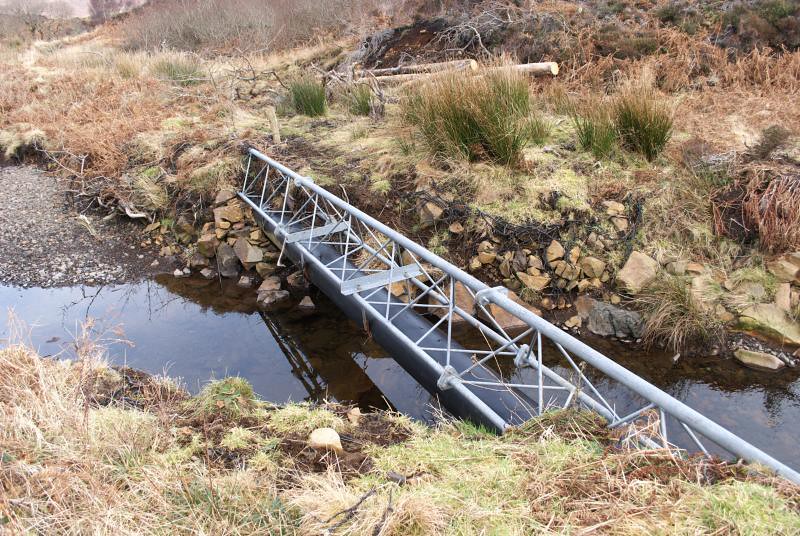
You can still just about see where it was buried on its way to the power house where the turbine is located (strip running up from the bottom of the picture, just left of centre):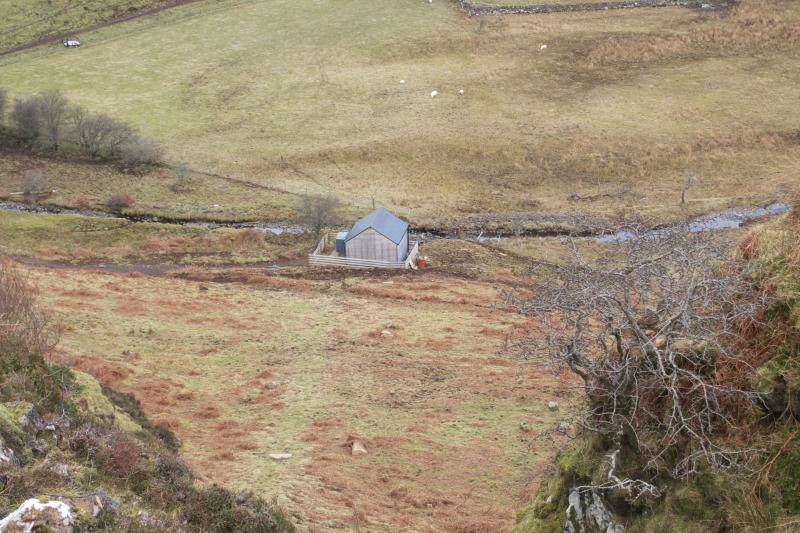
Inside the power house is the water turbine - these are never very interesting to look at, they just sit there and do their job. This one was painted in the traditional "hydro blue" that seems to be compulsory for turbine equipment!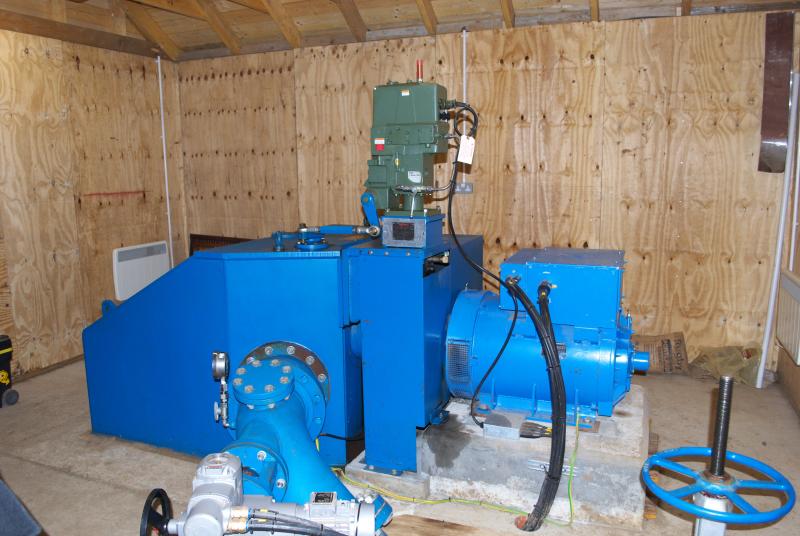
It's a pelton turbine, here's the technical details:
Well, that's where Eigg's electricity comes from, but as as I said, that's just one aspect of how they've cut their carbon emissions. Another is switching from from fossil fuels to wood for heating - I saw forestry work in progress, and the production of logs for heating is ramping up rapdily now: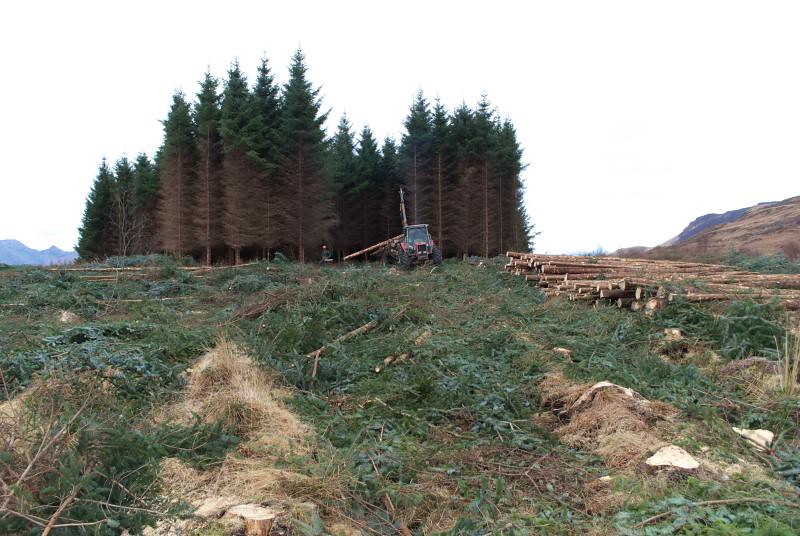

The wood is burned in stoves that either heat a room or have a boiler in them to run central heating: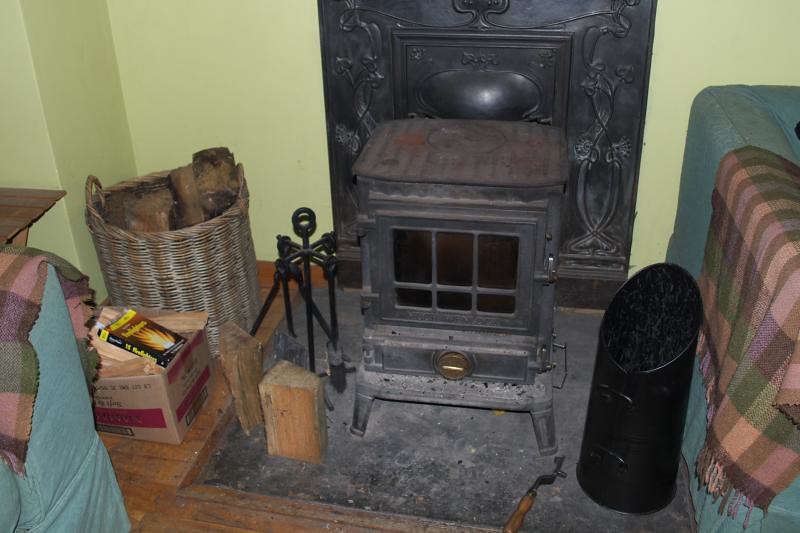
Every home has an OWL energy monitor - this is crucial, as one of the constraints adopted to make the renewable energy supply practical and affordable was to limit every house to 5 kW, and businesses to 10 kW - if you go over, your electricity cuts out, and a technician must visit to turn it on again. The meters sound an alarm if consumption gets close to the limit, and very few people ever get cut off, as energy-saving habits are second nature to the residents of Eigg.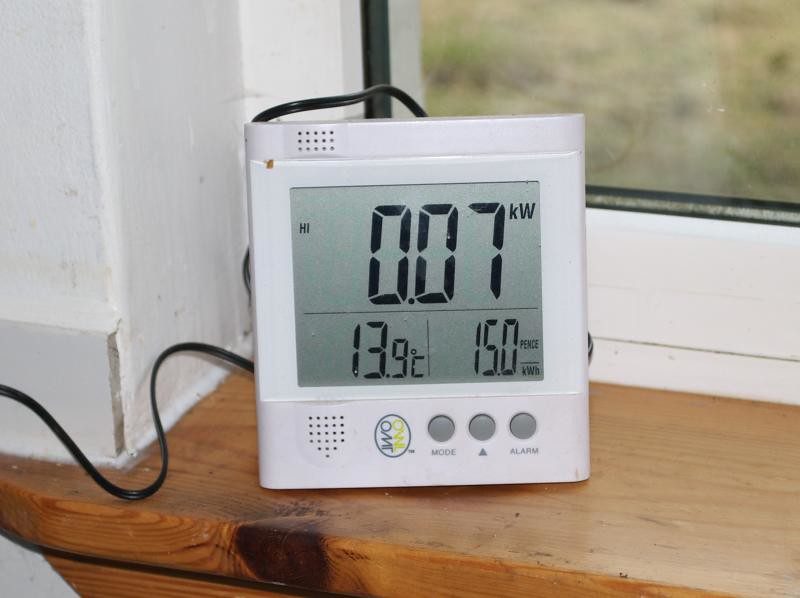
Every house on Eigg has to have it's own water supply, and it was nice to see a few ram pumps running - supplying water without using fossil fuels. We had an international Ashden Award winner using these a few years ago, in the Philippines.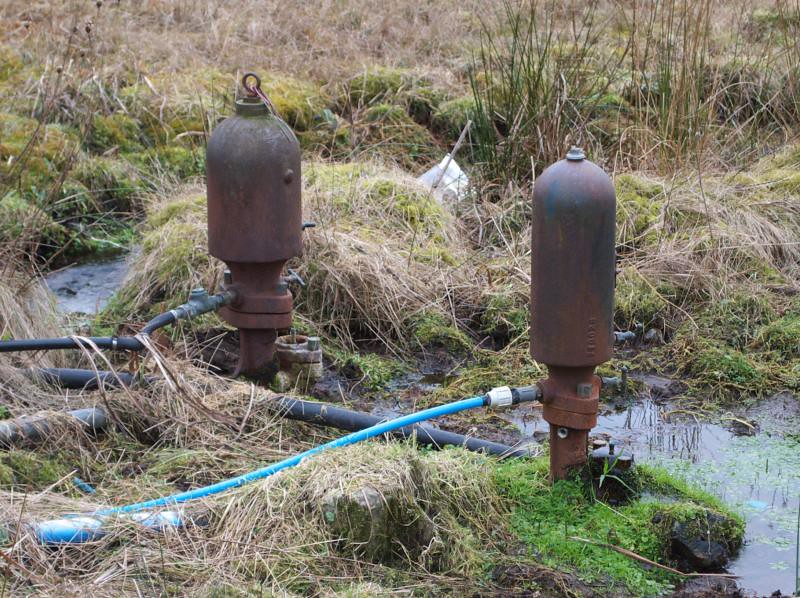
Over at the school sustainability was high on the agenda too, with a geodesic greenhouse and raised beds in the garden (I was there in February, which is why there's not much growing):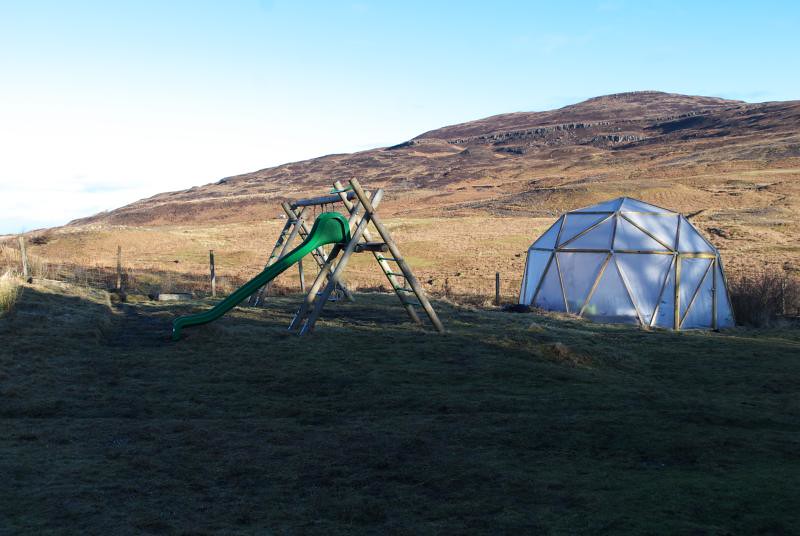
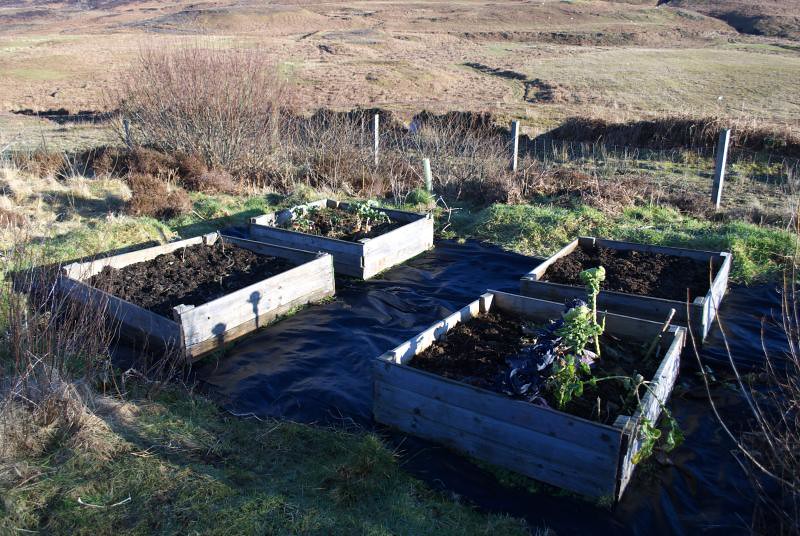
The school is proud of its achievements and has won a Green Flag from Eco-Schools for its work.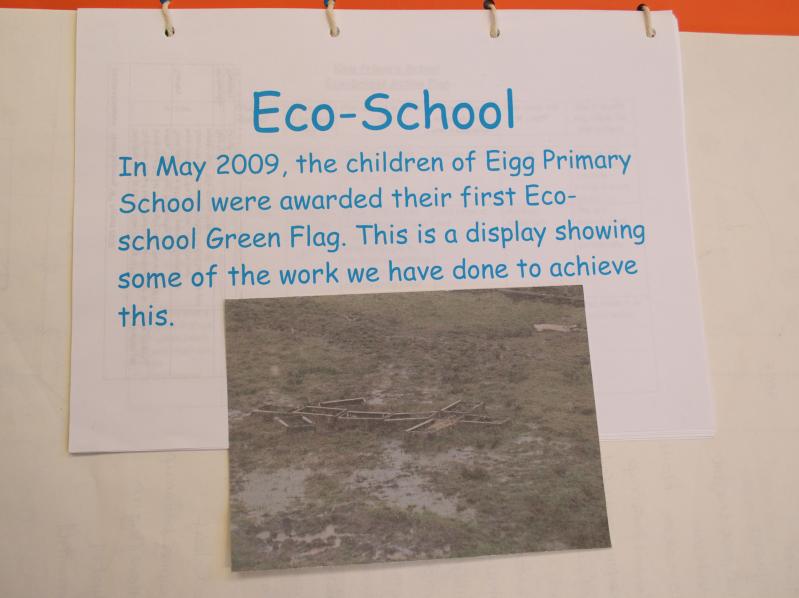
There are numerous other initiatives in progress, such as home insulation, poly-tunnels to grow food (reducing food miles), increased cycling and the use of solar water heating:
Eigg's done an amazing job, massively cutting it's carbon emissions, and showing the rest of the UK the way it should be going with renewable generation. To finish, I'll leave you with the video that the Ashden Awards made about Eigg's achievements (you can download a copy from the Ashden Awards website):
Mike
Read part 1 of Visiting the Isle of Eigg
Read part 2 of Visiting the Isle of Eigg
Click here to read the rest of this post.