On Sunday morning we went on a SWOG workshop on grey squirrel control in woodland. It was a bitterly cold day, about 1C and windy, with light snow falling as we got to lunchtime. To assess if you need to implement squirrel control before damage takes place, you could look for damage in neighbouring/adjoining woodlands or carry out a visual assessment to see if the numbers are above 5 per hectare. Look at the damage to trees, watch to see where their favourite feeding places are and then chose a method of control. There are a number of control methods: So, will the biodiversity of your woodland benefit if other woodland owners are not controlling numbers? John from Sussex EPS says yes, based on personal experience your woodland will benefit long term. He said that a plan for managing a woodland without taking account of pest control was not a complete plan. Grey squirrels can damage and kill young trees, and out-compete other wildlife for food and breeding sites. So what are we doing in Chestnut Coppice? Well, I've got myself a decent air rifle, and I've now got the sights lined up on it. I need some more target practice before I can be confident of getting a clean kill on a squirrel - maiming them is not acceptable. We don't think we have too many squirrels, but will be surveying the number of drays to get an idea. In any case, if we cull some there will always be more to move in. An important point for us is that we intend to eat every one we shoot, as we believe that eating wild meat is more environmentally friendly than eating farmed meat, which usually has large inputs of fossil fuels and chemicals. Mike p.s. I also took some pictures of birds on a feeder in the woods where we had the workshop, you can see them here.
John Bailey of Sussex Environmental Pest Solutions led the workshop, telling us about the origin of grey squirrels, their impact on British woodlands and different methods of population control.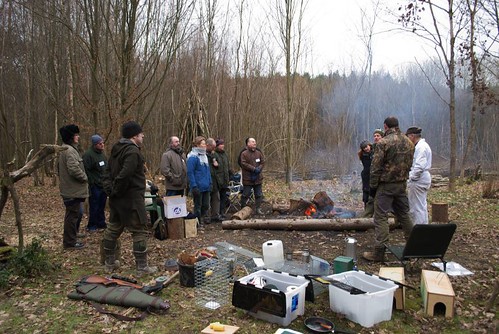 He said:
The grey squirrel was introduced to the UK in the mid-19th century, mainly spreading from Woburn Park, Bedfordshire and as they have no natural predators their numbers have soared. It is estimated that there are now over 2 million grey squirrels in the UK!
Here's a typical squirrel dray - they're much larger than a bird nest: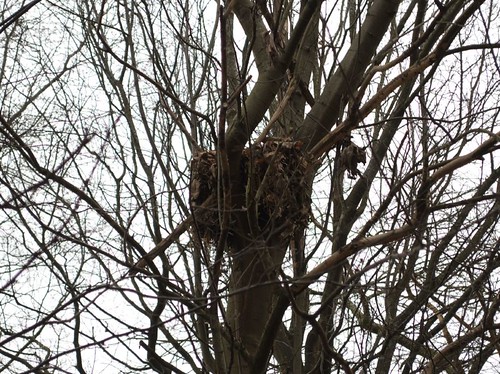 This is typical damage to a young oak, which will now never become a full-grown tree, although it may survive as a pollard. This is because the squirrels had "ring barked" it, preventing the flow of vital nutrients beyond that point:
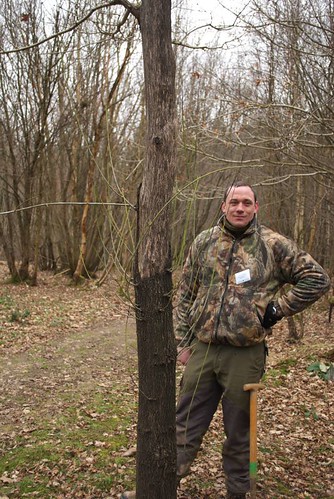 When the populations are over 5 per hectare, the greys are known to kill native trees through stripping of the cambium layer. They usually eat the sap from trees that are 10 – 40 years old and the damage in some woodlands can mean that some trees will not make maturity.
Grey squirrels also compete for food, nest sites and space with our native wildlife e.g. dormice, tawny owls, kestrel, woodpeckers, tree creepers, nuthatch, jay etc. Large populations of grey squirrels can cause instability to the carrying capacity of the woodland ecosystem.
Trap Types
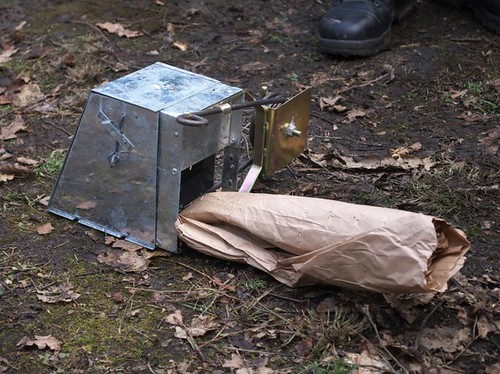
Kania
One of the safest traps to set, is species specific and probably the most powerful trap you could use. Approx £50 each and you would require around 7-10 per hectare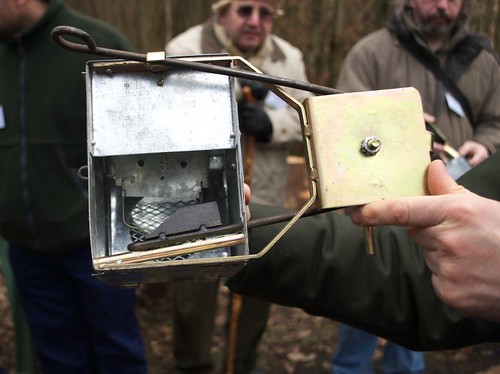 Here it is in action: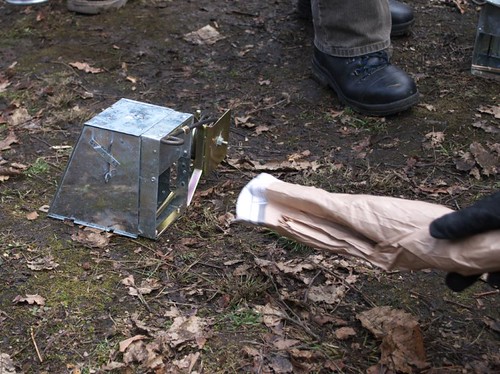
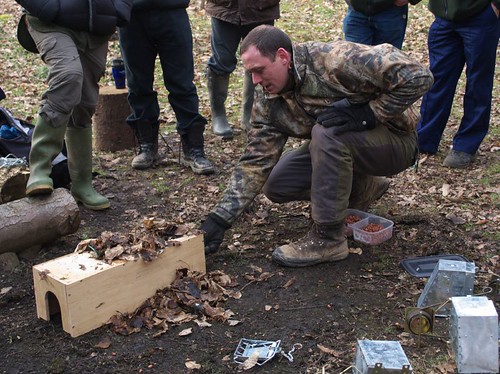
 Wooden tunnel MK4/MK6 Fenn trap
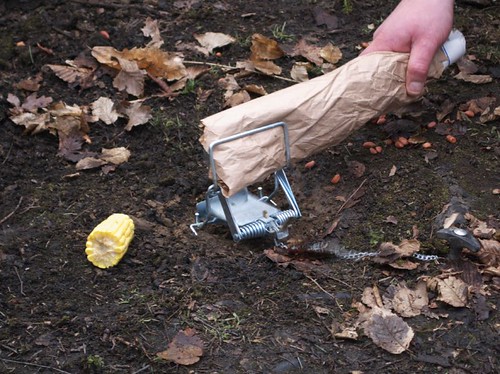
Sited in places and runs used by squirrels, a highly successful method of clearing large number of squirrels. The law requires that the trap is placed inside a tunnel. Approx £50 for 10 and you would require around 7-10 per ha. This does not include the cost of making the tunnels.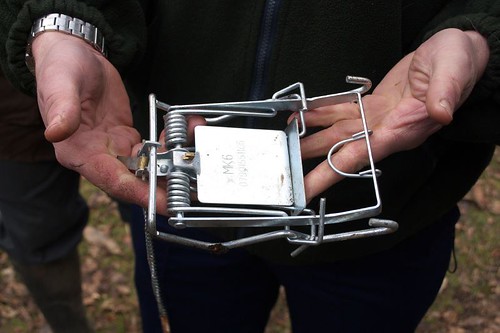 Clear the ground where you are going to lay the trap (this is so the squirrels can easily see the bait you place near the trap).
 Peg it to the ground (this is to stop badgers or foxes running off with the squirrel and the trap!)
 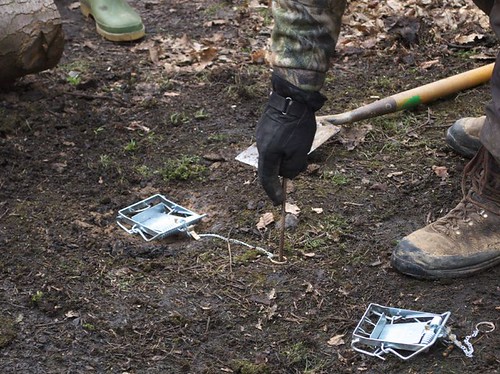 and cover with a wooden run. You must do this part to protect other animals from the trap. You can also disguise it by covering it with leaves. John will usually pre-bait areas for a few days with everything in place but the traps set not to go off, so the squirrels can get used to it being there.
 Here's the trap in action:
 Multi/Single Cage Traps
These traps keep the captured squirrel alive, which then of course, means you will need to kill them later (note that it is illegal to release a squirrel once trapped). £80 for a multi cage trap, £30 for single cage trap; around 4 multi cage traps would be required.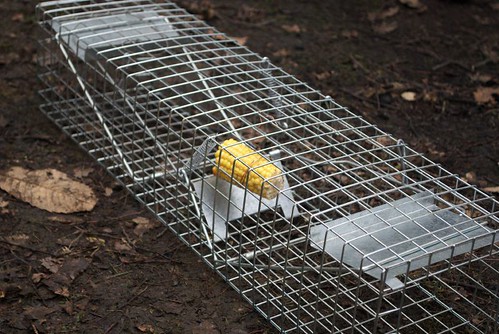
 Good bait to use is maize, peanuts and peanut butter. The best time of year to control the squirrel numbers is February and July, when they are breeding.
We finished up with lunch round the fire, and then a chance for people to try shooting some different air rifles at a target. Finally, our friend Paul demonstrated another method of squirrel control that he uses - a "buffalo" shotgun cartridge.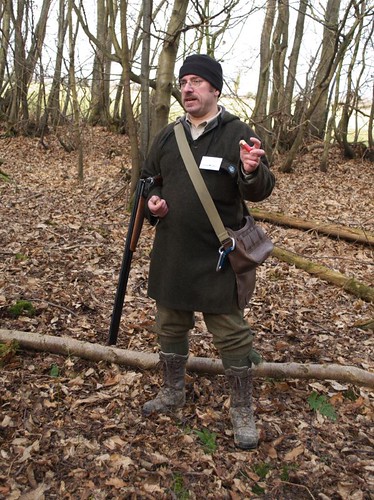 Here's what it does to a dray:

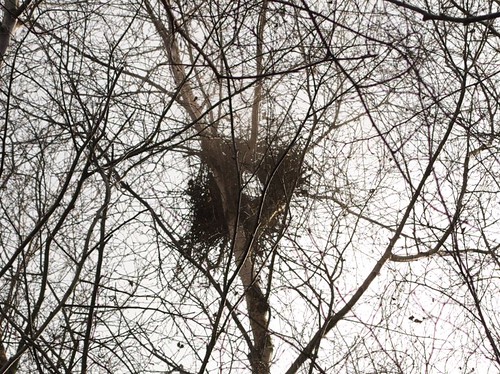 The idea is to shoot through it when it's full of young squirrels, and have other people with shotguns waiting nearby to get any that run out of the dray. Messy, but effective - a few people can cull dozens of them across many acres in just a few hours.
Tuesday, 3 February 2009
Grey squirrel control workshop


Monday, 2 February 2009
Even more snow in the wood
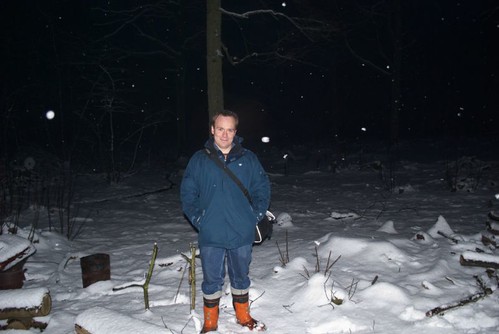
Yesterday we went up to the wood after work to get some more pictures of the snow. It was getting towards dark, so the photos are a little noisy, though pretty good for ISO3200 I think (glad I've got the DSLR for this...)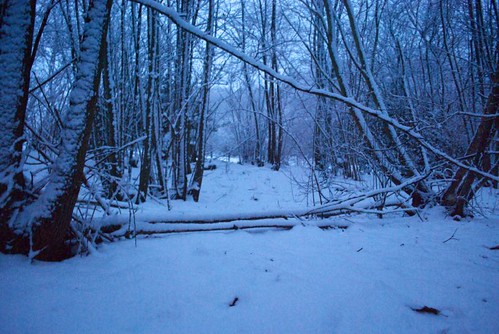 But first, here's what it was like back at home:
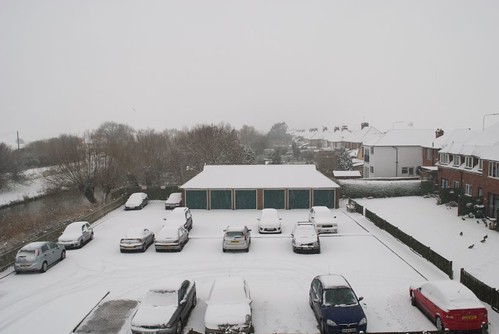 The ducks were going from garden to garden to see if anyone had put food out for them: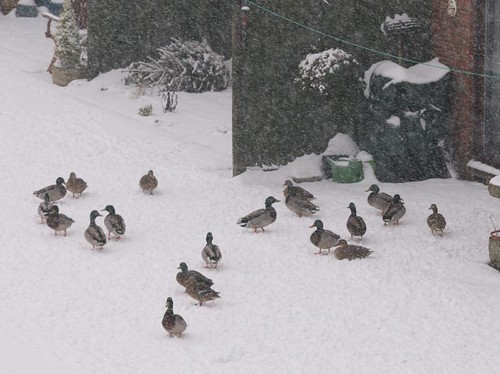
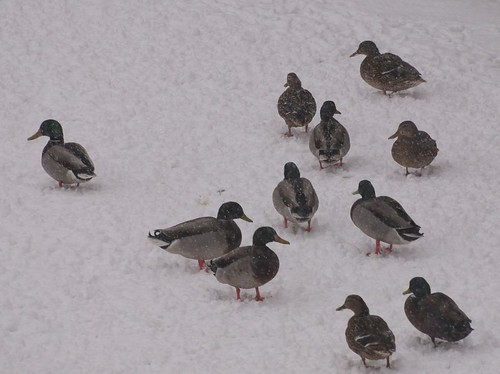 You can see where they all came through a gap in the fence and went round a car to move into the next garden:
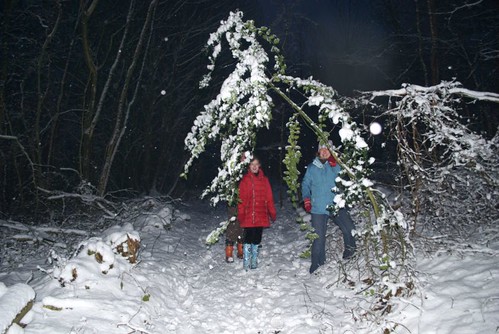
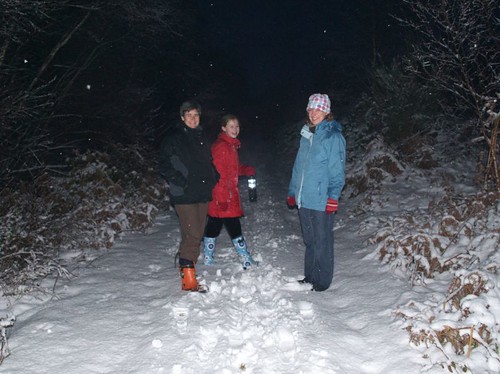
 Anyway, back to the wood. We took Joy and Lauren up as well: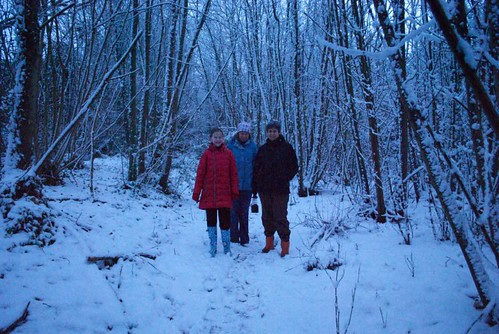
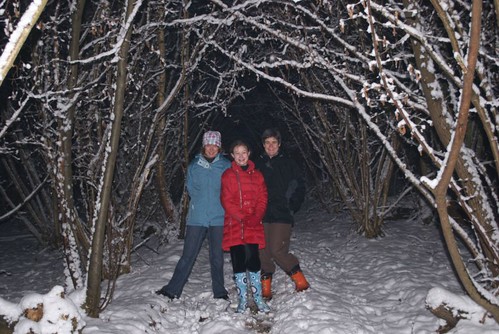
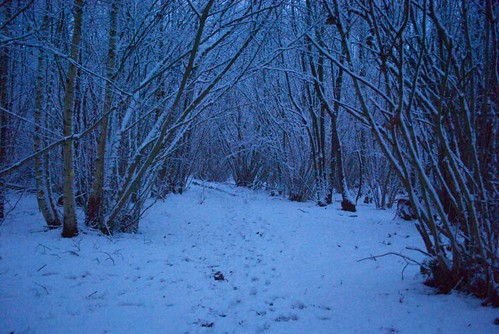 As it got darker I had to resort to using the flash, but it made a nice "tunnel effect":
 There were a few small trees weighed down by the snow, like this holly:
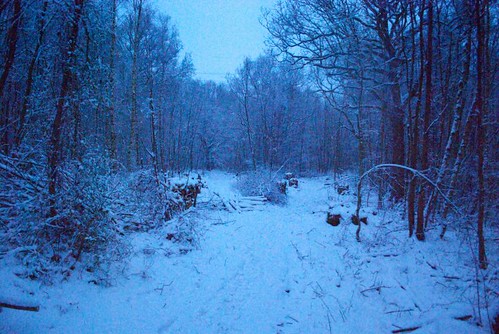
 Here's the clearing at he junction, which we coppiced in December:
 Then we got to the area we coppiced a year ago, but it was much too dark to do without the flash now: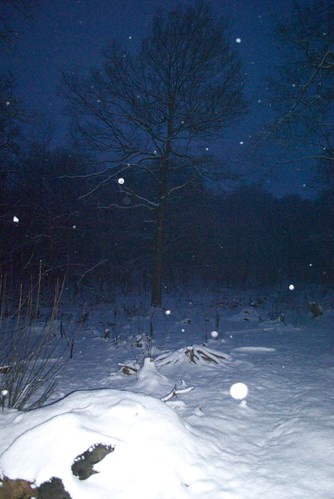
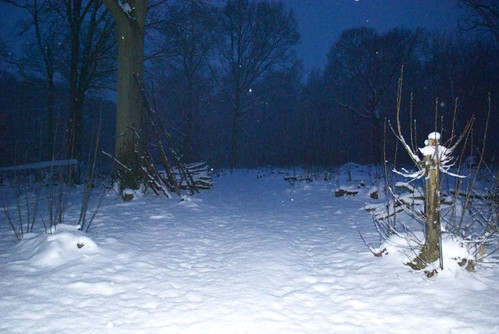 As you can see it was still snowing while we were there, although in Rye it had turned to sleet by now.
 We're certainly glad we got some logs out for a customer on Sunday, looking at the state of the wayleave!
 Mike
Mike
Snow day!
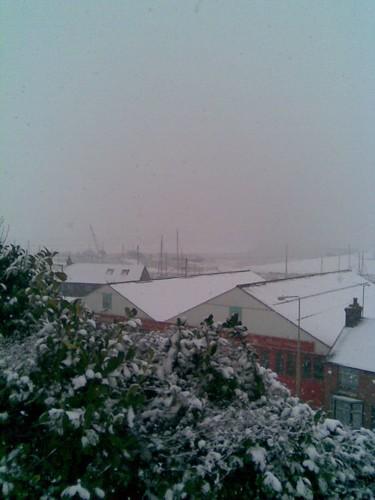
Today was lovely and snowy and as schools were closed, Joy and I (Tracy) borrowed some young people and went out to play! Photos are from my phone on a dark day - so they are not too clear.
The view from Rye was amazing, and we could hear fog horns in the distance.
 We had a huge snowball fight and build a snowman. Here are Emily, Lauren, Charlotte and Joy behind St Marys, with the beginnings of a snowman.
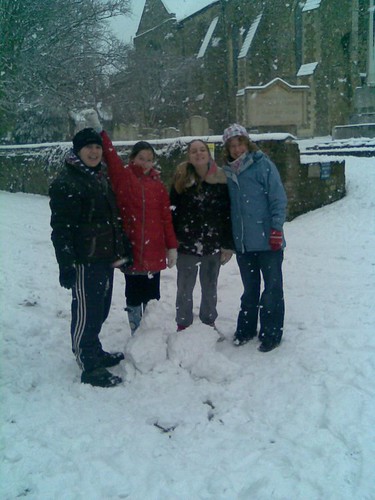 ...and then we all made snow angels, which, to be honest, is just a cold thing to do!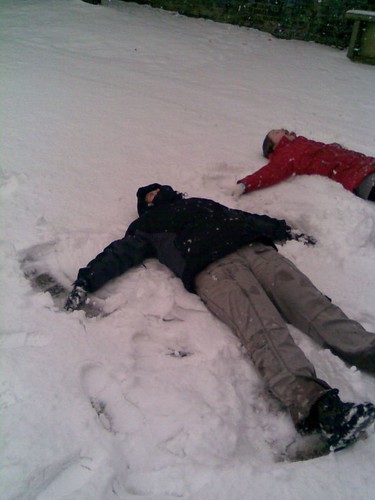
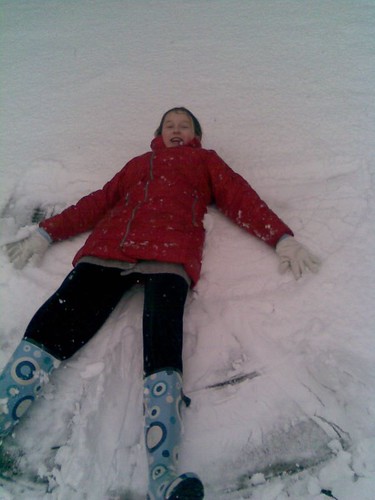
 It was great fun! Later we went to the wood, which Mike will write about soon. He also got some great pictures.
Tracy
Sunday, 1 February 2009
Trying out the new camera lens
Having realised that Sterling falling against the Yen and Dollar meant that electronics were going to get more expensive, I bought a new lens for my camera last week. It goes up to 300mm, whereas the one I already had only went to 200mm. This is particularly useful for getting photos of birds, so I cycled down to the beach at Rye Harbour yesterday with it.
Here's some pictures of Oystercatchers: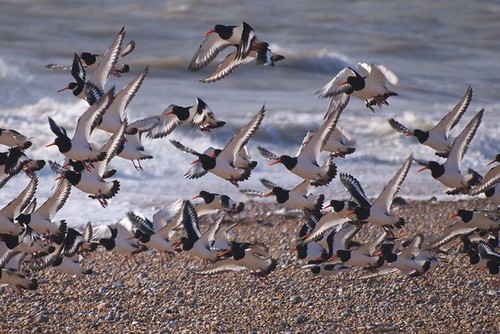
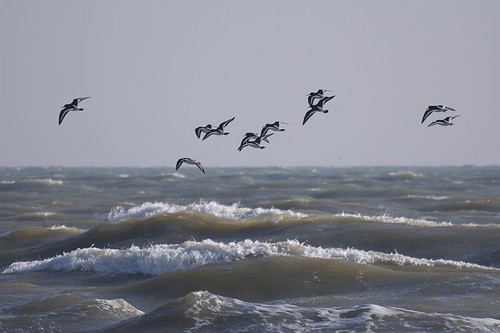
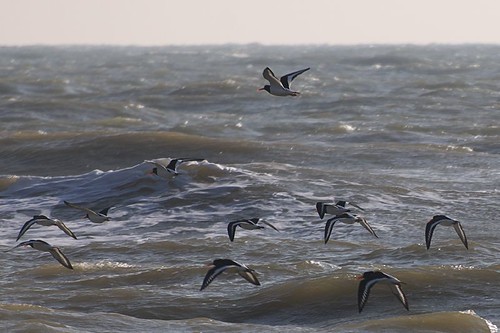
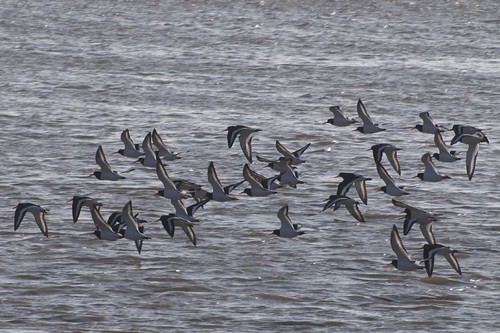

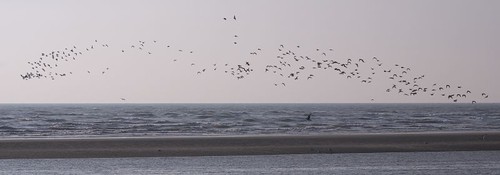
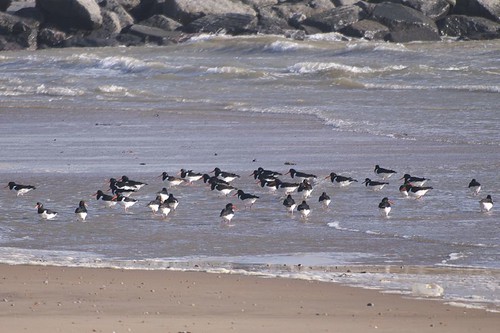 Remember you can see larger versions on my Flickr page.
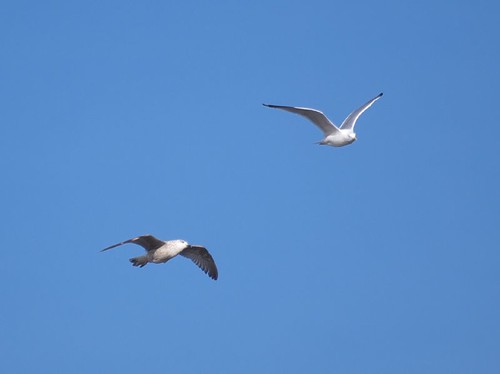
Here's some Ringed Plovers. It was harder to get these guys flying, mainly because there weren't as many around. They're actually quite well camouflaged (I've brought up the contrast in the photo below to make them more visible), and on one occasion I didn't see a small flock on the ground until I nearly walked into them! and here's an adult and juvenile Herring Gull
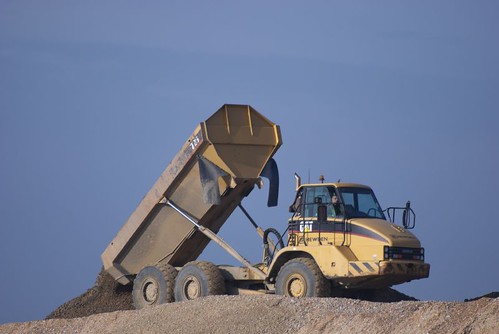
  And finally, as usual for the winter, they're busy pushing stones around to try and keep the sea out:
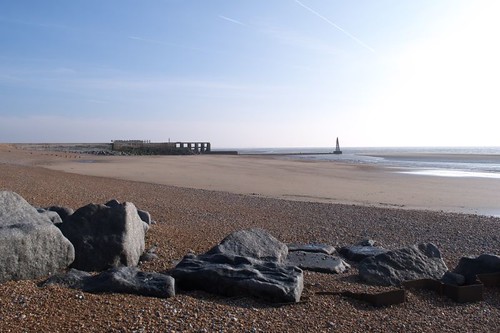
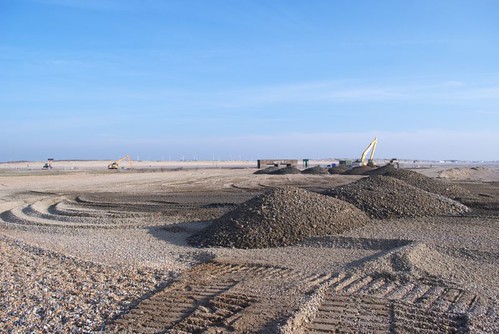 The rest of the beach still looks nice though:
 Mike
Mike
More snow
This morning we learned all about squirrel control in woodland (I'll write a post later), and then it started snowing. We had been planning to go and help our customer down at the allotment get her tree stakes into the ground in the afternoon, but she didn't fancy it with the snow, so what did we do instead? That's right, we went up to the wood to saw up a load of logs and bring it back to Rye for one of our customers! Here's what it looked like as we arrived at the wood: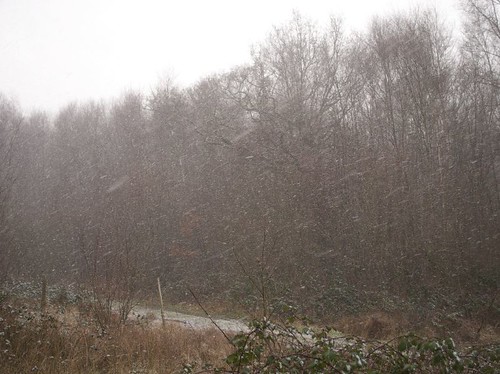 But we got to work regardless.
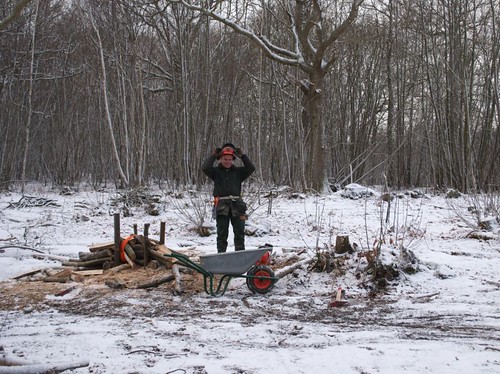 It's actually quite nice working in the snow - you don't get as wet as in the rain, and everything looks pretty.
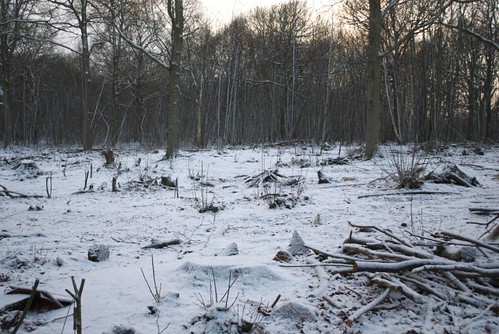 There's more snow forecast for the next few days, so we may be popping up to get some more pictures, though if the snow's bad we might have to go on our bikes instead of driving!
Mike


